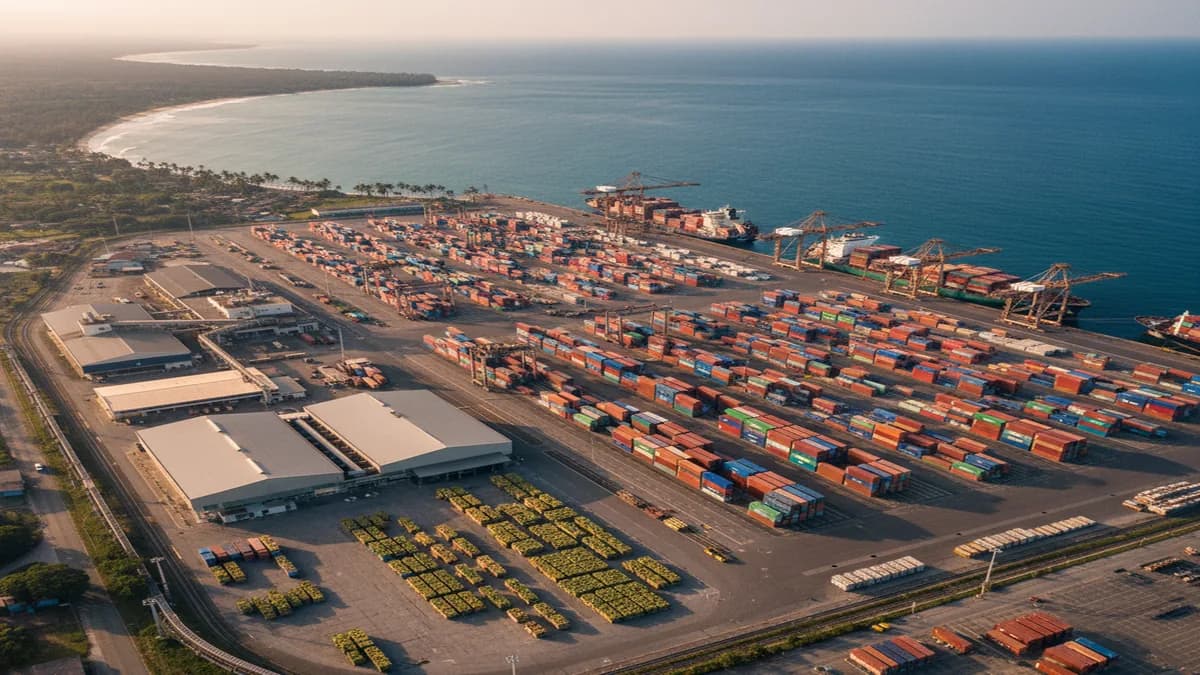
CAF Launches Economic Forum 2026 in Quito — Signs Competitiveness Agreement with Ecuador

Event Overview
The Development Bank of Latin America and the Caribbean (CAF) convened a high-level event in Quito to formalize the launch of two initiatives:
- II International Economic Forum — a multi-country event series examining investment climate, trade, and economic reform across the region
- Latin America and the Caribbean 2026 Business Roundtable — a matchmaking platform connecting international investors with project opportunities in member countries
The event brought together Ecuadorian government officials, multilateral representatives, and private sector leaders.
Technical Cooperation Agreement
Alongside the forum launch, CAF signed a non-reimbursable technical cooperation agreement titled "Towards a New Competitiveness Policy for Ecuador" ("Hacia una Nueva Política de Competitividad para Ecuador").
The agreement provides CAF-funded technical assistance to support Ecuador in developing:
- National competitiveness diagnostic — benchmarking Ecuador's performance against regional peers on the World Economic Forum's Global Competitiveness Index and World Bank's Doing Business successor metrics
- Sector-specific productivity strategies — targeting agriculture, aquaculture, tourism, and manufacturing
- Regulatory simplification roadmap — identifying bureaucratic bottlenecks in business registration, permitting, and trade facilitation
- Innovation ecosystem assessment — evaluating Ecuador's R&D spending, patent activity, and technology adoption rates
Strategic Context
Ecuador ranks in the lower half of regional competitiveness indices, constrained by:
| Competitiveness Factor | Ecuador Ranking (Regional) | Key Constraint |
|---|---|---|
| Ease of doing business | 13th/20 LatAm | Regulatory complexity, permitting delays |
| Infrastructure quality | 11th/20 LatAm | Road maintenance, port efficiency |
| Innovation capacity | 16th/20 LatAm | R&D spending <0.5% GDP |
| Labor market efficiency | 14th/20 LatAm | Rigidity, informal employment |
| Financial system depth | 12th/20 LatAm | Limited capital markets, high lending rates |
CAF's involvement signals multilateral institutional support for Ecuador's structural reform agenda — complementing the IMF's fiscal focus with a productivity and competitiveness dimension.
CAF's Ecuador Portfolio
CAF is one of Ecuador's largest multilateral creditors, with an active loan portfolio of approximately $4.5 billion across infrastructure, energy, social development, and institutional strengthening projects.
Recent CAF-financed projects in Ecuador include:
- Quito Metro Line 1 (transport)
- Guayaquil port modernization (trade)
- Rural road rehabilitation (infrastructure)
- SME credit lines through CFN (finance)
What to Watch
- Competitiveness policy publication timeline — the technical cooperation agreement typically produces a diagnostic within 6-9 months; expect a draft policy framework by Q1 2027
- Business Roundtable outcomes — track specific investment commitments or memoranda of understanding that emerge from the matchmaking sessions
- Regulatory reform implementation — the diagnostic is only valuable if recommendations are enacted; political will and legislative capacity are the constraints
- World Bank Doing Business successor rankings — Ecuador's position in the B-READY assessment (successor to Doing Business) will benchmark whether reforms translate to measurable improvement
- CAF capital increase — CAF is in the midst of a capital increase process; Ecuador's participation and voting share may shift
Source: CAF
Support the EcuadorBrief archive.
Research support helps fund review, corrections, and hosting. New publishing is paused.