Construction Sector Posts $2.45 Billion and 8% Growth in 2025 — Government's Miti-Miti Mortgage Program Set to Double Lending Volume in 2026

Sector Recovery After 27-Month Downturn
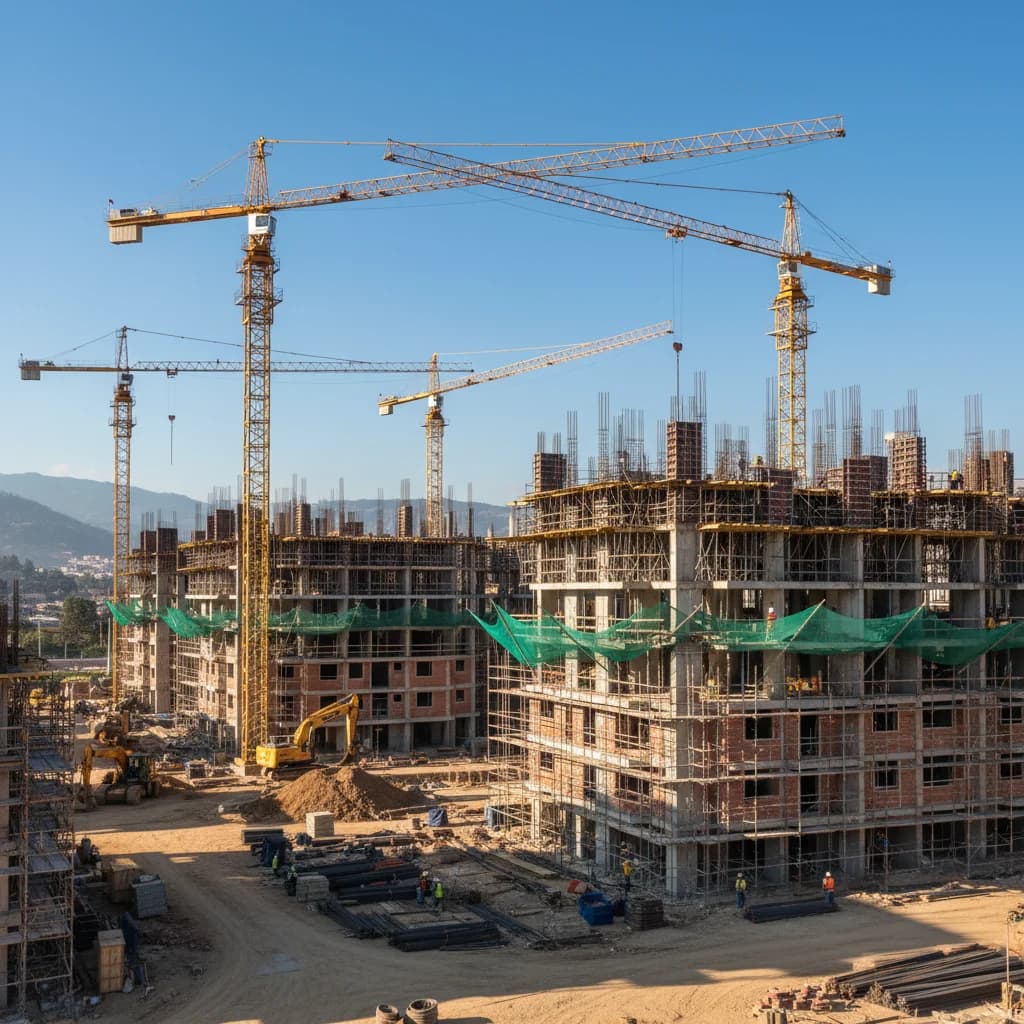
Ecuador's construction sector generated $2.45 billion in total output during 2025, marking an 8% year-over-year increase and ending a 27-month contraction that had shrunk the sector by nearly 15% from its 2022 peak. The recovery represents a critical inflection point for one of Ecuador's largest employers and a key driver of domestic economic activity.
| Construction Metric | 2023 | 2024 | 2025 | 2026 Projection |
|---|---|---|---|---|
| Sector output | $2.50 billion | $2.27 billion | $2.45 billion | $2.70-2.85 billion |
| Year-over-year growth | -4.2% | -9.2% | +8.0% | +10-16% |
| Share of GDP | 6.8% | 6.1% | 6.3% | 6.6% |
| Employment (direct) | 520,000 | 465,000 | 490,000 | 530,000+ |
| Cement consumption (MT) | 5.8 million | 5.2 million | 5.6 million | 6.0 million |
The Miti-Miti Engine
The "Tu Casa Miti-Miti" (Your House 50/50) program is the government's flagship housing initiative, offering subsidized mortgage terms that significantly undercut market rates:
| Program Feature | Miti-Miti Terms | Market Average |
|---|---|---|
| Interest rate | 4.87-4.99% | 9.0-11.5% |
| Down payment | 5% | 20-30% |
| Maximum term | 25 years | 15-20 years |
| Maximum property value | $105,000 (standard) / $150,000 (expanded) | No limit |
| Government subsidy | Up to $6,000 direct + rate buydown | None |
| Monthly payment ($80K home) | ~$420 | ~$780 |
The program is structured as a public-private partnership: the government provides a direct subsidy and an interest rate buydown, while private banks and cooperatives originate and service the loans using their own capital.
Lending Volume and Projections
Vice Minister of Housing Daniel Elmir stated that mortgage lending under Miti-Miti will double in 2026:
| Miti-Miti Metric | 2025 | 2026 Projection |
|---|---|---|
| Loans originated | 12,400 | 24,000-26,000 |
| Total lending volume | $890 million | $1.7-1.8 billion |
| Average loan size | $71,800 | $70,000 |
| Participating banks | 8 | 12 |
| Participating cooperatives | 15 | 25 |
| Geographic coverage | Quito, Guayaquil, Cuenca | + Ambato, Loja, Machala, Manta, Santo Domingo |
Regional Construction Activity
| City/Region | 2025 Building Permits | Year-over-Year Change | Dominant Segment |
|---|---|---|---|
| Quito | 3,200 | +12% | Mid-rise residential |
| Guayaquil | 2,800 | +15% | Housing developments |
| Cuenca | 1,100 | +6% | Residential + commercial |
| Ambato | 450 | +18% | Affordable housing |
| Machala | 380 | +22% | Residential |
| Manta | 320 | +25% | Commercial + tourism |
| Other cities | 2,750 | +5% | Mixed |
| Total | 11,000 | +12% |
Material Costs and Supply Chain
Construction material prices have stabilized after significant volatility in 2023-2024:
| Material | Current Price | Year-over-Year Change | Outlook |
|---|---|---|---|
| Portland cement | $8.20/bag (50kg) | +2.1% | Stable |
| Structural steel | $920/tonne | -3.5% | Declining |
| Concrete block | $0.45/unit | +1.8% | Stable |
| Lumber (pine) | $280/m³ | +4.2% | Rising |
| PVC pipe | $3.80/m (4") | -1.2% | Stable |
| Copper wiring | $12.50/m | +8.5% | Rising (global copper prices) |
Broader Economic Impact
Construction's multiplier effect on the economy is significant:
- Every $1 in construction generates an estimated $2.50 in total economic activity across the supply chain
- 490,000 direct jobs in 2025 support an estimated 1.2 million indirect jobs in building materials, transportation, equipment, and services
- The sector consumed 75% of domestic cement production and 60% of domestic steel production in 2025
What to Watch
Track Miti-Miti loan origination data quarterly — Vice Minister Elmir's doubling projection requires consistent monthly disbursement acceleration. Monitor building permit issuance in secondary cities — the program's expansion to Ambato, Loja, Machala, Manta, and Santo Domingo in 2026 will test whether demand exists beyond the major metros. Watch BanEcuador and BIESS lending rates — if public banks match Miti-Miti terms, the total mortgage market expansion could exceed projections. Track cement and steel import volumes — rising imports signal construction activity more reliably than survey data. Monitor SRI January 2026 sales data — real estate was among the top-growing sectors in January.
Sources: El Universo, SRI, Vice Ministry of Housing
Source
El Universo / SRI — “El sector de la construcción movió $2.450 millones en 2025 con un crecimiento del 8%”
View originalSupport the EcuadorBrief archive.
Research support helps fund review, corrections, and hosting. New publishing is paused.