Curfew in Four Provinces Through March 31 — 75,000 Security Forces Deployed

The Operation
Ecuador's government imposed a nightly curfew from 11:00 PM to 5:00 AM across four provinces effective March 15 through March 31, 2026, mobilizing 75,000 soldiers and police in one of the largest domestic security operations since the January 2024 state of emergency.
The curfew applies to:
| Province | Capital | Economic Significance |
|---|---|---|
| Guayas | Guayaquil | Ecuador's commercial capital, main port, ~25% of national GDP |
| Los Ríos | Babahoyo | Major agricultural province (rice, bananas, cacao) |
| Santo Domingo de los Tsáchilas | Santo Domingo | Transportation hub connecting coast and highlands |
| El Oro | Machala | Key banana and shrimp export province, border with Peru |
Force Deployment
The 75,000-strong deployment includes personnel from both the Armed Forces and National Police, supported by:
- Armored vehicles for urban patrol and highway checkpoints
- Motorcycles for rapid response in urban areas
- Helicopters for aerial surveillance and rapid deployment
- Fixed and mobile checkpoints on interprovincial highways
Airport travelers with valid boarding passes are exempt from curfew restrictions, as are emergency medical personnel and essential service workers with proper credentials.
Security Context
The curfew responds to escalating organized crime violence that has made Ecuador one of Latin America's most dangerous countries:
| Metric | Value | Context |
|---|---|---|
| 2025 homicide rate | 51 per 100,000 | Record for Ecuador; among highest in the hemisphere |
| 2024 homicide rate | 42 per 100,000 | Already historically elevated |
| 2019 homicide rate | 6.7 per 100,000 | Pre-crisis baseline |
| Active criminal organizations (est.) | 22+ | Designated as "terrorist organizations" by government |
| Inmates in prison system | ~38,000 | Severe overcrowding |
The Noboa administration has pursued a militarized approach to the security crisis, including joint operations with U.S. Special Forces, the opening of the FBI's first permanent office in Ecuador on March 12, and the designation of criminal groups as terrorist organizations — enabling military rules of engagement.
Business Impact Assessment
The curfew's concentration in Ecuador's commercial heartland creates measurable economic friction:
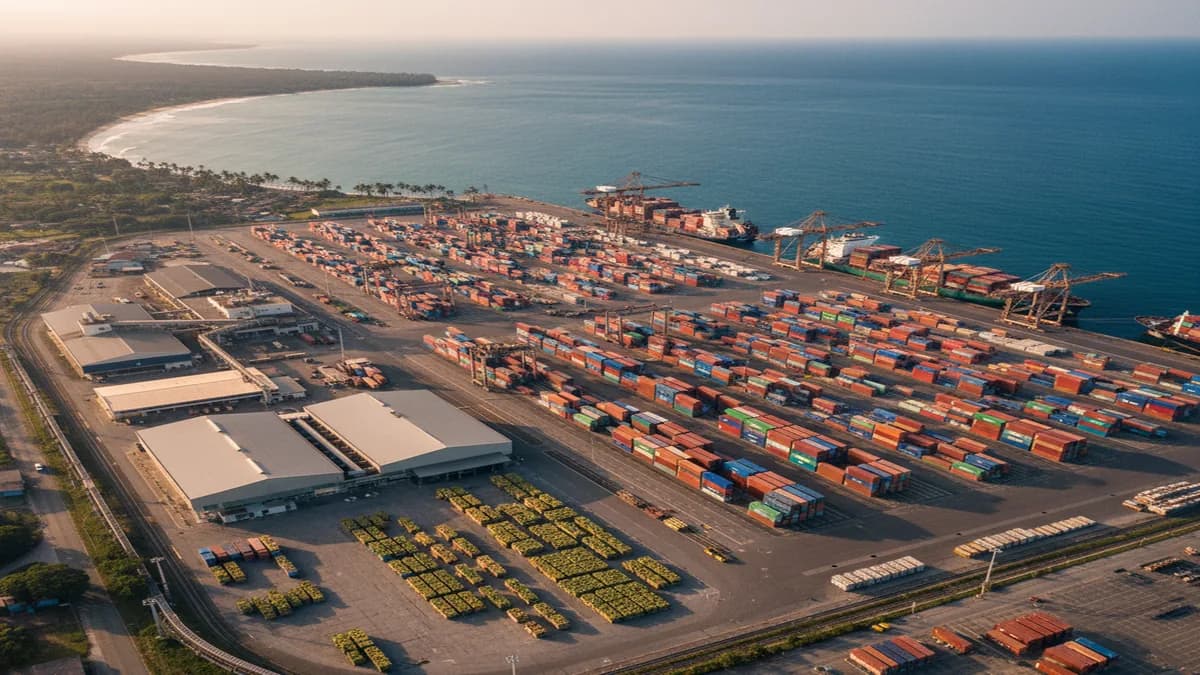
Port of Guayaquil: Ecuador's largest port handles approximately 70% of the country's non-oil exports. Nighttime curfew restrictions affect:
- Container truck movements between warehouses and port terminals
- Port worker shift changes during curfew hours
- Cold chain logistics for perishable exports (shrimp, bananas, flowers)
Nighttime commercial activity: Restaurants, entertainment venues, and retail establishments in Guayaquil and provincial capitals face mandatory closure by 11 PM, reducing revenue during peak evening hours.
Supply chain timing: Agricultural producers in Los Ríos and El Oro who rely on overnight trucking to reach Guayaquil port facilities face route delays and checkpoint inspections.
Cross-border trade: El Oro province borders Peru, and the Huaquillas border crossing — a key commercial corridor — operates under restricted hours during the curfew period.
| Sector | Disruption Level | Mechanism |
|---|---|---|
| Port logistics | Moderate | Nighttime truck restrictions, checkpoint delays |
| Perishable exports | Moderate | Cold chain timing disruption |
| Retail/hospitality | High | Mandatory early closure |
| Cross-border trade | Moderate | Border crossing hour restrictions |
| Manufacturing | Low | Most operations are daytime |
What to Watch
- Extension probability — previous curfews have been repeatedly extended; if violence metrics do not improve, extension past March 31 is likely
- Port throughput data — March container volume figures from the Port Authority of Guayaquil will quantify logistics impact
- Banana and shrimp export volumes — whether March shipment data shows delays or diversions to alternative logistics windows
- Insurance premiums — security-related surcharges on cargo insurance in affected provinces
- Business confidence surveys — the Cámara de Comercio de Guayaquil typically publishes quarterly sentiment data that will capture curfew impact
Sources: UPI
Support the EcuadorBrief archive.
Research support helps fund review, corrections, and hosting. New publishing is paused.