Ecuador's Cacao Exports Hit $1.2bn Record as Fine-Aroma Demand Surges

Ecuador's Cacao Exports Hit $1.2bn Record as Fine-Aroma Demand Surges
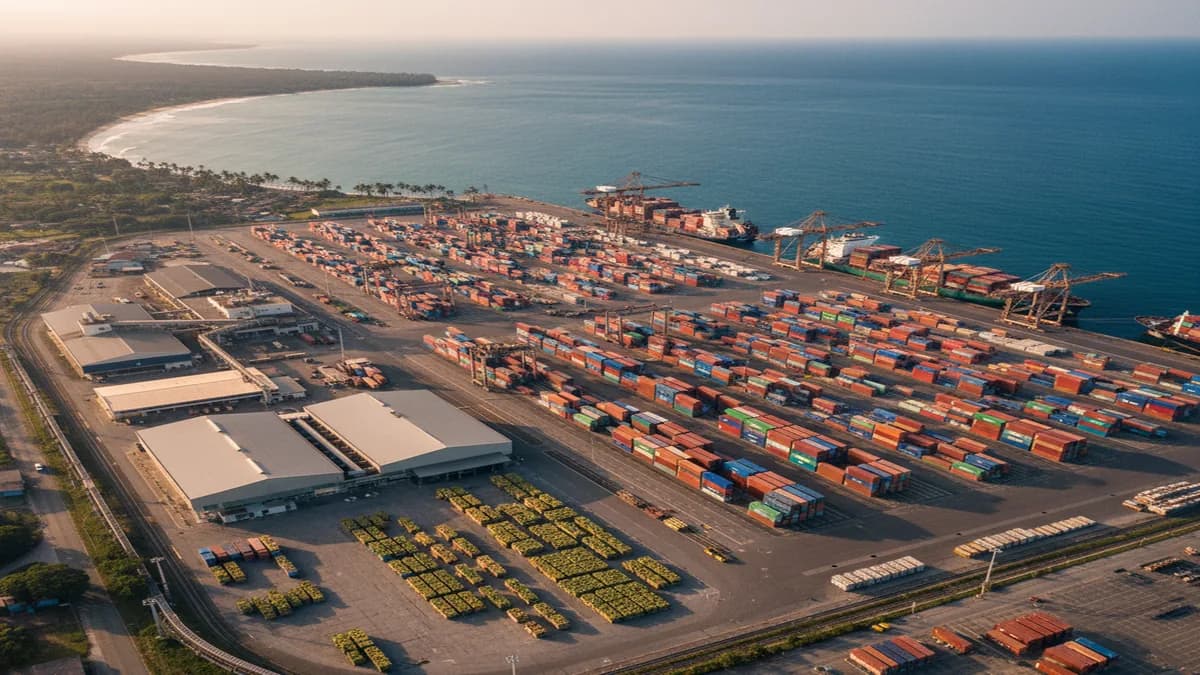
Ecuador's cacao exports reached a record $1.2 billion in 2025, up 23% year-on-year, according to data released by the Asociacion Nacional de Exportadores de Cacao (Anecacao) on Monday. The country shipped approximately 430,000 metric tonnes during the calendar year, consolidating its position as the world's third-largest cacao exporter.
The standout driver remains the Nacional fino de aroma variety, which accounted for roughly 62% of total export volume. International buyers -- particularly European craft chocolate manufacturers and premium confectioners in Switzerland, Belgium, and Germany -- are paying an average premium of 18% over ICE New York benchmark prices for certified fine-aroma beans.
"The global pivot toward single-origin and bean-to-bar chocolate has structurally shifted demand in Ecuador's favour," said Maria Fernanda Quiroz, executive director of Anecacao. "No other origin can match our volume of fine-aroma supply."
Key figures
- Total export value (2025): $1.2bn (vs $976mn in 2024)
- Volume: ~430,000 MT (+15% YoY)
- Top destinations: United States (22%), Indonesia (18%), Netherlands (14%), Germany (9%)
- Average FOB price: $2,790/MT for fine-aroma; $2,365/MT for CCN-51 bulk
The sector's expansion comes amid persistent global supply concerns following poor harvests in Cote d'Ivoire and Ghana, where black pod disease and ageing tree stock have weighed on output for three consecutive seasons. ICE cocoa futures have traded above $8,000 per tonne in recent weeks, near multi-decade highs.
Ecuador's Ministry of Agriculture has earmarked $45 million in 2026 budget funds for cacao productivity programmes, including replanting initiatives in Los Rios and Guayas provinces targeting yield improvements of 20% per hectare over five years.
Analysts at BloombergNEF estimate that Ecuador could capture an additional 3-4% of global market share by 2028, provided infrastructure investment in post-harvest processing facilities keeps pace with farm-level output growth.
Support the EcuadorBrief archive.
Research support helps fund review, corrections, and hosting. New publishing is paused.