Ecuador-Colombia Trade War Escalates: 30% Mutual Tariffs, 900% Pipeline Fee Hike to $30/Barrel, and Electricity Suspension Disrupt $2.3 Billion Bilateral Trade

30% Tariffs and 900% Pipeline Fee Hike
President Daniel Noboa announced on January 21, 2026 at the World Economic Forum in Davos a 30% "security tariff" on all Colombian imports, effective February 1, 2026. Noboa cited Colombia's alleged insufficient cooperation on drug trafficking and illegal mining along the 600-kilometer shared border.
Simultaneously, Ecuador imposed a 900% increase in transit fees for Colombian crude oil transported through the SOTE (Trans-Ecuadorian Oil Pipeline System) — from $3 to $30 per barrel. Ecuador announced plans for additional fees on Colombian crude transiting the OCP (Oleoducto de Crudos Pesados) pipeline.
Environment and Energy Minister Ines Manzano confirmed: "We made a change in the tariff value... Instead of three dollars, it is now 30 dollars per barrel."
Timeline of Escalation
| Date | Event |
|---|---|
| Late 2024 | Colombia provides ~450 MW (~90% of exportable power) to stabilize Ecuador's drought-stricken grid |
| Nov 2025 | US Homeland Security Secretary Kristi Noem visits Ecuador twice, praising security partnership |
| Jan 21, 2026 | Noboa announces 30% security tariff on all Colombian imports at WEF Davos |
| Jan 21, 2026 | Ecuador raises SOTE pipeline fee from $3 to $30 per barrel (900% increase) |
| Jan 22, 2026 | Colombia retaliates: 30% tariff on 23 Ecuadorian products; suspends all electricity exports |
| Feb 1, 2026 | Tariffs and electricity suspension take effect |
| Feb 2026 | Foreign ministers meet — no resolution reached |
Colombia's Retaliation
Colombia responded within 24 hours with a three-pronged retaliation:
1. Tariffs: A 30% duty on 23 Ecuadorian products, affecting approximately $250 million in Ecuadorian exports. Colombia's Trade Minister Diana Marcela Morales Rojas characterized the measures as "corrective action aimed at protecting the national productive apparatus" rather than a sanction.
2. Electricity suspension: Colombia's Ministry of Mines and Energy ordered an indefinite suspension of all international electricity sales to Ecuador. Energy Minister Edwin Palma condemned Ecuador's tariffs as "economic aggression undermining regional integration" — noting the irony that Colombia had rescued Ecuador's grid during the 2024 drought crisis.
3. Diplomatic protest: Colombia formally rejected Ecuador's tariffs as contrary to Andean Community (CAN) trade rules and sent a formal protest note to Quito.
Bilateral Trade at Stake
| Metric | Value |
|---|---|
| Ecuadorian exports to Colombia (Jan-Nov 2024) | $760 million |
| Colombian exports to Ecuador (Jan-Nov 2024) | $1.8 billion |
| Ecuador's trade deficit with Colombia | ~$852 million annually |
| Ecuadorian products entering Colombia | 1,130+ categories |
| Colombian crude through SOTE (Nov 2025) | ~10,300 barrels/day |
Key Colombian exports to Ecuador: Medicines, vehicles, cosmetics, plastics, electricity
Key Ecuadorian exports to Colombia: Vegetable oils and fats, canned tuna, minerals, metals
Border Commerce Collapse
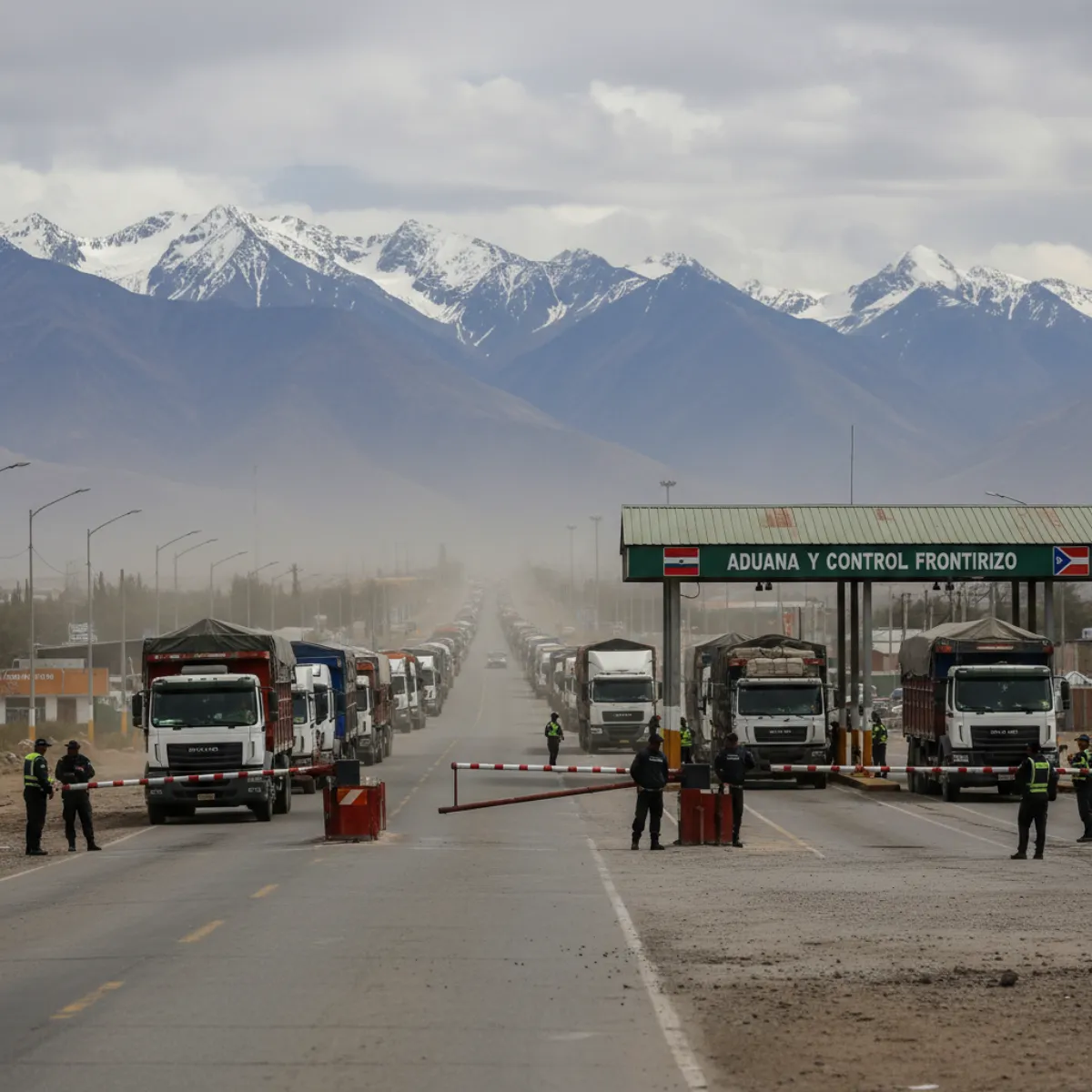
Border commerce has reportedly fallen by up to 99% since the tariffs took effect. Merchants and truckers on both sides of the border have organized protests. Oliva Diazgranados of the Colombian-Ecuadorian Chamber of Commerce warned of "immediate economic fallout and potential job losses" if the dispute is not resolved.
The Security Dimension
Noboa framed the tariffs as a security measure, not a trade policy. The underlying context:
| Security Metric | Value |
|---|---|
| Ecuador's 2024 homicide rate | 44.6 per 100,000 (South America's highest) |
| Ecuador homicides (2024) | 7,062 |
| Colombia coca cultivation | ~253,000 hectares (10 consecutive years of growth) |
| Colombian drug labs destroyed | 18,400+ |
Noboa — a 38-year-old right-wing president closely aligned with the Trump administration — has pursued an aggressive security posture, including declaring multiple states of emergency. The tariffs appear designed to pressure Colombian President Gustavo Petro — a left-wing leader pursuing a "Total Peace" dialogue approach that Noboa views as insufficient.
Petro responded: "I hope Ecuador appreciated that when it needed us, we responded with energy."
CAN Legal Framework
Both nations are members of the Andean Community (CAN), which operates a free trade zone prohibiting unilateral tariffs between members. Colombia's foreign ministry has formally argued that Ecuador's tariffs violate CAN rules. Any CAN arbitration process could take months, leaving the tariffs in effect during the dispute.
What to Watch
Track CAN arbitration proceedings — a formal ruling could force Ecuador to rescind tariffs or face institutional consequences. Monitor electricity supply adequacy — Colombia's 450 MW suspension arrives as Ecuador approaches the dry season, potentially triggering a repeat of 2024 blackout conditions. Watch for US mediation signals — Washington's close relationship with Noboa and strategic interest in regional stability could prompt diplomatic intervention. Track pipeline revenue impact — the $30/barrel fee may cause Ecopetrol and private operators to reroute Colombian crude exports, reducing SOTE utilization. Monitor Petro-Noboa bilateral meeting prospects — direct presidential engagement remains the most likely path to resolution.
Sources: Al Jazeera, AP, The City Paper Bogota, Washington Post
Source
Al Jazeera / AP / The City Paper Bogota — "Ecuador announces 30 percent tariff on Colombia over drug trafficking"
View originalSupport daily Ecuador business intelligence.
Research support funds source monitoring, data checks, editing, publishing, and sector coverage for professionals tracking Ecuador.
