Ecuador-Colombia Trade War Escalates: Cross-Border Transit Drops 99%, Pipeline Tariff Surges 900%, and Electricity Exports Suspended

Trade War Reaches Crisis Levels
The commercial relationship between Ecuador and Colombia has deteriorated into the most severe bilateral trade crisis in the modern history of both nations. What began as a 30% "security tariff" imposed by Quito on Colombian imports has cascaded into a multi-front economic confrontation affecting trade, energy, and petroleum transport.
Timeline of escalation
| Date | Action | Actor |
|---|---|---|
| Jan 21, 2026 | Ecuador announces 30% tariff on Colombian imports, citing security costs of cross-border drug trafficking | Ecuador (Noboa) |
| Feb 1, 2026 | 30% security tariff takes effect on all Colombian goods | Ecuador |
| Feb 3, 2026 | Colombia retaliates with 30% tariffs on 23 Ecuadorian products | Colombia (Petro) |
| Feb 5, 2026 | Colombia suspends electricity exports to Ecuador | Colombia |
| Feb 7, 2026 | Ecuador raises OCP pipeline tariff from $3 to $30/barrel for Colombian crude | Ecuador |
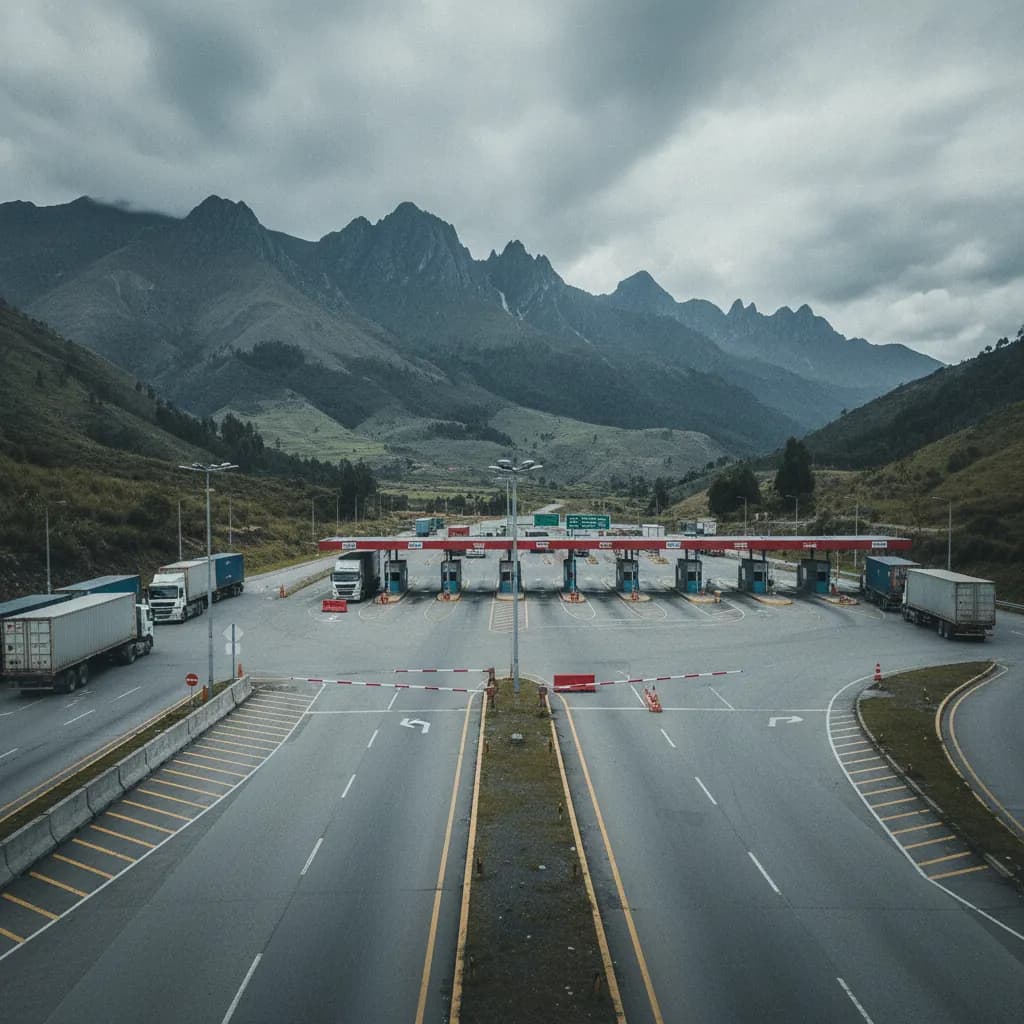
| Feb 10, 2026 | Cross-border transit at Rumichaca drops 99% | Both |
Trade impact: $2.3 billion at risk
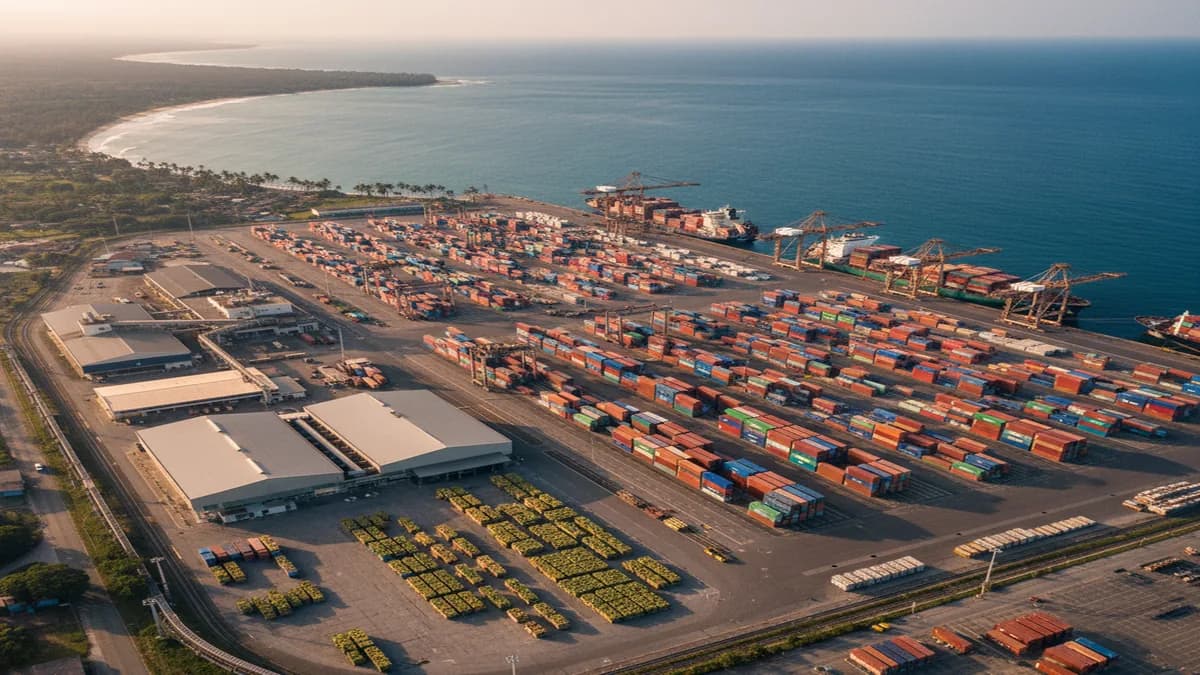
Bilateral trade between Ecuador and Colombia totaled approximately $2.3 billion annually before the crisis, making Colombia one of Ecuador's top five trading partners.
| Metric | Pre-crisis | Current |
|---|---|---|
| Annual bilateral trade | ~$2.3B | Effectively frozen |
| Ecuador exports to Colombia | ~$950M/year | 23 products now face 30% tariff |
| Colombia exports to Ecuador | ~$1.35B/year | All face 30% security tariff |
| Rumichaca daily truck crossings | ~800-1,000 | <10 |
Colombian retaliation: 23 products targeted
Colombia's Ministry of Commerce selected 23 Ecuadorian products for retaliatory 30% tariffs, strategically targeting sectors with maximum political impact:
- Canned tuna and fish — Ecuador's largest processed food export to Colombia
- Palm oil and derivatives — directly competing with Colombian production
- Processed foods and beverages — consumer-facing products
- Textiles and apparel — labor-intensive manufacturing sector
- Plastics and petrochemicals — industrial inputs
Energy weapon: electricity suspension
Colombia's decision to suspend electricity exports to Ecuador adds a dangerous dimension to the dispute. Ecuador had been importing approximately 200-300 MW of Colombian electricity, particularly during dry seasons when hydroelectric output declines. The suspension comes as Ecuador continues to recover from the 2024 power crisis that forced nationwide rationing.
Ecuador's Ministry of Energy stated that the country can compensate through thermal generation and increased output from the Coca Codo Sinclair hydroelectric complex, but at higher cost — thermal generation costs $0.12-0.18/kWh versus $0.03-0.05/kWh for imported Colombian power.
| Energy metric | Value |
|---|---|
| Colombian electricity imports (pre-suspension) | 200-300 MW |
| Cost of replacement thermal generation | $0.12-0.18/kWh |
| Cost of Colombian imports | $0.03-0.05/kWh |
| Additional annual cost to Ecuador | Est. $150-250M |
Pipeline counter-escalation: 900% tariff increase
Ecuador's most aggressive countermeasure has been raising the transit tariff on the OCP (Oleoducto de Crudos Pesados) pipeline for Colombian crude oil from $3 to $30 per barrel — a 900% increase. The OCP pipeline transports Colombian heavy crude from Putumayo department through Ecuadorian territory to the Pacific coast for export.
Colombia ships approximately 40,000-60,000 barrels per day through the pipeline. At the new rate, the tariff cost alone would consume approximately $1.2-1.8 million per day, making transport economically unviable for most grades of Colombian crude.
Industry impact
Most affected sectors in Ecuador:
- Manufacturing — dependent on Colombian industrial inputs (chemicals, plastics, paper)
- Agriculture — fertilizers and agricultural chemicals from Colombia
- Transport and logistics — border-region trucking companies facing zero revenue
- Retail — Colombian consumer goods (snacks, beverages, household products) disappearing from shelves
- Energy — higher electricity costs from thermal replacement generation
Most affected sectors in Colombia:
- Petroleum — pipeline tariff makes Pacific exports uneconomic
- Food processing — loss of Ecuadorian canned fish and seafood imports
- Agriculture — Ecuadorian produce inputs disrupted
Mediation prospects
The Andean Community (CAN) — of which both countries are members — has called for dialogue but has no enforcement mechanism. The OAS has offered to mediate. However, the dispute is entangled with the broader security confrontation: Noboa's declaration of Colombian armed groups as "military targets" and the deployment of troops to the border have elevated tensions beyond commercial grievances.
What to watch
Track whether CAN or OAS mediation produces a framework for de-escalation — the first 30 days of tariff implementation are the critical window. Monitor Ecuador's electricity grid stability as Colombian imports are replaced by costlier thermal generation. Watch for supply chain substitution patterns — companies sourcing from Colombia will seek alternatives from Peru, Brazil, or Asia. Track the OCP pipeline throughput data for signs that the $30/barrel tariff is effectively blocking Colombian crude exports.
Sources: Al Jazeera, Washington Post, The City Paper Bogotá, ABC News, El Comercio
Source
Al Jazeera / Washington Post / The City Paper Bogotá — “Ecuador announces 30% tariff on Colombia over drug trafficking”
View originalSupport the EcuadorBrief archive.
Research support helps fund review, corrections, and hosting. New publishing is paused.