Ecuador-Colombia Trade War Paralyses Rumichaca Border as Reciprocal 30% Tariffs Devastate $3B+ Annual Commerce

Ecuador-Colombia Trade War Paralyses Rumichaca Border as Reciprocal 30% Tariffs Devastate $3B+ Annual Commerce
The Rumichaca International Bridge -- the principal land crossing between Ecuador and Colombia and historically one of Latin America's busiest commercial border points -- has been reduced to near-silence after reciprocal 30% tariffs imposed by both nations took effect on February 1, triggering what trade officials on both sides describe as the most severe disruption in bilateral commerce in at least two decades.
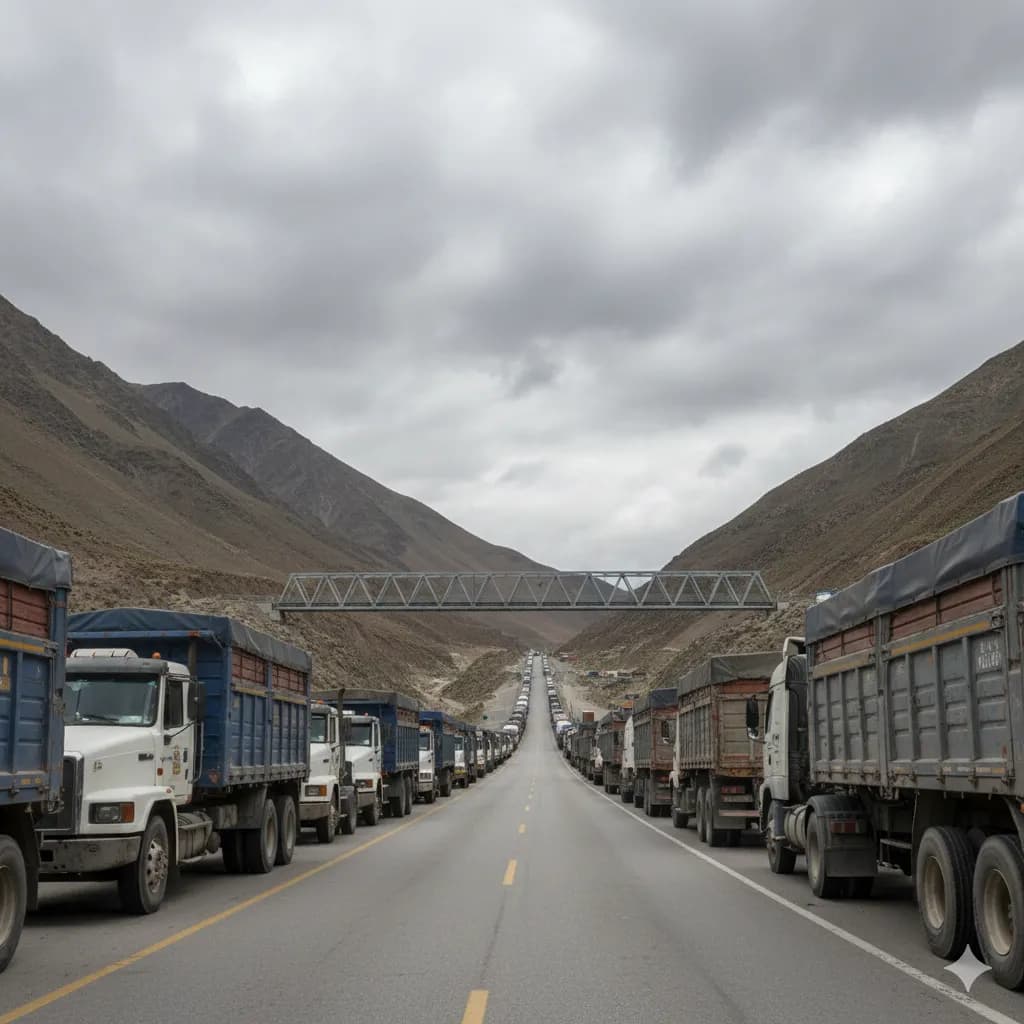
Cross-border commercial traffic at Rumichaca has collapsed by an estimated 99% since the tariffs took effect, according to data from Ecuador's customs authority Senae and its Colombian counterpart DIAN. Where hundreds of heavy goods vehicles crossed daily in January, the bridge now sees barely a handful.
The 'March for Border Dignity'
On February 4, more than 1,000 truckers, freight operators, and border town merchants staged the "Marcha por la Dignidad Fronteriza" (March for Border Dignity) along the approach road to the Rumichaca bridge on the Colombian side. The protest drew participants from across Colombia's Narino department and Ecuador's Carchi province.
Protest organisers said the march represented workers who "have been made collateral damage in a political dispute they did not create." Many truckers reported being stranded with loaded vehicles they can no longer profitably move across the border.
Economic devastation
The scale of the bilateral trade relationship underscores the severity of the disruption:
- Annual bilateral trade: Over $3 billion (2025), making Colombia Ecuador's second-largest trading partner after the United States
- Ecuador's exports to Colombia: Approximately $1.2 billion, dominated by canned fish, palm oil, vehicles, and textiles
- Colombia's exports to Ecuador: Approximately $1.8 billion, led by plastics, chemicals, pharmaceuticals, and manufactured goods
- Ipiales economy: An estimated 38% of the economy of Ipiales -- the Colombian city adjacent to Rumichaca -- depends directly on cross-border trade with Ecuador
The Ecuador Ministry of Production has estimated that 15,000 jobs on the Ecuadorian side of the border are at immediate risk, with the Carchi provincial government declaring an economic emergency.
Timeline of escalation
The trade war erupted with startling speed:
- January 22: Colombia announced 30% tariffs on select Ecuadorian agricultural and industrial imports, citing "unfair trade practices" and unresolved phytosanitary disputes
- January 25: Ecuador's President Noboa ordered reciprocal 30% tariffs on Colombian goods, effective February 1
- January 28: Ecuador raised SOTE pipeline tariffs on Colombian crude by 900% (see related article)
- February 1: Both tariff regimes take effect simultaneously; Colombia suspends electricity exports
- February 4: "March for Border Dignity" protest at Rumichaca
Diplomatic track
A high-level meeting between senior officials from both governments is scheduled for February 6 in Quito, though expectations are tempered. Ecuador's Foreign Ministry confirmed that Vice-Minister of Trade Carolina Sanchez will lead the Ecuadorian delegation, while Colombia is sending Deputy Trade Minister Alejandro Reyes.
The agenda is expected to cover tariff de-escalation, the electricity suspension, pipeline tariff disputes, and border security cooperation. However, diplomatic sources told Ecuador Brief that both sides are "far apart" on preconditions for tariff rollback.
Regional implications
The dispute has drawn concern from the Andean Community (CAN), of which both nations are members. CAN Secretary General Jorge Hernando Pedraza issued a statement urging both parties to "return to the framework of Andean integration" and offered to mediate.
The Inter-American Development Bank warned in a January 30 note that prolonged bilateral trade disruption could shave 0.3-0.5 percentage points off GDP growth for both nations in 2026.
Source
Washington Post — “Ecuador-Colombia trade war sparks protests as border commerce collapses”
View originalSupport the EcuadorBrief archive.
Research support helps fund review, corrections, and hosting. New publishing is paused.