Ecuador Halts All Mining in Napo Province, Restricts Operations in El Oro and Loja Over Toxic Contamination

Ecuador Halts All Mining in Napo Province, Restricts Operations in El Oro and Loja Over Toxic Contamination
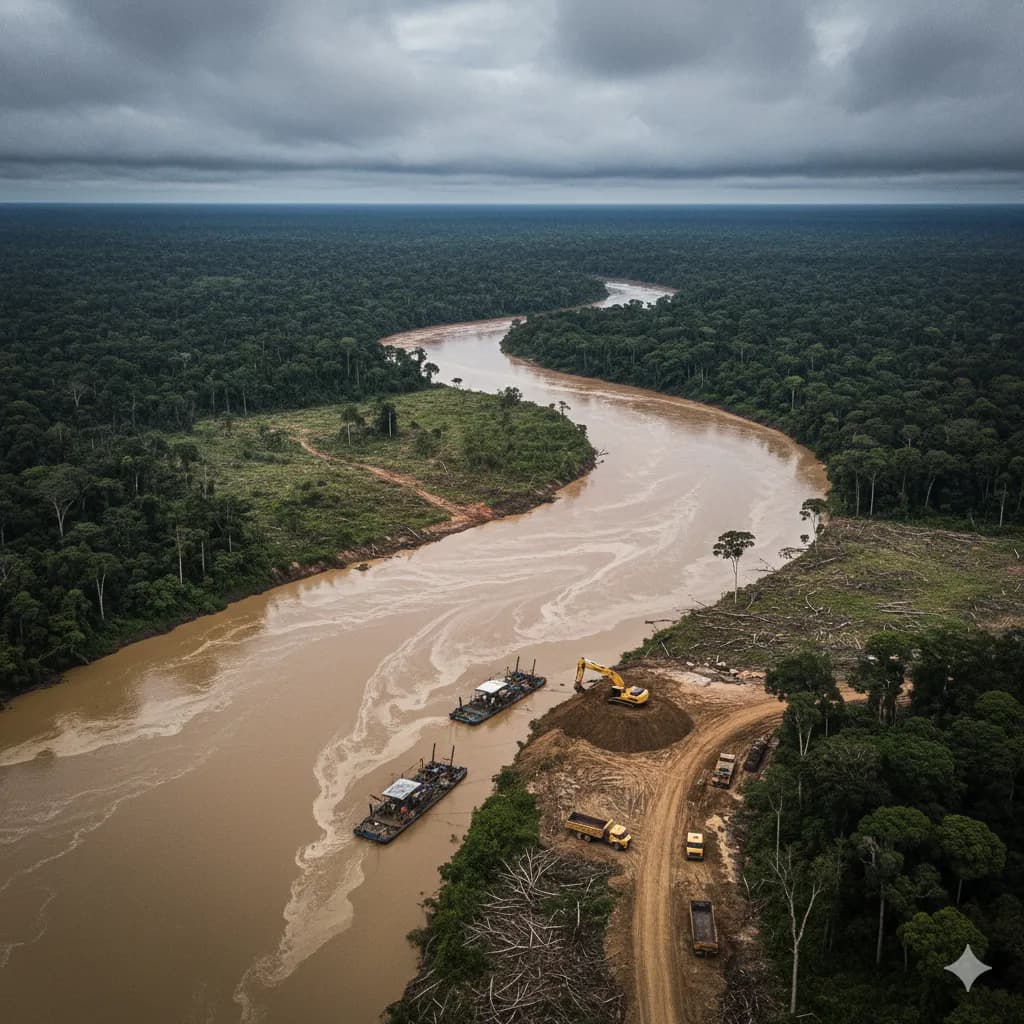
Ecuador's Ministry of Environment issued a sweeping resolution on February 2 ordering the immediate suspension of all mining activity in Napo province and restricting mineral processing operations in El Oro and Loja provinces, citing severe water contamination that poses "imminent risk to human health and aquatic ecosystems."
The resolution, signed by Minister Ines Manzano, follows an emergency environmental audit that found concentrations of heavy metals and industrial chemicals far exceeding national and WHO safe limits across three major river basins.
Contamination findings
The audit, conducted by the Ministry's Subsecretaria de Calidad Ambiental in partnership with Ecuador's national water authority SENAGUA, documented the following exceedances:
| Contaminant | River System | Level Found | Safe Limit | Exceedance |
|---|---|---|---|---|
| Copper | Calera (El Oro) | 4.8 mg/L | 0.5 mg/L | 9.6x |
| Lead | Amarillo (Loja) | 0.32 mg/L | 0.01 mg/L | 32x |
| Arsenic | Napo River | 0.18 mg/L | 0.01 mg/L | 18x |
| Cadmium | Calera (El Oro) | 0.09 mg/L | 0.003 mg/L | 30x |
| Cyanide | Amarillo (Loja) | 0.42 mg/L | 0.07 mg/L | 6x |
"The level of environmental degradation we have found is staggering," Minister Manzano said in a televised press conference. "Restoring these river systems to safe conditions will take many years of sustained remediation effort."
Scope of the suspension
The resolution distinguishes between three levels of restriction:
- Napo province: Complete halt of all mining extraction, processing, and transport activities until further notice
- El Oro province: Suspension of all mineral processing and beneficiation; extraction permitted only for operations with current, validated environmental management plans
- Loja province: Suspension of artisanal and small-scale mining processing; industrial-scale operations subject to immediate reinspection
The Ministry has ordered administrative proceedings to be initiated against non-compliant operators within 10 business days, with potential penalties including permanent licence revocation and criminal referrals.
Economic impact
The affected provinces account for a significant share of Ecuador's non-petroleum mining output. El Oro is the country's historical centre of gold mining, hosting an estimated 3,000 artisanal and small-scale mining operations that employ approximately 40,000 workers. Napo province has seen a surge in alluvial gold mining in recent years, much of it poorly regulated.
The mining sector contributed approximately $2.4 billion to Ecuador's economy in 2025, though the government acknowledges that illegal and informal operations -- particularly prevalent in the three affected provinces -- often operate outside regulatory oversight.
Industry group the Camara de Mineria del Ecuador called the suspensions "necessary but urged the government to provide a clear pathway for compliant operators to resume activities."
The resolution comes as President Noboa simultaneously pursues an ambitious $10 billion mining investment pipeline through a separate mining reform bill currently before the National Assembly -- a juxtaposition that environmental groups have characterised as contradictory.
Source
Energy News / OE Digital — “Ecuador stops mining in three provinces due to environmental damage”
View originalSupport the EcuadorBrief archive.
Research support helps fund review, corrections, and hosting. New publishing is paused.