Articles may be AI-generated and can contain errors. Check linked sources and verify changing details with official records. Report an issue through the Web3Forms contact page.
Rice Producers Warn El Niño Could Affect Up to 80,000 Hectares
Agriculture

Rice Producers Warn El Niño Could Affect Up to 80,000 Hectares

Chip MorenoChip Moreno||Source: El Universo

Ecuador's rice and cacao sectors are reassessing climate exposure as a possible El Niño event raises flood, disease and post-harvest risk for agricultural production.

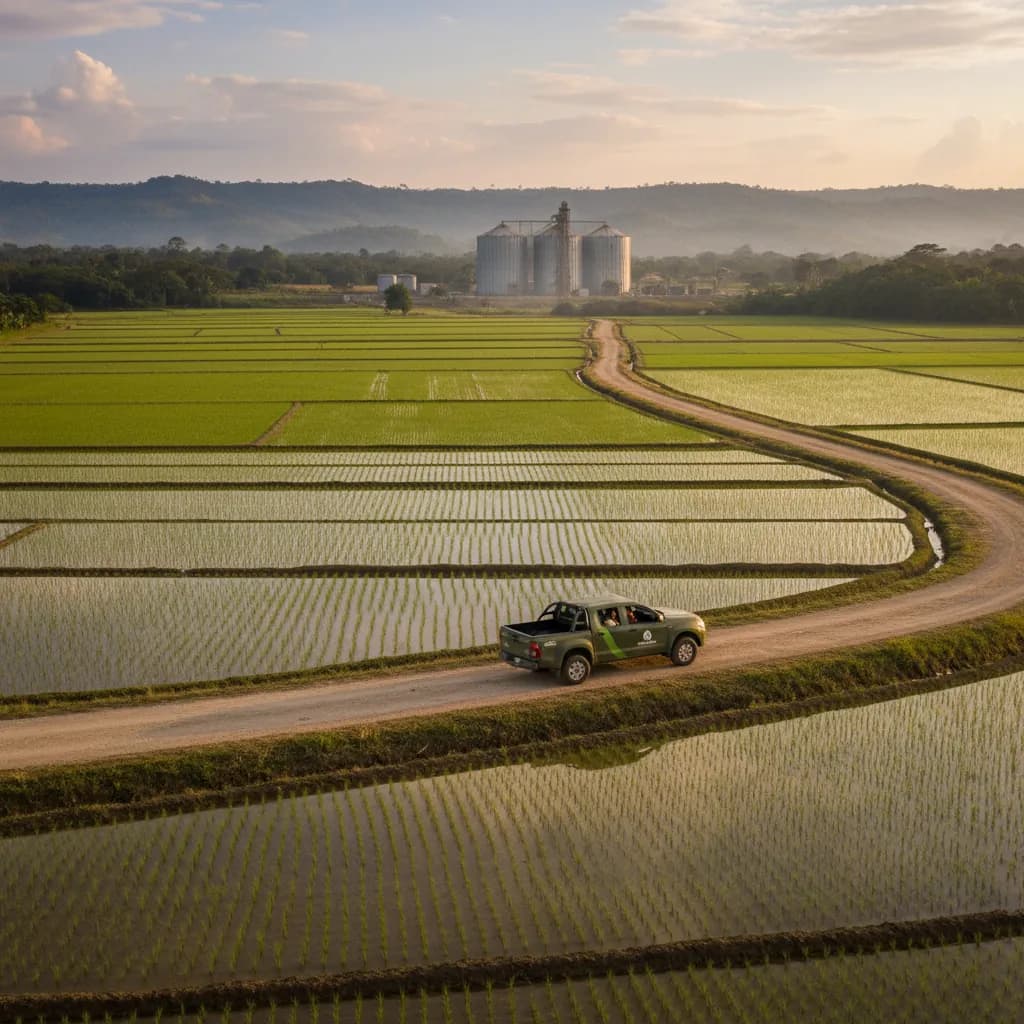
Rice producers identify Salitre, Samborondón and Vinces among the areas vulnerable to recurring winter flooding. Under a regular winter, affected rice areas are estimated at 40,000-50,000 hectares, equivalent to about one quarter of annual national production.

Under a stronger El Niño scenario, the exposed rice area could rise to 70,000-80,000 hectares, depending on the intensity of the event.

Rice and Industrial Exposure

Ecuador produces about 780,000 tons of rice annually. Producer representatives say small and medium growers in flood-prone zones face the greatest exposure, while industrial processors in lower areas of Guayas, particularly around Daule and Yaguachi, are also at risk.

Industrial measures include raising warehouse terrain and checking storage conditions to reduce leakage or product damage.

Cacao Risk

The cacao sector is also cautious. Anecacao cited Ciifen reports assigning a 20-30% probability that El Niño reaches a strong magnitude.

The most severe rainfall effects are expected toward the end of the year if the phenomenon strengthens. Cacao representatives warn that production could operate under reduced-volume conditions, while field work, harvesting, disease pressure and post-harvest handling could be affected.

What to watch

The key indicators are rainfall forecasts, flood mapping in Salitre, Samborondón, Vinces, Daule and Yaguachi, and whether public and private mitigation measures protect storage, harvest logistics and post-harvest handling.

For commodity buyers and exporters, the short-term risk is volume uncertainty. For processors and local distributors, the risk is disruption in field access, storage quality and supply timing.

Source

El Universo — “Productores alertas a posibles efectos del fenómeno del Niño”

View original

Report an article problem

Tell us what seems incorrect or outdated. Email is optional.

El Ninoricecacaoagricultureclimate risk
Companies: Corpcom, Corpnoarroz, Anecacao, Aprocafa
Regions: Guayas, Salitre, Samborondón, Vinces, Daule, Yaguachi
Share

For business readers

Need a focused answer to an Ecuador business question?

Request a separately scoped 30-minute research consult with a written summary. A request does not update or verify this archived article. This is business research context, not legal, tax, or investment advice.

Request a research consult
Research Support

Support the EcuadorBrief archive.

Research support helps fund source monitoring, corrections, and hosting.
Newsletter signups are unavailable

Browse the article archive or join Chip's personal newsletter for updates.

Join Chip's personal newsletter

Related Coverage

Agriculture

El Niño Poses Risk to 161,357 Hectares of Guayas Crops, Agricultural Insurance Uptake Remains Low

The El Niño phenomenon places 161,357 hectares of transient crops in Guayas province at risk, with rice accounting for 129,449 hectares. Despite this, agricultural insurance premiums issued decreased significantly from 2025 to 2026, and less than 1% of Ecuadorian agricultural production is insured.

primicias.ec|
Agriculture

Ecuador's Non-Traditional Industrialized Exports Surge to $3.03 Billion in First Seven Months of 2026

Ecuador's non-traditional industrialized exports reached $3.03 billion between January and July 2026, marking significant growth.

eluniverso.com|
Agriculture

Guayas Rice Growers Pull Planting Forward as Rain Risk Reprices the Crop Calendar

Rice producers in Guayas are changing planting calendars ahead of a possible increase in El Niño-linked rainfall. The move shifts the operating question from output alone to whether harvest timing can stay ahead of flooding exposure.

El Universo|
Policy & Regulation

Ecuador Logistics Sector Proposes Tax-for-Works Infrastructure Bill to Counter El Niño Risks

The Asociación Logística del Ecuador presented a tax-for-works draft bill in Quito to address high vulnerability along 3,100 kilometers of state roads exposed to El Niño weather risks.

primicias.ec|
Mining

Rainfall Delays Silvercorp's Curipamba-El Domo Production Target to November 2027

Rainfall linked to the El Niño phenomenon has delayed construction at Silvercorp's Curipamba-El Domo medium-scale mining project in Bolívar province, shifting the target production start from July 2027 to November 2027.

eluniverso.com|
Opens WhatsApp with a pre-filled message