FBI Permanent Office in Ecuador: Security Cooperation and Business Environment Signal

The Announcement
In mid-March 2026, the Federal Bureau of Investigation (FBI) opened a permanent field office at the U.S. Embassy in Quito — the first full-time FBI presence in Ecuador. The office operates under the bureau's International Operations Division and will be staffed by special agents and intelligence analysts with regional expertise.
The establishment follows a bilateral security agreement signed during President Daniel Noboa's visit to Washington in late 2025 and complements the broader U.S. security engagement framework that includes Operation Southern Spear, a joint military operation launched in March 2026.
Scope of Operations
The FBI's Quito office will focus on four primary investigative areas:
| Priority Area | Context |
|---|---|
| Drug trafficking | Ecuador is now the primary transit point for an estimated 70% of global cocaine shipments, surpassing Colombia as the leading departure country for maritime drug routes |
| Money laundering | Dollarization makes Ecuador's financial system attractive for laundering proceeds; estimated $2-4B annually in illicit flows |
| Weapons smuggling | Firearms trafficking from the U.S. and Colombia into Ecuador has fueled gang violence in Guayaquil and Esmeraldas |
| Terrorism financing | Transnational criminal organizations increasingly linked to financing structures requiring counter-terrorism tools |
The office will work alongside the existing Drug Enforcement Administration (DEA) presence and coordinate with U.S. Southern Command (SOUTHCOM), which has expanded its engagement in Ecuador since 2024.
U.S. Security Architecture in Ecuador
The FBI office is the latest component of an expanding U.S. security footprint:
| Entity | Role | Status |
|---|---|---|
| FBI Field Office | Criminal investigations, intelligence | Opened March 2026 |
| DEA Ecuador | Counter-narcotics operations | Active since 2000s |
| SOUTHCOM advisors | Military training, equipment | Expanded 2024-2026 |
| Operation Southern Spear | Joint naval/ground operations | Launched March 3, 2026 |
| USAID security programs | Institutional capacity building | Ongoing |
Business Environment Implications
For investors and multinational corporations evaluating Ecuador exposure, the FBI office carries several implications:
Positive signals:
- Enhanced due diligence environment — FBI joint investigations improve the quality of anti-money laundering (AML) enforcement, reducing counterparty risk for foreign investors
- Compliance infrastructure — companies operating in mining, energy, and financial services benefit from a more transparent regulatory enforcement environment
- Insurance and risk premiums — improved security cooperation could, over time, reduce political risk insurance costs for large-scale projects
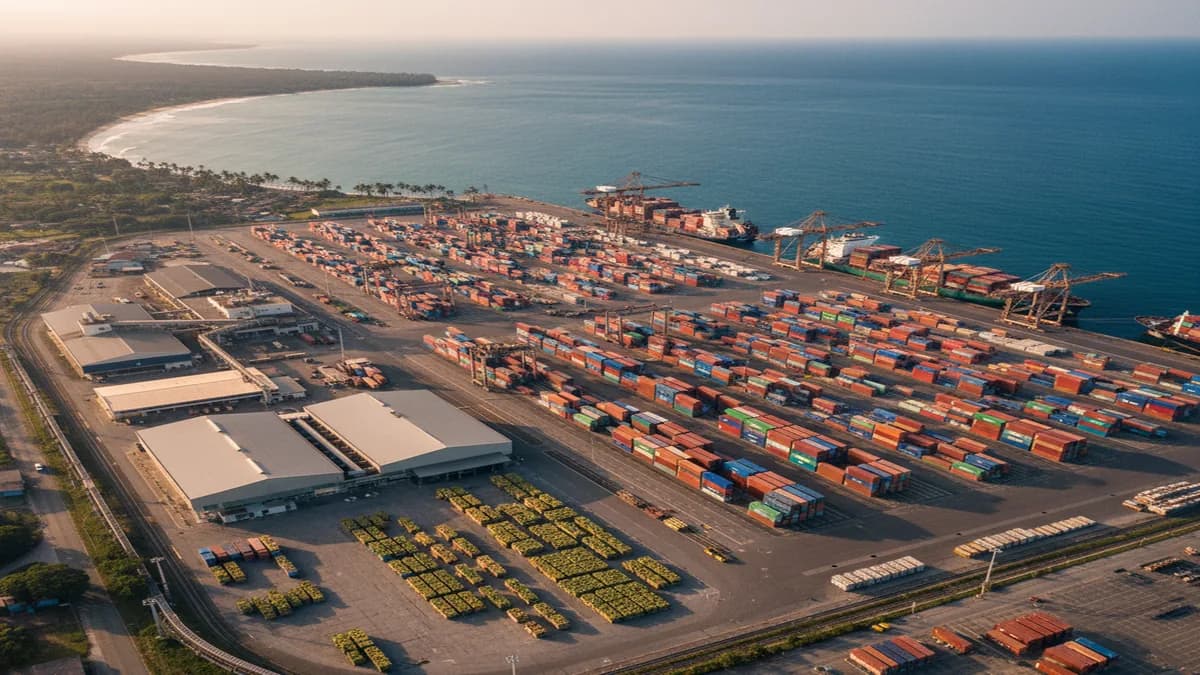
- Port security — FBI involvement in maritime drug interdiction at Posorja and Guayaquil ports may reduce container inspection delays and improve logistics reliability
Considerations:
- Sovereignty concerns — domestic opposition to foreign law enforcement presence may generate political friction, particularly from leftist and indigenous movements
- Operational disruptions — intensified enforcement operations could temporarily increase security incidents in port cities and border areas
- Reputational framing — the narrative of Ecuador as a major cocaine transit hub, while factually accurate, could complicate investment promotion efforts
Regional Comparison
The FBI maintains permanent offices throughout Latin America, but the Ecuador deployment reflects an escalation in priority:
| Country | FBI Presence | Context |
|---|---|---|
| Mexico | Multiple offices | Largest LatAm operation |
| Colombia | Bogota office | Longstanding counter-narcotics |
| Brazil | Brasilia, Sao Paulo | Financial crimes, cybercrime |
| Ecuador | Quito (new) | Drug transit, AML |
| Panama | Panama City | Canal security, financial hub |
What to Watch
- First joint operation results — early arrests or seizures will indicate the office's operational tempo and Ecuadorian cooperation level
- Impact on port processing times — whether enhanced security screening at Guayaquil and Posorja creates logistics delays or improves throughput
- Political reaction — domestic response from CONAIE, Revolución Ciudadana, and civil liberties organizations
- Money laundering prosecutions — FBI involvement in AML cases would directly affect the banking and real estate sectors
- Coordination with Operation Southern Spear — whether the FBI office integrates intelligence from military operations into civilian prosecutions
Sources: FBI, UPI, US News & World Report
Support the EcuadorBrief archive.
Research support helps fund review, corrections, and hosting. New publishing is paused.