Two Free Trade Zones Now Operational in Guayas Province: ZOFRAPORT and Pascuales Offer 0% Income Tax for Five Years Under Economic Efficiency Law

Two Zones Operational in Guayas
Ecuador's free trade zone program has reached operational status in Guayas province with two zones now accepting companies under the preferential tax regime established by the 2023 Economic Efficiency Law (Ley de Eficiencia Económica).
| Zone | Location | Investment Commitment | Status |
|---|---|---|---|
| ZOFRAPORT | Posorja | $563,000 (transition) | Operational |
| Paseo Tablado | Pascuales | $9.97 million | Operational |
Tax Incentive Structure
The free zone regime offers one of Latin America's most competitive tax packages:
| Benefit | Detail | |---|---|---| | Income tax (Years 1-5) | 0% | | Income tax (Year 6+) | Fixed 15% | | ISD (capital exit tax) | Exempt on zone-related transfers | | VAT on inputs | 0% for goods and services consumed within the zone | | Import duties | Exempt on raw materials, machinery, equipment | | Profit repatriation | No withholding tax |
The 0% income tax for five years followed by a fixed 15% rate compares favorably to Ecuador's standard corporate rate of 25% (or 28% for companies with shareholders in tax havens). The regime is designed to attract export-oriented manufacturing, logistics, and technology operations.
ZOFRAPORT: Port-Adjacent Industrial Zone
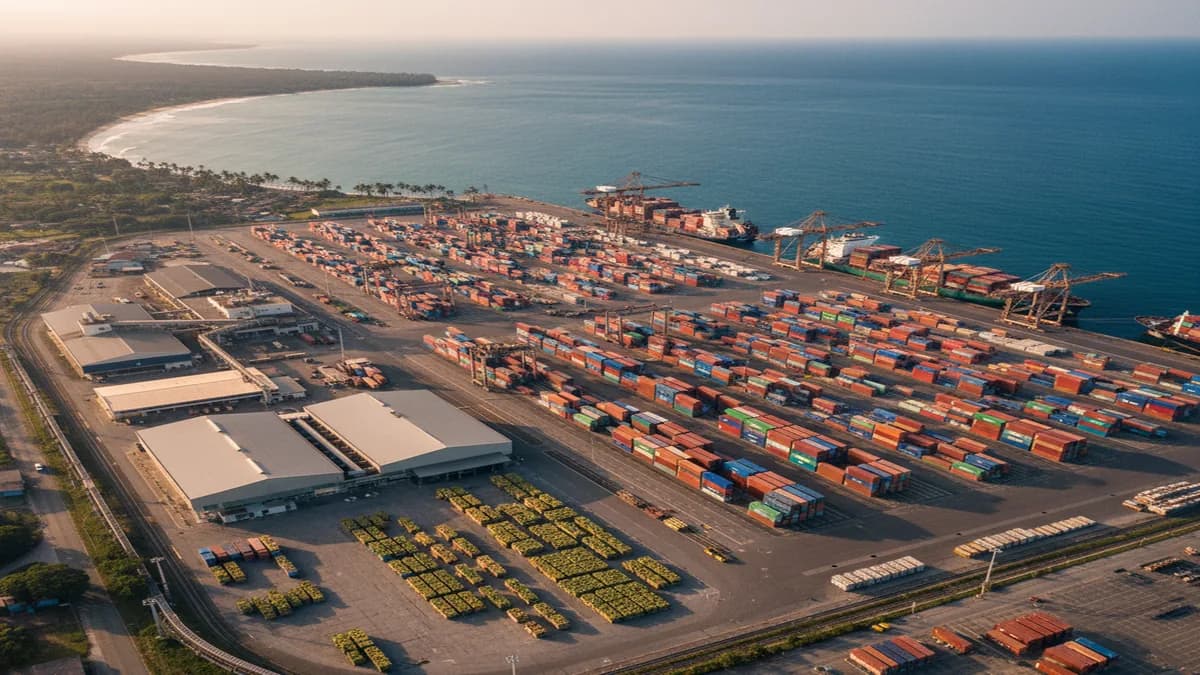
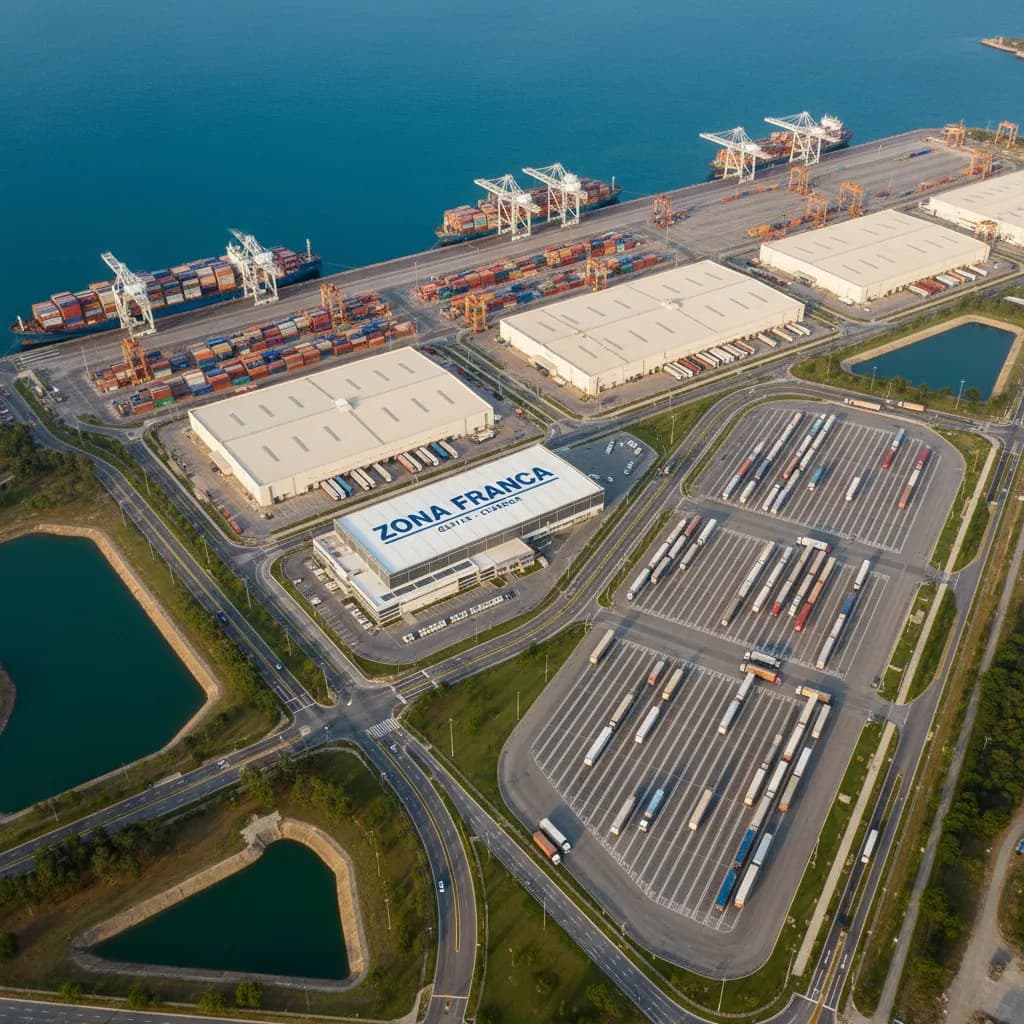
ZOFRAPORT is strategically located adjacent to DP World's Posorja deep-water port — Latin America's most efficient container terminal and Ecuador's only facility capable of handling Neo-Panamax vessels.
| ZOFRAPORT Feature | Detail | |---|---|---| | Location | Posorja, adjacent to DP World terminal | | Port capacity | 1.4 million TEUs (post-expansion) | | Transition investment | $563,000 | | Target sectors | Export logistics, cold chain, seafood processing | | Key advantage | Direct port access eliminates inland transport costs |
The zone's proximity to the port creates a vertically integrated export corridor — companies can manufacture or process goods within the zone and load directly onto container vessels without crossing public infrastructure, reducing logistics costs and transit times.
Paseo Tablado: Industrial Nearshoring Hub
Paseo Tablado in Pascuales (northern Guayaquil) targets industrial manufacturing and nearshoring operations with a larger investment footprint:
| Paseo Tablado Feature | Detail | |---|---|---| | Location | Pascuales, northern Guayaquil | | Investment pledge | $9.97 million | | Target sectors | Manufacturing, assembly, technology | | Key advantage | Access to Guayaquil's labor market (3.6 million metro area) |
National Employment Projections
The government projects the free zone program will generate:
| Metric | Value | |---|---|---| | Direct jobs | 180,000 | | Indirect jobs | 500,000 | | Total employment impact | 680,000 |
For context, Ecuador's total formal employment is approximately 3.4 million, meaning the free zone program targets creating employment equivalent to 20% of the current formal workforce.
Broader Free Zone Pipeline
Beyond the two operational zones, Ecuador is developing additional free zone capacity:
- ESPOL technology zone — University-linked innovation hub in Guayaquil
- Contecon port zone — Adjacent to Guayaquil's Contecon terminal
- Technological free trade zones — Part of the government's AI strategy, targeting R&D investment in emerging technologies
The Telecom Minister announced plans for technological free trade zones at the World Governments Summit 2026 in Dubai, positioning them as part of Ecuador's First AI Strategy with 21 action axes.
Competitive Positioning
| Country | Free Zone Income Tax | Duration |
|---|---|---|
| Ecuador | 0% then 15% | 5 years at 0%, permanent 15% |
| Panama (Colon) | 0% | 20 years |
| Costa Rica | 0% then 15% | 8 years at 0%, then 50% reduction |
| Colombia | 20% (flat) | Permanent |
| Dominican Republic | 0% | 15 years |
Ecuador's regime is competitive but shorter in its full exemption period than Panama or the Dominican Republic. The offsetting advantages are dollarization (no currency risk), port proximity (Posorja), and preferential trade access to the US (via the new ART), EU (FTA), and China (FTA).
What to Watch
Track company announcements in the two operational zones — the first major tenants will signal whether the incentive structure is sufficient to attract meaningful investment. Monitor ESPOL and Contecon zone development timelines — additional zones would expand the program's geographic and sectoral reach. Watch for technological free trade zone regulations — the AI strategy's free zone component could attract international tech companies. Track the interaction between free zones and the US-Ecuador ART — companies producing in Ecuador's free zones for export to the US under zero tariffs represent a compelling nearshoring proposition.
Sources: LatamFDI, MasContainer, Primicias
Support the EcuadorBrief archive.
Research support helps fund review, corrections, and hosting. New publishing is paused.