Mi Casa Propia Stalls: Over 60% of Loan Applications Fail to Qualify Despite $100 Million Government Allocation

Mi Casa Propia: 60%+ Applications Unqualified Despite $100M Allocation
Ecuador's Mi Casa Propia programme -- the Noboa administration's flagship initiative to expand affordable homeownership -- is struggling to deploy its $100 million allocation after more than 60% of loan applications failed to meet qualification criteria, according to data reported by programme administrators.
The high rejection rate raises questions about the programme's design and the structural barriers that prevent Ecuador's lower-income population from accessing formal mortgage credit.
Programme overview
Mi Casa Propia was launched as part of President Noboa's social policy agenda, targeting households that earn too much to qualify for social housing but too little to access conventional bank mortgages:
| Parameter | Detail |
|---|---|
| Total allocation | $100 million |
| Target segment | Lower-middle income households |
| Subsidy mechanism | Below-market interest rates + down payment assistance |
| Administering entities | BanEcuador, BIESS, participating private banks |
| Application rejection rate | >60% |
Why applications are failing
The disqualification pattern reflects deep structural characteristics of Ecuador's labour market and property system:
1. Informal employment (primary barrier) Approximately 55% of Ecuador's workforce operates in the informal sector, meaning applicants cannot produce the pay stubs, employer certifications, or tax filings required to demonstrate stable income. Self-employed workers, market vendors, and agricultural labourers -- precisely the demographics the programme targets -- are the most likely to be rejected.
2. Income documentation gaps Even formally employed applicants often cannot demonstrate sufficient income history. Mi Casa Propia requires 12-24 months of verifiable income, but high labour turnover rates in Ecuador (particularly in agriculture, construction, and services) mean many applicants show discontinuous employment records.
3. Land title irregularities In periurban and rural areas where affordable housing demand is highest, properties frequently lack clean titles. Informal subdivisions, inheritance disputes, and municipal registration backlogs create legal obstacles that disqualify otherwise eligible properties from programme financing.
4. Credit history requirements Applicants must demonstrate a clean credit record with Ecuador's credit bureaus. In a country where formal banking penetration stands at approximately 55% of the adult population, many potential beneficiaries have no credit history at all -- which the system treats as a disqualifying factor rather than a neutral data point.
Housing deficit context
Ecuador faces a housing deficit estimated at 1.8-2.2 million units, comprising both quantitative shortages (households without any dwelling) and qualitative deficits (households in substandard structures). Key metrics:
| Indicator | Figure |
|---|---|
| Total housing deficit | 1.8-2.2 million units |
| Annual new housing demand | ~80,000 units |
| Annual formal construction | ~35,000-45,000 units |
| Mortgage penetration | ~12% of GDP |
| Average home price (urban) | $45,000-65,000 |
| Minimum wage | $460/month |
At $460 per month minimum wage, even subsidised mortgage payments on a $45,000 home strain household budgets beyond conventional debt-to-income thresholds.
Policy responses emerging
The Mi Casa Propia difficulties have prompted two parallel policy adjustments:
- BIESS (social security bank) reduced its Credicasa mortgage rate to 2.99% and expanded eligible property values to $71,504, including single-bedroom units for the first time -- effectively creating an alternative channel for applicants who qualify through the social security system
- Programme administrators are reportedly considering relaxed income documentation requirements that would accept alternative verification methods (utility payment records, mobile money transaction histories, community attestations)
Construction sector impact
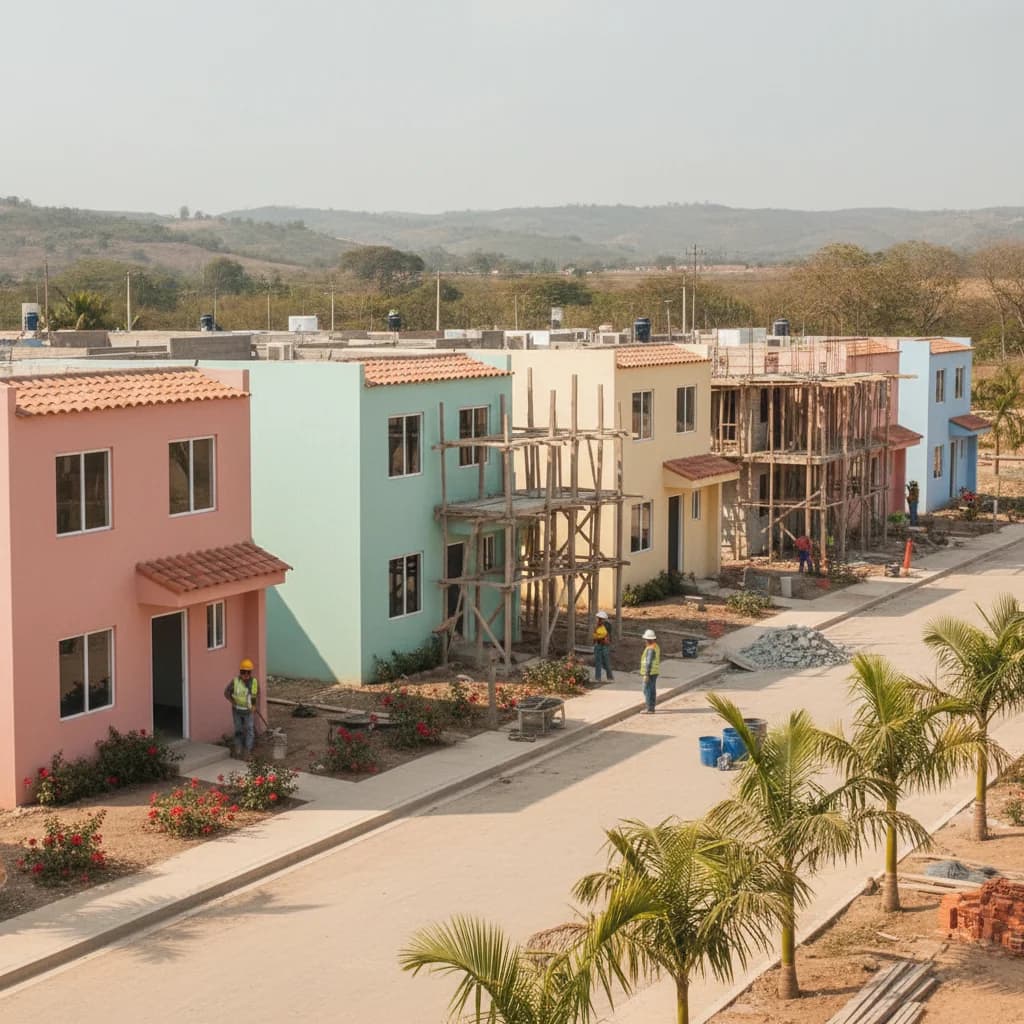
The programme's slow deployment has downstream effects on Ecuador's construction sector, which had anticipated Mi Casa Propia-driven demand for affordable housing units. Several developers who pre-invested in qualifying projects report sales velocity 40-50% below business plan projections, creating inventory buildup and financing stress in the affordable segment.
What to watch
Monitor whether programme administrators implement alternative income verification standards that could unlock applications from informal-sector workers. Track BIESS Credicasa disbursement data for Q1 2026 to gauge whether the 2.99% rate is absorbing demand that Mi Casa Propia cannot serve. The construction sector's inventory levels in the affordable segment ($30,000-60,000 range) will signal whether developer confidence in government housing programmes is eroding.
Sources: El Universo, Primicias
Source
El Universo / Primicias — “Más del 60% de solicitudes de Mi Casa Propia no califican pese a asignación de $100 millones”
View originalSupport the EcuadorBrief archive.
Research support helps fund review, corrections, and hosting. New publishing is paused.