Quito Metro Line 1 Northern Extension to La Ofelia Receives Environmental License: 5 km Underground Corridor, 4 New Stations, $80 Million CAF Financing

Environmental License Granted
Ecuador's national environmental authority has granted the environmental license for the northern extension of Quito Metro Line 1 to La Ofelia, clearing the most significant regulatory hurdle for the project.
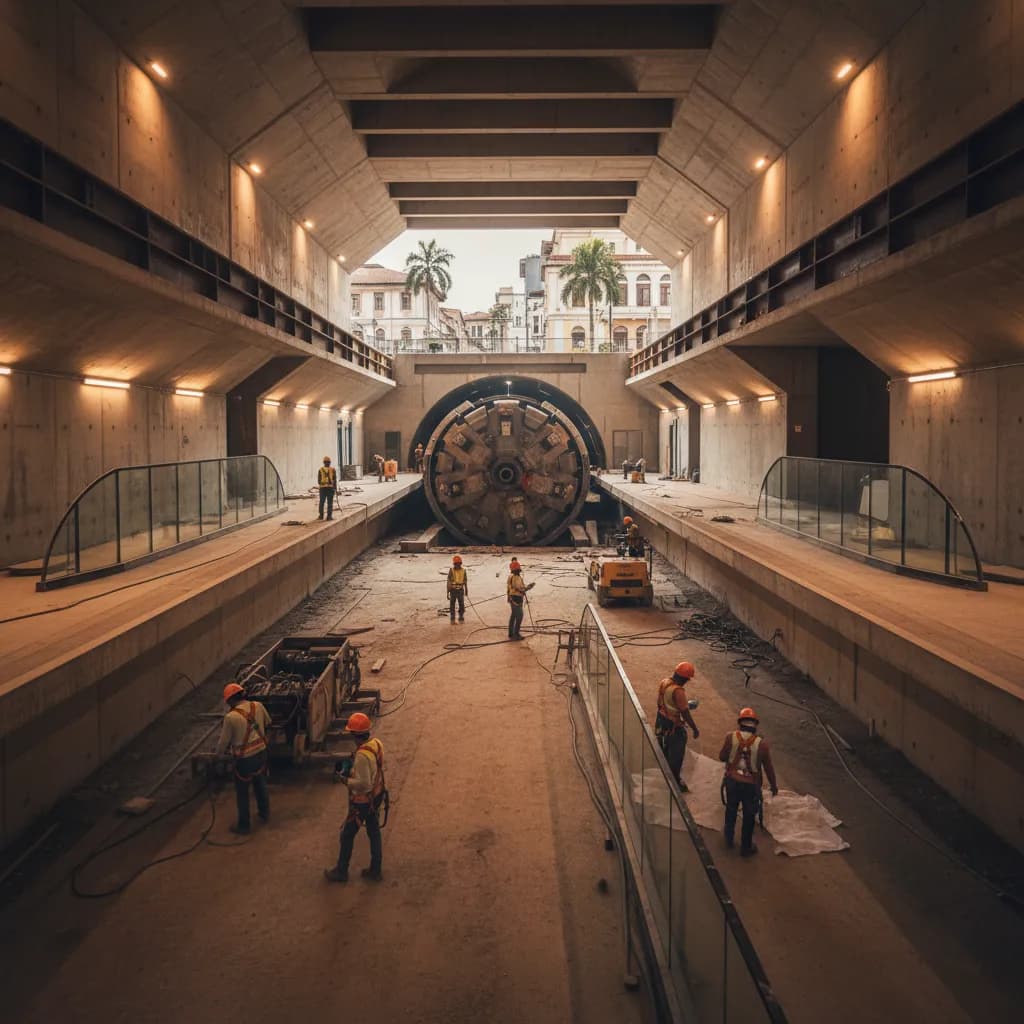
The extension adds more than 5 kilometers of underground corridor with four new stations, extending the existing metro line from its current northern terminus at El Labrador to the La Ofelia transport hub.
Extension Details
| Metric | Value | |---|---|---| | Extension length | 5+ km (underground) | | New stations | 4 (Bicentenario, Andalucia, Rosario, Ofelia) | | Population served | 500,000+ residents | | Neighborhoods connected | 70+ | | Travel time (current) | 48 minutes (peak hour, surface transit) | | Travel time (metro) | 8 minutes | | Initial financing | $80 million (CAF) |
New Station Locations
| Station | Neighborhood | Key Connection |
|---|---|---|
| Bicentenario | Bicentenario Park area | Northern commercial district |
| Andalucia | Andalucia | Residential corridor |
| Rosario | El Rosario | Northern business zone |
| Ofelia | La Ofelia | Major bus terminal, northern transport hub |
The La Ofelia station is strategically significant — it connects the metro to La Ofelia bus terminal, one of Quito's largest intermodal transport hubs serving the northern valleys of Pomasqui, San Antonio de Pichincha, and Mitad del Mundo.
Current Line 1 System
Quito Metro Line 1 — which began commercial operations in late 2023 after years of construction delays — runs 22 km with 15 stations from Quitumbe (southern terminus) to El Labrador (current northern terminus):
| Line 1 Metric | Value | |---|---|---| | Total length (current) | 22 km | | Total length (with extension) | 27+ km | | Stations (current) | 15 | | Stations (with extension) | 19 | | Daily ridership | ~200,000+ passengers | | Altitude | ~2,800 meters (highest metro in the Americas) | | Operator | Metro de Quito |
The extension would increase the system's reach by approximately 23%, connecting the northern third of the city that currently relies on congested surface bus routes.
Financing Structure
CAF (Development Bank of Latin America and the Caribbean) has committed $80 million in initial financing, part of a broader $303 million package that also includes improvements to Ecuador's national electricity transmission system.
Total extension costs are estimated to exceed the initial $80 million commitment, with additional financing expected from:
- Municipality of Quito — local budget allocation
- IDB — potential complementary lending
- Government of Ecuador — national infrastructure investment plan
Urban Impact
Quito's geography — a narrow valley stretching 40+ km north to south but only 5-8 km east to west — creates extreme traffic congestion on north-south corridors. The metro extension addresses this directly:
| Transport Comparison | Surface Bus | Metro Extension |
|---|---|---|
| El Labrador to La Ofelia | 48 minutes (peak) | 8 minutes |
| Reliability | Variable (traffic-dependent) | Fixed schedule |
| Capacity | ~60 passengers/bus | ~1,200 passengers/train |
| Emissions | Diesel bus fleet | Electric traction |
Construction Timeline
While the environmental license represents a critical regulatory milestone, the Municipality of Quito has not yet announced a definitive construction timeline. Key remaining steps include:
- Detailed engineering design — Final alignment and station specifications
- Land acquisition — Right-of-way for tunnel alignment and station entrances
- Construction tender — International bidding for tunnel boring and station construction
- Construction — Estimated 3-4 years for tunnel and station completion
- Systems integration and testing — Rolling stock, signaling, ventilation
What to Watch
Track the construction tender timeline — the environmental license enables but does not guarantee rapid project advancement. Monitor CAF disbursement conditions — the $80 million is likely tied to procurement and implementation milestones. Watch for additional financing announcements — the full extension cost will require multiple funding sources. Track current Line 1 ridership data — growing passenger numbers strengthen the business case for the extension and may accelerate political support.
Sources: BNamericas, Metro de Quito, CAF
Source
BNamericas / CAF — “Ecuador grants environmental license for expansion of Quito metro”
View originalSupport the EcuadorBrief archive.
Research support helps fund review, corrections, and hosting. New publishing is paused.