UAE-Ecuador CEPA: $3B Investment Pipeline in Clean Energy, Mining, Tech

The Agreement
In early March 2026, Sheikh Khaled bin Mohamed bin Zayed Al Nahyan, Crown Prince of Abu Dhabi, traveled to Quito for a state visit that culminated in the signing of a Comprehensive Economic Partnership Agreement (CEPA) between the UAE and Ecuador.
The CEPA is accompanied by a $3 billion strategic investment roadmap spanning five priority sectors. It is the most significant Gulf-state economic framework ever signed by Ecuador and positions the country alongside Colombia, Chile, and Costa Rica as the fourth Latin American nation to formalize a CEPA with the UAE.
Investment Roadmap: $3B Across Five Sectors
| Sector | Estimated Investment | Key Focus Areas |
|---|---|---|
| Clean energy & renewables | $1.2B | Solar PV, wind, green hydrogen, grid modernization |
| Mining | $800M | Copper-gold exploration, processing infrastructure |
| Logistics & ports | $450M | Port upgrades, cold chain, free trade zones |
| Advanced technology | $300M | Data centers, smart agriculture, e-government |
| Agriculture & food security | $250M | Shrimp processing, cacao value-add, flower logistics |
| Total | $3.0B |
The clean energy allocation is the largest single component, reflecting the UAE's Masdar strategy of deploying renewable energy assets across emerging markets. Ecuador's $2.43 billion power expansion plan — targeting 963 MW of solar capacity through 2030 — provides a ready pipeline for Masdar and other UAE energy developers.
Bilateral Trade Baseline
The CEPA builds on a modest but growing trade relationship:
| Metric | 2024 | 2025 (est.) |
|---|---|---|
| Non-oil bilateral trade | $340M | $373.6M |
| Ecuador exports to UAE | $210M | $235M |
| UAE exports to Ecuador | $130M | $138.6M |
| Ecuador's top exports | Bananas, shrimp, cocoa | — |
| UAE's top exports | Refined petroleum, plastics, machinery | — |
Bilateral trade grew approximately 10% year-over-year in 2025, with Ecuador's agricultural exports to the Gulf region expanding as UAE sovereign wealth funds invest in global food security supply chains.
Key Entities and Counterparties
The investment roadmap identifies specific UAE entities as lead counterparties:
- Masdar (Abu Dhabi Future Energy Company) — renewable energy projects, potential participation in Ecuador's solar tender pipeline
- Mubadala Investment Company — mining sector equity investments, potential stakes in copper-gold assets
- Abu Dhabi Ports (AD Ports Group) — port modernization and logistics corridor development
- G42 — artificial intelligence and data center infrastructure
- ADIO (Abu Dhabi Investment Office) — coordination of the overall investment roadmap execution
On the Ecuadorian side, ProEcuador (export and investment promotion agency) and the Ministry of Production are designated as the coordinating bodies.
Strategic Significance
The UAE-Ecuador CEPA reflects two converging strategies:
For the UAE: Diversification of economic partnerships beyond traditional energy trading blocs. Latin America represents a growth frontier for Gulf sovereign capital, particularly in agriculture (food security), mining (energy transition metals), and renewables (carbon offset potential).
For Ecuador: The CEPA diversifies the country's investment and trade partnership base at a critical juncture. With the U.S. ART signed on March 13, the China FTA operational since 2024, and the Canada FTA effective in 2025, Ecuador is building a multi-polar trade network designed to reduce dependency on any single partner.
The mining allocation is strategically timed. Ecuador's Mining and Energy Reform Law took effect March 2, simplifying environmental licensing and creating a more predictable regulatory framework for foreign investors. The $800 million mining investment from the UAE pipeline could accelerate development of projects like Cascabel, Warintza, and La Plata.
What to Watch
- Masdar participation in Ecuador's solar tenders — whether the El Aromo (200 MW) or other flagship projects attract UAE capital
- Mubadala mining investments — specific project-level commitments will test the roadmap's credibility
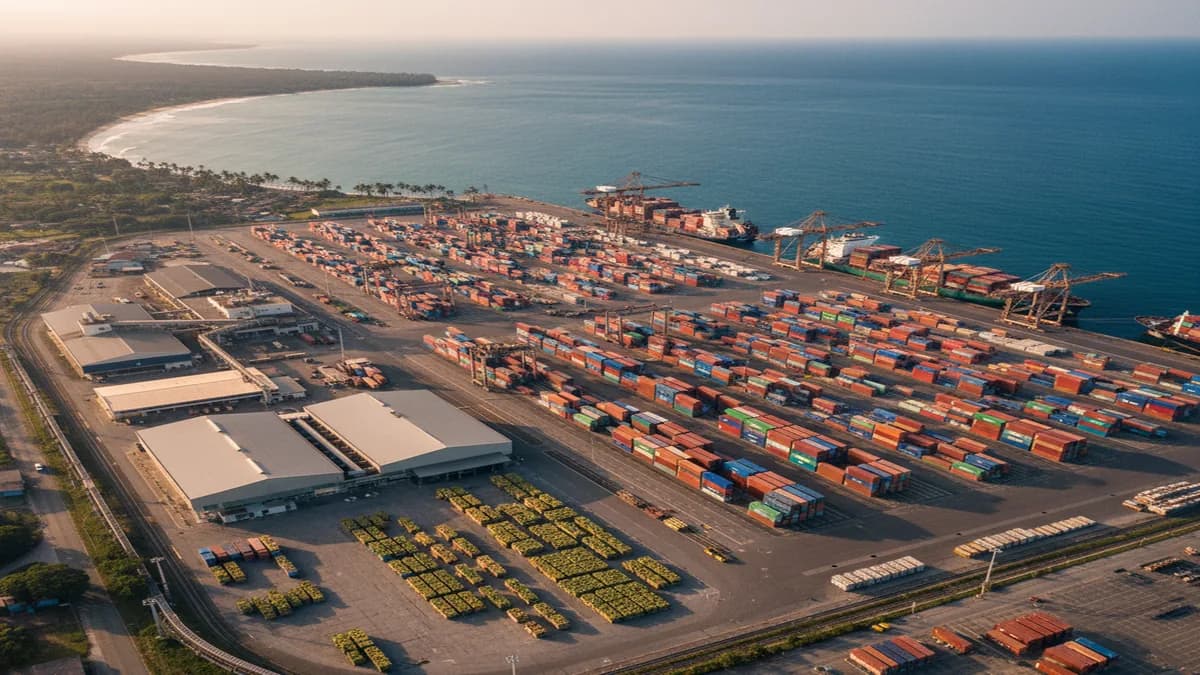
- AD Ports Group engagement — port modernization at Posorja or Manta would have measurable trade facilitation impact
- CEPA ratification timeline — implementing legislation and secondary regulations required in both countries
- Disbursement pace — the gap between announced investment roadmaps and actual capital deployment is the key risk; the $3B figure is aspirational until projects reach financial close
Sources: Solar Quarter, Economy Middle East
Support the EcuadorBrief archive.
Research support helps fund review, corrections, and hosting. New publishing is paused.