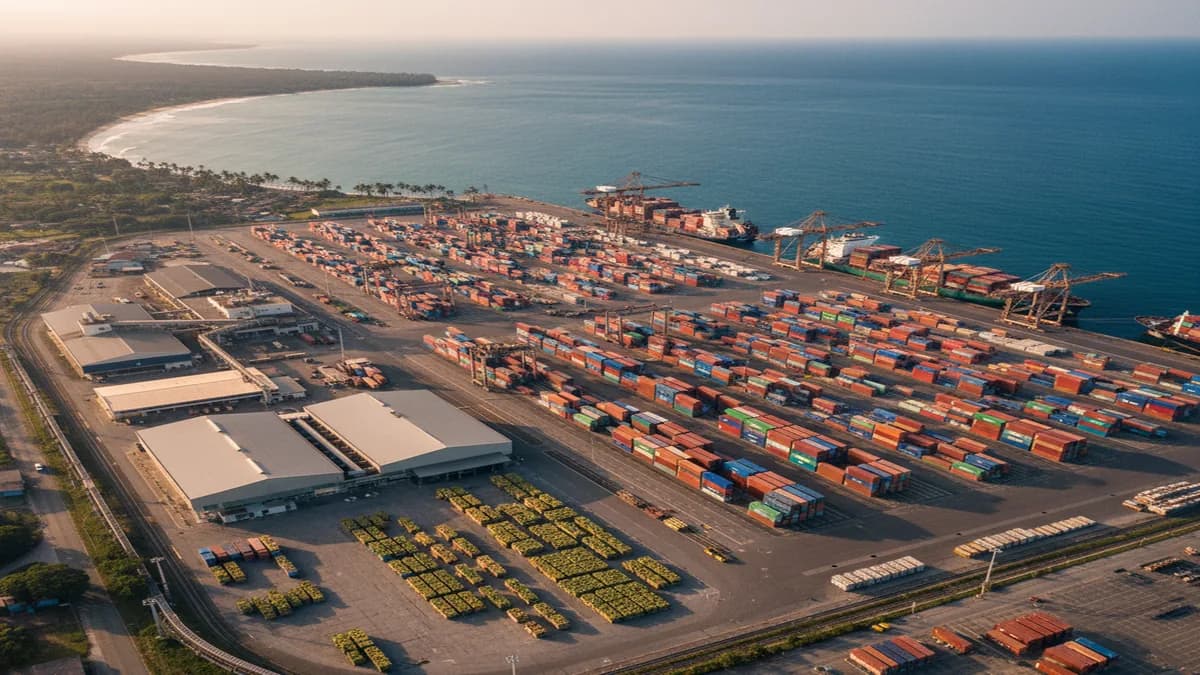
UAE-Ecuador CEPA: $3B Investment Pipeline — 96%+ Tariff Elimination

The Agreement
Ecuador and the United Arab Emirates signed a Comprehensive Economic Partnership Agreement (CEPA) in March 2026, eliminating tariffs on over 96% of product lines and establishing a framework for a $3 billion investment pipeline across energy, logistics, infrastructure, and agriculture.
The CEPA makes Ecuador one of the first Latin American countries to secure a comprehensive trade agreement with a Gulf Cooperation Council (GCC) member, opening access to a market with $500 billion+ in annual imports and some of the world's largest sovereign wealth funds.
Trade Potential
| Metric | Value |
|---|---|
| Current bilateral trade | ~$200M annually |
| Tariff lines eliminated | 96%+ |
| Investment pipeline | $3B planned |
| UAE GDP | $500B+ |
| UAE sovereign wealth (ADIA + Mubadala + ADQ) | $1.5T+ |
Ecuador's primary export opportunities to the UAE include:
- Shrimp and seafood — the UAE is a major seafood re-export hub for the Middle East and South Asia
- Bananas and tropical fruit — growing demand in Gulf markets
- Cacao — premium Arriba Nacional varieties for the UAE's luxury food sector
- Cut flowers — emerging market for Ecuadorian roses
Investment Pipeline
The $3 billion investment pipeline targets sectors where Gulf capital and Ecuadorian resources align:
| Sector | Est. Investment | Focus |
|---|---|---|
| Energy | $1.2B | Renewable energy projects, LNG infrastructure |
| Logistics | $800M | Port modernization, cold chain infrastructure |
| Agriculture | $600M | Agro-processing, aquaculture technology |
| Real estate/infrastructure | $400M | Commercial development, special economic zones |
UAE-based entities including Abu Dhabi Ports (AD Ports), Masdar (clean energy), and DP World (logistics) have been identified as potential investors, though formal project commitments remain in the memorandum-of-understanding phase.
Strategic Significance
The UAE CEPA complements Ecuador's broader trade diversification strategy:
- Geographic diversification — reduces dependence on the Americas and Europe by opening a Gulf corridor
- Investment diversification — Gulf sovereign wealth funds offer patient, large-scale capital distinct from traditional multilateral or U.S./European sources
- Logistics hub access — the UAE's position as a global transshipment hub (Jebel Ali, Khalifa Port) gives Ecuadorian exports access to Middle Eastern, South Asian, and East African markets
What to Watch
- Investment conversion rate — the gap between announced pipelines and deployed capital in Latin America is historically wide; actual project commitments will be the real metric
- AD Ports interest — any formal engagement with Ecuador's port infrastructure would signal serious Gulf logistics investment
- Halal certification — Ecuador's shrimp and food exporters will need to secure halal certification at scale to access UAE and broader Gulf consumer markets
- Masdar renewable projects — the UAE's clean energy arm has been expanding in Latin America; Ecuador's $2.43B renewable energy plan could attract Masdar participation
Sources: Economy Middle East
Support the EcuadorBrief archive.
Research support helps fund review, corrections, and hosting. New publishing is paused.