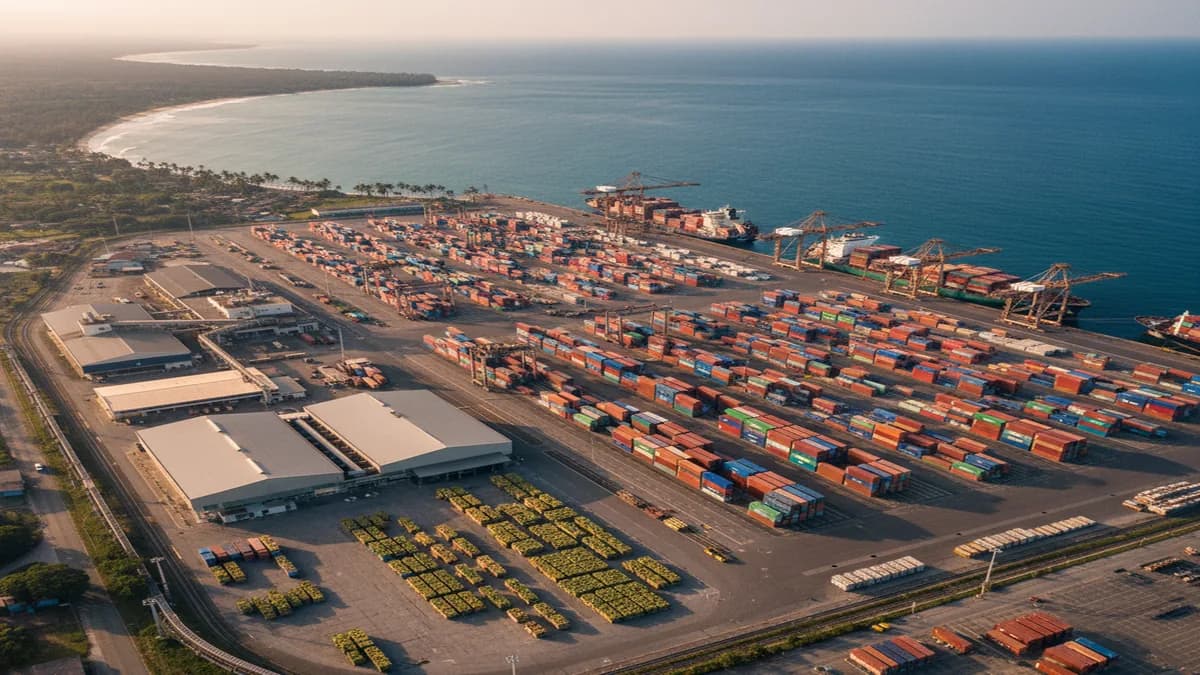
U.S.-Ecuador Reciprocal Trade Agreement Finalized: Tariff Cuts on Key Export Sectors

The Agreement
On March 13, 2026, the U.S. Trade Representative (USTR) and Ecuador's Ministry of Production, Foreign Trade, Investment, and Fisheries formally concluded negotiations on a reciprocal trade agreement — the most comprehensive bilateral trade framework between the two countries since Ecuador's Andean Trade Preferences Act expired in 2013.
The deal covers an estimated $2.786 billion in non-oil Ecuadorian exports to the United States, making it one of the most significant trade developments for Ecuador's export economy in over a decade.
Key Provisions
Ecuadorian Exports to the U.S.
| Product | 2025 Export Value (est.) | Tariff Treatment |
|---|---|---|
| Bananas | $680M | Duties eliminated |
| Shrimp | $900M+ | Duties eliminated |
| Cocoa | $450M | Duties eliminated |
| Flowers | $380M | Duties eliminated |
| Coffee | $120M | Duties eliminated |
| Other non-oil | ~$256M | Varies by product |
The tariff elimination on these categories is immediate upon ratification — not phased in over years, as is common in multilateral agreements.
U.S. Exports to Ecuador
Ecuador will provide duty-free tariff-rate quotas for key U.S. agricultural inputs:
| Product | Quota Structure |
|---|---|
| Corn | Duty-free quota (volume TBD) |
| Sorghum | Duty-free quota |
| Ethanol | Duty-free quota |
| Poultry | Duty-free quota |
| Pork | Duty-free quota |
| Dairy | Duty-free quota |
| Soybean oil | Duty-free quota |
Critically, Ecuador has agreed to suspend its price band system for U.S. agricultural imports covered by the agreement. The Andean Price Band System (SAFP) has historically added variable surcharges to agricultural imports when international prices fell below trigger levels — effectively protecting domestic producers from cheap imports.
Strategic Context
The agreement reflects a broader U.S. strategy to rebuild trade relationships in the Andes during a period of geopolitical competition with China. Ecuador's top trading partners by export value are now:
- China — ~$6.8B (led by shrimp, crude oil)
- United States — ~$5.2B (led by crude oil, shrimp, bananas)
- European Union — ~$3.8B (led by bananas, shrimp, cocoa)
For the Noboa administration, the deal accomplishes two objectives: securing preferential access for Ecuador's top commodity exports and signaling alignment with U.S. economic and security priorities — a posture reinforced by the concurrent joint military operations launched March 3.
Domestic Implications
Winners:
- Banana sector: Ecuador exports ~6.5 million MT annually; the U.S. is the second-largest buyer. Tariff elimination improves competitiveness against Colombian and Central American producers
- Shrimp sector: The $900M+ U.S. shrimp market gains cost advantage at a time when the sector is pushing beyond its China dependency
- Cocoa sector: With Ecuador poised to become the world's #2 producer, tariff-free U.S. access supports volume growth
Concerns:
- Domestic agriculture: Duty-free U.S. corn, poultry, and dairy could undercut Ecuadorian producers. Farm organizations have raised concerns about food sovereignty
- Price band suspension: Removing the SAFP safety net exposes Ecuadorian farmers to international price volatility
- CONAIE opposition: Indigenous organizations have signaled opposition to agricultural import liberalization
What to Watch
- Ratification timeline — the agreement requires approval by Ecuador's National Assembly, where Noboa lacks a reliable majority
- Quota volumes — the specific tonnage of duty-free U.S. imports will determine the actual impact on domestic producers
- Price band implementation — whether the suspension is permanent or tied to quota volumes
- Impact on EU and China trade — whether preferential U.S. access diverts export volumes from other markets
- Farm sector response — potential protests or political opposition from agricultural organizations and CONAIE
Sources: Bloomberg, USTR, Fresh Fruit Portal, Supply Chain Dive
Source
Bloomberg — “U.S. and Ecuador Finalize Reciprocal Trade Agreement Covering Key Agricultural Exports”
View originalSupport the EcuadorBrief archive.
Research support helps fund review, corrections, and hosting. New publishing is paused.