75,000 Military and Police Deployed in Joint U.S.-Ecuador Anti-Narcotics Operation

Operation Overview
On March 3, 2026, President Daniel Noboa formally launched Operation Southern Spear (Operacion Lanza del Sur), the largest joint military-police deployment in Ecuador's modern history:
| Parameter | Detail |
|---|---|
| Personnel deployed | 75,000 (military + police) |
| U.S. participation | SOUTHCOM advisory, intelligence, logistics |
| Duration (initial phase) | March 3-31, 2026 |
| Geographic focus | Guayas, Los Rios, El Oro, Esmeraldas |
| Curfew | 11:00 PM - 5:00 AM (four provinces) |
| First night arrests | 253 |
| Weapons seized (first week) | 487 firearms, 12 grenades |
| Narcotics seized (first week) | 8.2 tonnes cocaine |
This is the first U.S. military coordination operation on Ecuadorian soil in decades, marking a dramatic shift from the 2009 closure of the Manta Forward Operating Location under President Rafael Correa.
Curfew Impact on Business
The 11 PM to 5 AM curfew across Guayas, Los Rios, El Oro, and Esmeraldas provinces directly affects economic activity:
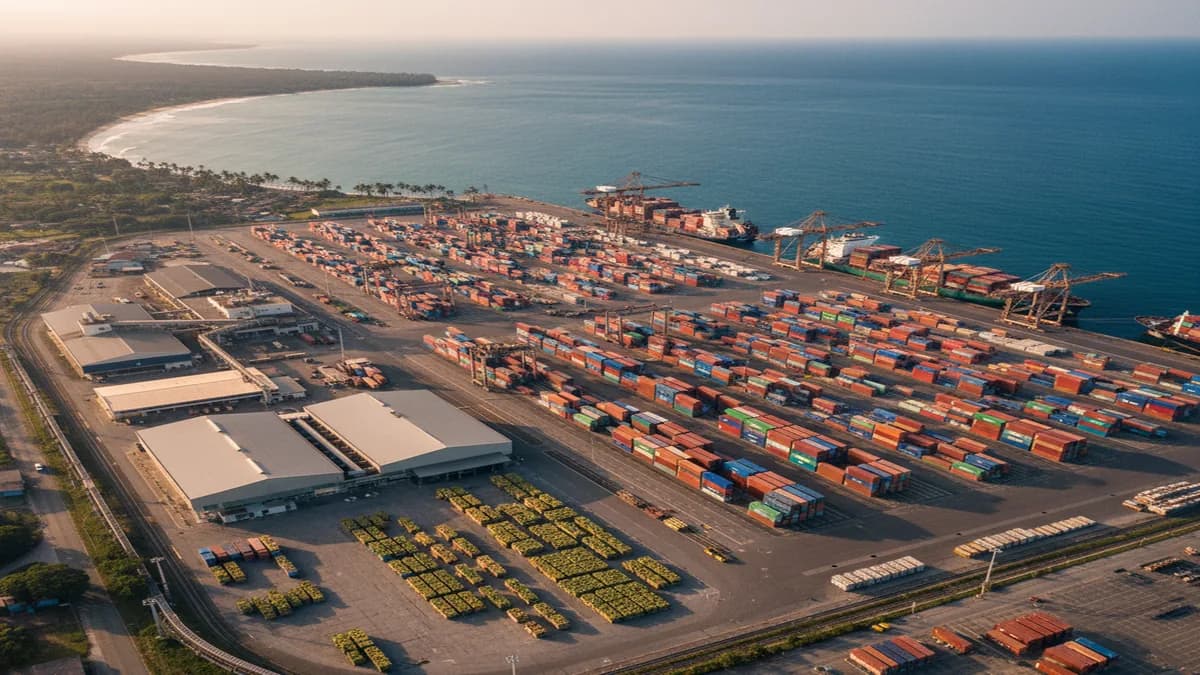
Port operations: The Port of Guayaquil (Ecuador's largest, handling 70% of maritime trade) operates 24 hours but faces restrictions on truck movements between 11 PM and 5 AM. Port authority CONTECON has extended daytime receiving hours to compensate, but logistics operators report 15-20% throughput reduction during the curfew period.
Agriculture: Night harvest operations for banana and flower exports — which rely on pre-dawn cutting to maintain cold chain — are disrupted. Workers require military transit permits, adding $0.05-0.10 per box in compliance costs.
Hospitality: Hotels, restaurants, and entertainment venues in Guayaquil and coastal cities face mandatory closure by 10:30 PM, reducing revenue by an estimated 25-30% for the sector during the curfew period.
Fishing: Artisanal and industrial fishing fleets that typically depart between 2-4 AM face new departure protocols requiring military authorization.
U.S. Military Involvement
U.S. Southern Command (SOUTHCOM) is providing:
- Intelligence: Signals intelligence and satellite surveillance of drug trafficking routes
- Advisory: U.S. military advisors embedded with Ecuadorian special forces units
- Logistics: Equipment, communications systems, and tactical vehicles
- Training: Joint training exercises preceding the operation (conducted January-February)
- Naval: U.S. Coast Guard patrols coordinating with the Ecuadorian Navy on Pacific interdiction routes
SOUTHCOM Commander General Laura Richardson described the operation as "a model for hemispheric counter-narcotics cooperation" in a March 3 press statement.
First-Week Results
The government released initial operational metrics after the first week:
- 253 arrests on the first night alone (March 3-4)
- 1,847 total arrests through March 10
- 8.2 tonnes of cocaine seized (estimated street value: $300M+)
- 487 firearms confiscated, including military-grade weapons
- 23 clandestine drug processing labs dismantled in Esmeraldas and Los Rios
- 12 armored vehicles seized from criminal organizations
Domestic Political Context
The operation carries political risk for the Noboa administration:
- The November 2025 referendum on allowing foreign military bases was rejected by voters, suggesting public ambivalence about U.S. military presence
- CONAIE and opposition parties have questioned the constitutional basis for foreign military participation without legislative approval
- Human rights organizations have raised concerns about curfew enforcement, citing 17 complaints of excessive force in the first week
However, public opinion surveys show 68% support for enhanced security operations in coastal provinces, where cartel violence has been most acute.
What to Watch
- Curfew extension beyond March 31 — whether the government extends the curfew or transitions to targeted operations
- Port throughput data — March shipping volumes will quantify the curfew's economic impact
- U.S. force posture — whether SOUTHCOM presence becomes permanent or remains operation-specific
- Human rights monitoring — excessive force complaints could generate international scrutiny
- Criminal organization adaptation — cartels typically adjust operations within 4-6 weeks of large-scale deployments
Sources: U.S. Southern Command, Washington Post, U.S. Embassy Quito
Source
U.S. Southern Command — “SOUTHCOM Supports Ecuador's Operation Southern Spear Counter-Narcotics Initiative”
View originalSupport the EcuadorBrief archive.
Research support helps fund review, corrections, and hosting. New publishing is paused.