Cocoa Prices Crash Below $3,100/Ton From Record Highs as 287,000-Tonne Global Surplus Emerges — Ecuador Positioned to Become World's No. 2 Producer

Price Collapse From Record Highs
Global cocoa futures have fallen below $3,100 per metric ton as of late February 2026, representing a collapse of approximately 70-75% from the record highs above $11,000/ton reached during the 2024-2025 supply crisis. The crash reflects a fundamental shift in the global supply-demand balance as West African production recovers and new plantings in Latin America and Asia come into maturity.
Price History
| Period | Price ($/MT) | Context |
|---|---|---|
| 2023 average | ~$3,400 | Pre-crisis baseline |
| Early 2024 | ~$5,500 | West Africa drought impact begins |
| Mid-2024 peak | ~$11,200 | Record high — Ghana/Ivory Coast crop failure |
| Late 2025 | ~$5,800 | Partial recovery in West African supply |
| February 2026 | <$3,100 | Surplus emerges, prices below 2023 levels |
The speed of the decline — from $11,200 to below $3,100 in approximately 18 months — has caught many market participants off guard, particularly speculative funds that had built large long positions during the 2024 price surge.
The 287,000-Tonne Surplus
The International Cocoa Organization (ICCO) and private analysts project a 287,000-tonne surplus for the 2025/26 crop year, the first meaningful surplus after two consecutive deficit years:
| Supply-Demand Balance | 2023/24 | 2024/25 | 2025/26 (Proj.) |
|---|---|---|---|
| Global production | 4.33 million MT | 4.55 million MT | 4.98 million MT |
| Global grindings | 4.65 million MT | 4.70 million MT | 4.69 million MT |
| Balance | -320,000 MT | -150,000 MT | +287,000 MT |
| Stocks-to-grindings ratio | 28.4% | 25.1% | 31.2% |
The surplus is driven primarily by West African production recovery — particularly in Ivory Coast and Ghana, which together account for approximately 60% of global supply — combined with demand destruction caused by two years of elevated prices that forced chocolate manufacturers to reduce cocoa content and raise retail prices.
Ecuador's Ascent to No. 2
Ecuador is projected to produce 650,000+ metric tons in the 2026/27 crop year, positioning it to overtake Ghana as the world's second-largest cocoa producer behind Ivory Coast:
| Country | 2024/25 Output | 2026/27 (Proj.) | Yield (kg/ha) | Global Share |
|---|---|---|---|---|
| Ivory Coast | 2.10 million MT | 2.25 million MT | 550 | ~45% |
| Ghana | 620,000 MT | 600,000 MT | 400 | ~12% |
| Ecuador | 580,000 MT | 650,000+ MT | 800 | ~13% |
| Cameroon | 300,000 MT | 310,000 MT | 450 | ~6% |
| Indonesia | 250,000 MT | 260,000 MT | 500 | ~5% |
Ecuador's yield advantage is striking: at 800 kg/ha, Ecuadorian plantations produce double the output per hectare of Ghanaian farms (400 kg/ha). This productivity differential reflects several factors:
- CCN-51 variety dominance: Ecuador's widespread adoption of the high-yielding CCN-51 hybrid, which produces significantly more than traditional Nacional or West African varieties
- Younger tree stock: Ecuador has undergone a planting boom in the last decade, meaning its tree population is younger and more productive
- Climate advantages: Consistent rainfall patterns in the Los Rios, Guayas, and Esmeraldas growing regions
- Intensive farming practices: Higher input use including fertilizer, irrigation, and pest management
Revenue Impact Analysis
The price crash creates a double-edged financial equation for Ecuador's cacao sector:
| Metric | 2024/25 | 2026/27 (Proj.) | Change |
|---|---|---|---|
| Volume | 580,000 MT | 650,000+ MT | +12% |
| Average price | ~$6,500/MT | ~$3,000/MT | -54% |
| Gross export revenue | ~$3.77 billion | ~$1.95 billion | -48% |
Despite a 12% increase in volume, the 54% price decline could reduce Ecuador's cocoa export revenue by approximately $1.8 billion — a significant blow to a sector that contributed substantially to the record $29.4 billion non-oil export total in 2025.
However, these projections assume prices remain near current levels. Many analysts expect a partial recovery to the $3,500-4,500 range as the surplus is absorbed and speculative short positions are unwound.
Fine Flavor vs. Bulk Production
Ecuador's cocoa industry operates across two distinct market segments:
| Segment | Variety | Share of Output | Price Premium | Primary Markets |
|---|---|---|---|---|
| Fine flavor (Arriba Nacional) | Nacional | ~25% | +30-50% vs. bulk | EU, Japan, specialty chocolate |
| Bulk/commodity | CCN-51 | ~75% | Standard market price | Global grinding, mass market |
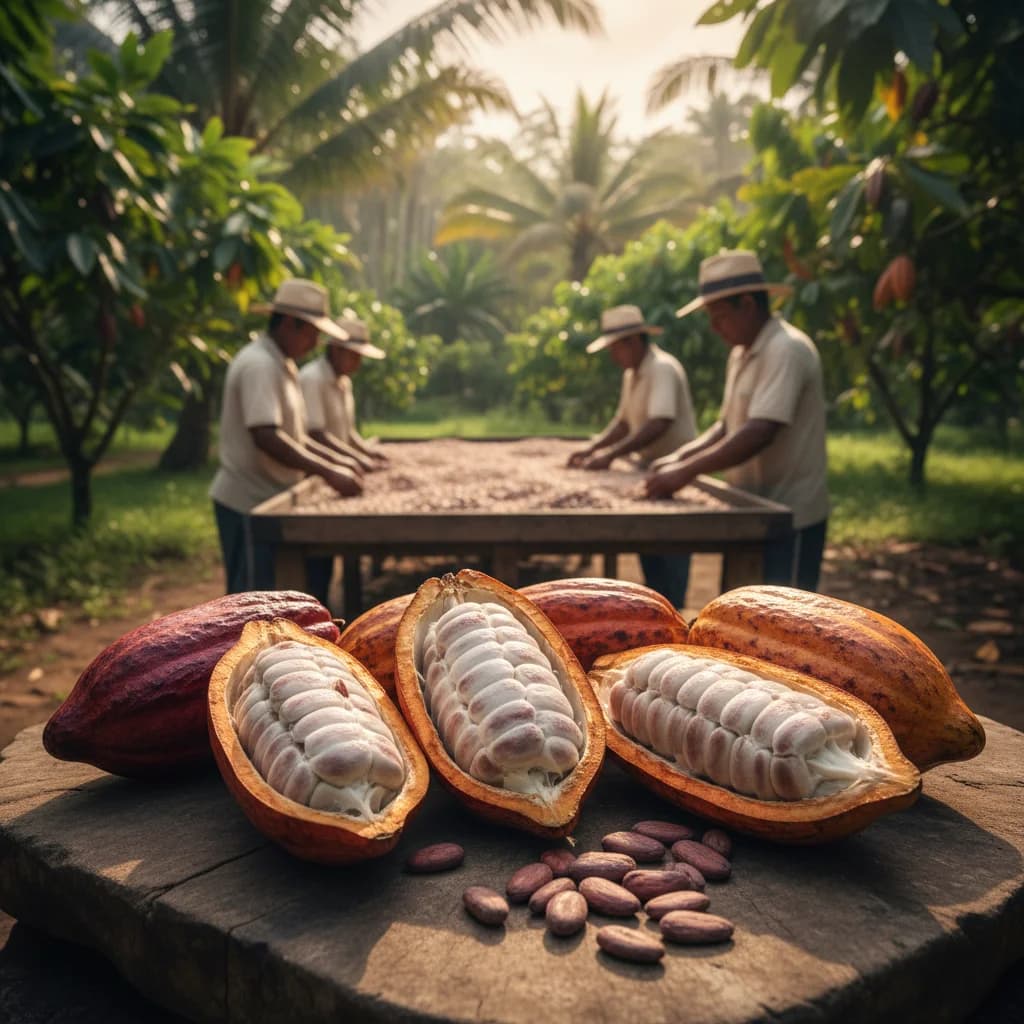
The fine flavor segment is partially insulated from the price crash because specialty chocolate manufacturers pay significant premiums for Arriba Nacional beans — prized for their floral, fruity flavor profile. Ecuador is the world's largest producer of fine-flavor cocoa, designated as such by the ICCO.
However, the CCN-51 bulk segment — which accounts for 75% of production — is fully exposed to the global commodity price. The variety's reputation for high yields but inferior flavor means it competes directly with West African bulk cocoa on price.
Key Ecuadorian Cacao Entities
| Entity | Role |
|---|---|
| ANECACAO | National cacao exporter association |
| AGROCALIDAD | Phytosanitary regulation and export certification |
| ProEcuador | Export promotion agency |
| Republica del Cacao | Premium Ecuadorian chocolate manufacturer |
| Pacari | Award-winning organic chocolate producer |
| Luker (Nestle) | Major cacao bean buyer/processor |
Growing Regions
| Province | Share of Production | Specialty |
|---|---|---|
| Los Rios | ~30% | CCN-51, some Nacional |
| Guayas | ~25% | CCN-51, bulk |
| Esmeraldas | ~15% | Fine flavor Nacional |
| Manabi | ~12% | Mixed varieties |
| Other | ~18% | Various |
What to Watch
Track ICCO quarterly production estimates — if the 287,000-tonne surplus materializes as projected, prices could test $2,500/MT, further compressing Ecuadorian revenue. Monitor CCN-51 vs. Nacional price spreads — widening premiums for fine flavor could incentivize producers to shift planting away from bulk varieties. Watch Ecuador's monthly export data — whether volume growth accelerates to offset price declines will determine the net revenue impact. Track Ghana's crop performance — Ghana's structural challenges (aging trees, swollen shoot virus, smuggling to Ivory Coast) are the primary catalyst for Ecuador's ascent to the No. 2 position, and any Ghanaian recovery would slow that trajectory.
Sources: Confectionery News, Reuters/Investing.com, Trading Economics
Source
Confectionery News / Reuters / Trading Economics — “Cocoa prices tumble below $3,100 as massive global surplus emerges”
View originalSupport the EcuadorBrief archive.
Research support helps fund review, corrections, and hosting. New publishing is paused.