Ecuador Shrimp Sector: 60 Million Pounds Held Up as Middle East War Disrupts Maritime Logistics

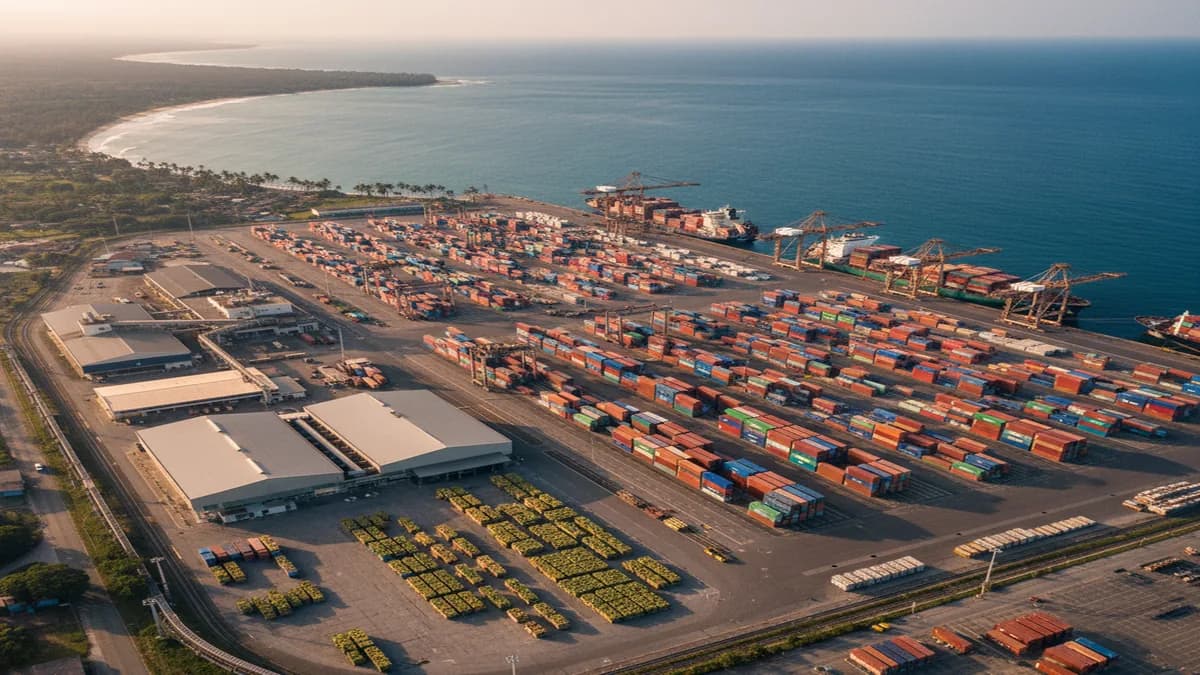
Ecuador's shrimp sector — the country's largest non-oil export — is facing a logistics crisis as the US-Iran conflict disrupts maritime routes and reduces container availability.
The Disruption
According to José Antonio Camposano, president of the Cámara Nacional de Acuacultura (CNA), 60 million pounds of shrimp are currently held up due to logistics disruptions: "60 millones de libras de camarón están represadas."
The conflict has produced three compounding effects on Ecuador's shrimp supply chain:
- Changes in maritime shipping routes avoiding conflict zones
- Port delays across key transit hubs
- Reduced availability of refrigerated (reefer) containers from major shipping lines
CNA estimates a 30% logistics delay across the sector.
Curfew Complication
The government's Decree 370 curfew (May 3–18, 11 PM – 5 AM) affects 9 provinces, including the coastal production zones where Ecuador's shrimp industry is concentrated.
The industry has requested 24-hour operations at container yards to prevent the curfew from further compounding logistics delays.
Sector Context
| Metric | Figure |
|---|---|
| Product held up | 60 million lbs |
| Logistics delay | ~30% |
| Curfew dates | May 3–18, 23:00–05:00 |
| Provinces affected | 9 (primarily coastal) |
Ecuador is the world's largest shrimp exporter by volume, with the aquaculture sector generating approximately $7 billion in annual export revenue. Any sustained logistics disruption cascades through foreign exchange earnings, coastal employment, and trade balance calculations.
What to Watch
- Container availability metrics. Reefer container shortages typically precede price spikes in frozen commodity exports. Monitor Maersk, MSC, and Hapag-Lloyd allocation to Latin American routes
- Curfew operational exemptions. If the government grants 24-hour container yard access, the production-side impact is manageable. If not, expect further backlog accumulation through May 18
- Maritime insurance premiums. Gulf route disruptions have elevated marine cargo insurance costs. Any premium increase directly compresses exporter margins
- Spot shrimp prices. With 60 million pounds delayed, near-term supply constraints in destination markets could push spot prices upward — a temporary margin benefit if logistics clear before product degradation
Source: Primicias
Source
Primicias — “60 millones de libras de camarón están represadas por logística y toque de queda”
View originalSupport the EcuadorBrief archive.
Research support helps fund review, corrections, and hosting. New publishing is paused.