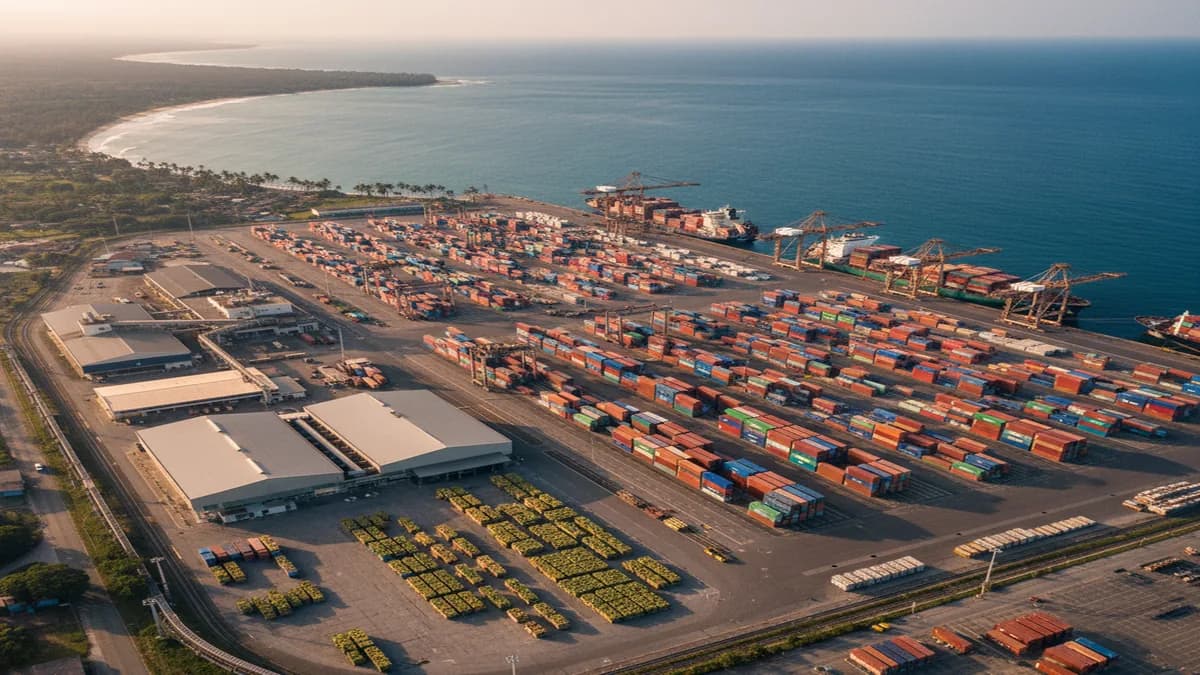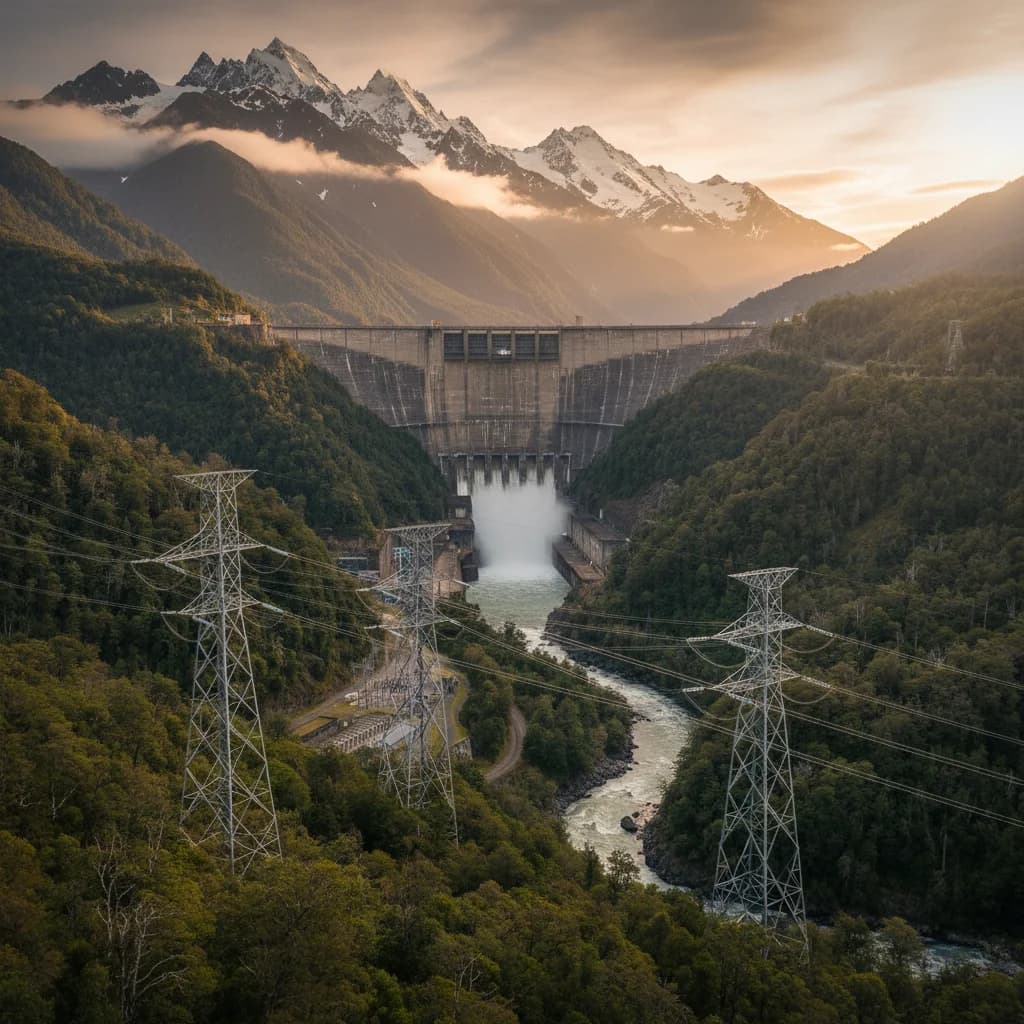
Ecuador Unveils $2.43B Power Expansion Plan Targeting 1,471 MW of New Capacity Across 23 Projects With Nuclear Exploration

Ecuador Unveils $2.43B Power Expansion Plan Targeting 1,471 MW of New Capacity
Ecuador's Ministry of Energy and Mines released its 2025-2030 Electric Power Expansion Plan on February 7, committing $2.43 billion to 23 generation projects that will add a combined 1,471 MW of new installed capacity to the national grid. The plan represents the government's most comprehensive response to the devastating 2024 blackout crisis, which exposed critical vulnerabilities in Ecuador's hydroelectric-dependent energy matrix.
The national grid operator CENACE confirmed that peak electricity demand reached 5,110 MW in May 2025, with demand growing at approximately 360 MW per year -- a pace that current installed capacity cannot sustain without significant new investment.
Investment breakdown by technology
Solar photovoltaic dominates the expansion plan, accounting for 65% of new capacity and 38% of total investment:
| Technology | Capacity (MW) | Investment ($M) | Share of Capacity | Projects |
|---|---|---|---|---|
| Solar PV | 963 | 913 | 65.5% | 12 |
| Wind | 210 | 485 | 14.3% | 4 |
| Hydroelectric | 178 | 720 | 12.1% | 4 |
| Biomass/Biogas | 80 | 195 | 5.4% | 2 |
| Natural Gas | 40 | 117 | 2.7% | 1 |
| Total | 1,471 | $2,430 | 100% | 23 |
The heavy solar weighting reflects both Ecuador's equatorial irradiation advantage -- averaging 4.5-5.5 kWh/m2/day in highland and coastal zones -- and the government's desire to reduce dependence on hydroelectric generation, which currently accounts for approximately 60% of national output but proved catastrophically unreliable during the 2024 drought.
Nuclear exploration
In a significant policy departure, the plan includes a dedicated section on nuclear energy exploration. The government disclosed that it is evaluating the feasibility of:
- Medium term (2030-2035): A 300 MW small modular reactor (SMR) as baseload complement to intermittent renewables
- Long term (post-2035): A 1 GW conventional nuclear reactor to serve as anchor generation for projected industrial demand growth
The Ministry has initiated preliminary discussions with the International Atomic Energy Agency (IAEA) on regulatory framework development and site assessment protocols. No specific vendor has been selected, though the SMR segment is dominated by NuScale Power (US), Rolls-Royce SMR (UK), and CNNC (China).
Demand projections
The urgency of the expansion plan is underscored by CENACE's demand projections, which forecast a 76% increase in peak electricity demand over the next decade:
| Year | Projected Peak Demand (MW) | Growth Driver |
|---|---|---|
| 2024 (actual) | 5,063 | Baseline |
| 2026 | 5,783 | Mining expansion |
| 2028 | 6,540 | Shrimp farming electrification |
| 2030 | 7,320 | Oil sector modernisation |
| 2034 | 8,904 | Cumulative industrial growth |
The mining sector alone is expected to add 800-1,200 MW of demand by 2032 as large-scale copper and gold projects at Cascabel, Cangrejos, and Warintza reach full production. Executive Decree 273, issued in January 2026, requires all new mining projects to supply 100% of their own electricity -- a provision that may catalyse private renewable energy investment in mining-adjacent regions.
Post-blackout context
The 2024 blackout crisis, triggered by severe drought that reduced output at the Coca Codo Sinclair and Paute-Mazar hydroelectric complexes to below 40% of rated capacity, resulted in rolling power cuts of 8-12 hours daily across much of the country for approximately three months. The crisis cost the economy an estimated $1.2 billion in lost productivity and forced the government to import emergency diesel generation at premium rates.
Petroecuador has been tasked with ensuring natural gas supply for the plan's thermal component, with the Amistad gas field in the Gulf of Guayaquil designated as a priority feedstock source.
What to watch
Key milestones include the publication of project-level procurement timelines expected in Q2 2026, the outcome of IAEA preliminary consultations on nuclear feasibility, and whether the government secures multilateral financing from the IDB or CAF to bridge the $2.43 billion investment requirement. The mining sector's compliance with the self-supply electricity mandate under Decree 273 will also be a critical demand-side variable.
Sources: New Energy Events, Ministry of Energy and Mines, CENACE
Source
New Energy Events / Ministry of Energy — “Ecuador's 2025-2030 Electric Power Expansion Plan”
View originalSupport the EcuadorBrief archive.
Research support helps fund review, corrections, and hosting. New publishing is paused.