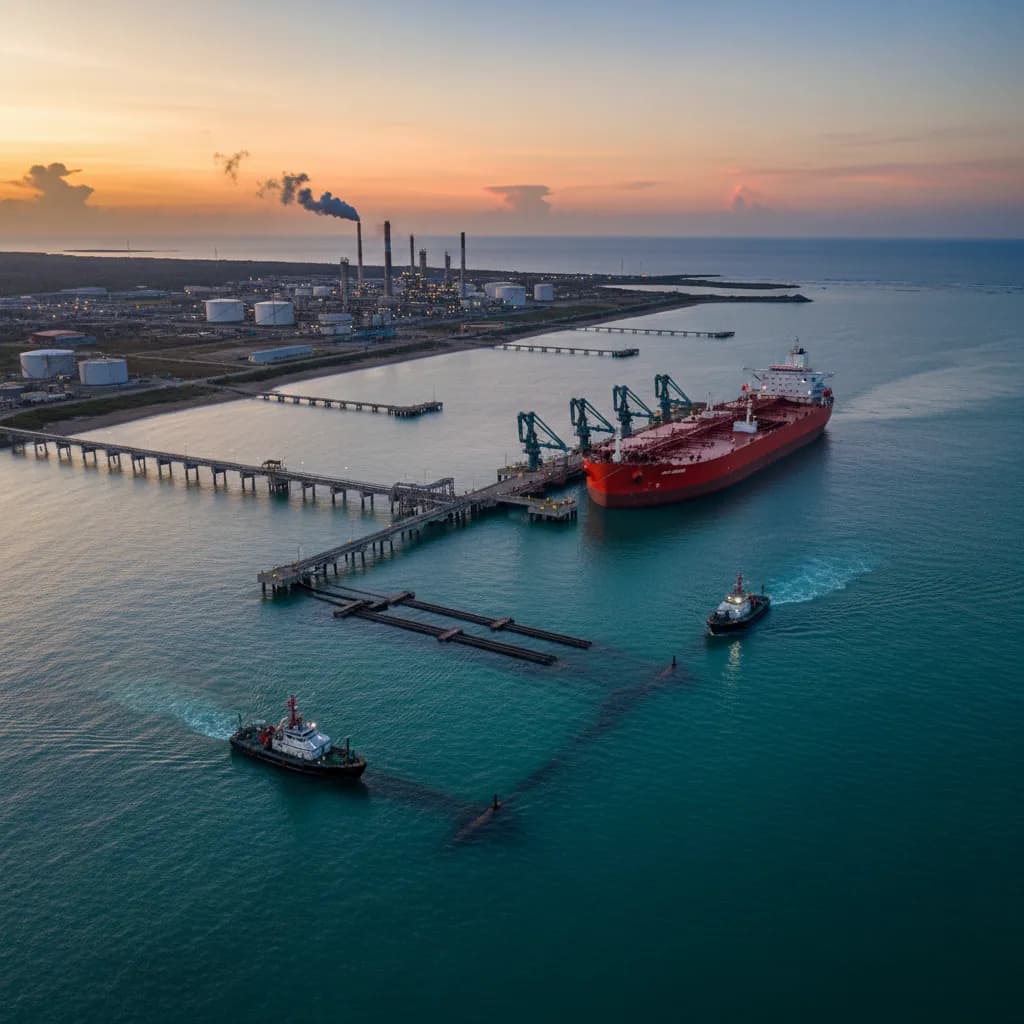
Esmeraldas Refinery at 33-40% Capacity With FCC Unit Offline; Ecuador Now Imports 65% of Fuel Demand

Ecuador's fuel supply chain reached a critical juncture on May 12 as new monthly prices took effect with diesel crossing $3/gallon for the first time — a milestone driven by the Esmeraldas refinery operating at just 33-40% of its 110,000 barrel-per-day nameplate capacity.
The facility's FCC (Fluid Catalytic Cracking) unit — the core component that produces gasoline and domestic cooking gas — remains offline. Petroecuador has scheduled a restart for May 15, with full operational capacity of approximately 85% targeted by June 2, 2026.
Fuel Price Schedule (May 12 – June 11, 2026)
| Grade | Price/Gallon | Previous | Change |
|---|---|---|---|
| Extra / Ecopaís | $3.164 | $3.024 | +4.6% |
| Super Premium 95 | $4.81 | $4.57 | +5.3% |
| Diesel Premium | $3.103 | $2.962 | +4.8% |
Prices are set under Ecuador's monthly stabilization band, which caps increases at 5% and allows decreases of up to 10%.
Import Dependency and Fiscal Exposure
With the refinery underperforming, Ecuador is importing 65% of its total fuel demand. Between January and March 2026, the country consumed 300,900 barrels daily but produced only approximately 106,900 domestically — requiring roughly 194,000 barrels/day in imports.
The fiscal cost is escalating:
| Period | Import Cost |
|---|---|
| February 2026 | $485M |
| March 2026 | $810M |
The March figure — nearly double February — reflects both volume increases and international price pressure from the Iran-related disruption of the Strait of Hormuz, through which approximately 20% of global petroleum transits. International crude has pushed toward $80-100 per barrel.
Subsidy Structure (May 2026)
| Fuel | Subsidy/Gallon |
|---|---|
| Diesel | $1.93 |
| Extra / Ecopaís | $0.59 |
The diesel subsidy alone represents a significant fiscal obligation. Diesel imports accounted for 83% of domestic demand in Q1 2026. Naphtha imports (for 85-octane gasoline) surged 61% between February and March, rising from 54,000 to 78,000 barrels daily.
Supply Disruptions
Ivo Rosero, president of the petroleum distributors chamber (Camddepe), confirmed that stations "aren't able to purchase the required volumes at distribution terminals." Multiple stations in Quito and Guayaquil reported closures on May 12 due to lack of Extra and Ecopaís grades.
The government has threatened legal action against speculators while asserting adequate nationwide supply.
Former Petroecuador manager Marcela Reinoso warned that the import dependency weakens Ecuador's economy, as the nation "sells crude oil at lower prices and then buys refined fuels at higher cost."
What to Watch
- May 15 FCC restart. The most immediate variable. A successful restart would reduce import dependency within weeks; a delay extends the $800M+/month import bill
- June 2 full operations target. Petroecuador's 85% capacity goal. Actual performance post-restart will determine whether the June 12 price adjustment sees relief or further increases
- Subsidy sustainability. At $1.93/gallon on diesel with 83% import dependency, the fiscal cost of the diesel subsidy alone runs into hundreds of millions monthly. Any reduction triggers political risk (transport strikes, consumer backlash)
- Iran/Strait of Hormuz. Crude prices are the exogenous variable. Resolution or escalation in the Middle East directly impacts Ecuador's import bill
- Refinery investment. The Esmeraldas facility has been a recurring point of failure. Long-term capex decisions on modernization versus continued import dependency represent a structural policy choice
Sources: El Universo, Primicias, Expreso
Source
Primicias — “Problemas en la Refinería Esmeraldas ya obligan a importar el 65% de los combustibles”
View originalSupport the EcuadorBrief archive.
Research support helps fund review, corrections, and hosting. New publishing is paused.