Ecuador's $46.3 Billion 2026 Budget Approved With $2.2 Billion Public Investment Plan Targeting 1,471 MW of New Energy Capacity and 388 Infrastructure Projects

Ecuador Approves Record Budget for 2026
The National Assembly approved Ecuador's 2026 General State Budget (PGE) at $46.3 billion, representing 33.27% of GDP and a 13% increase over the 2025 fiscal year. The budget signals a marked shift toward infrastructure and energy investment as the Noboa administration prioritizes economic modernization alongside its security agenda.
Budget overview
| Metric | 2025 | 2026 | Change |
|---|---|---|---|
| Total budget | ~$41.0B | $46.3B | +13% |
| As % of GDP | ~31.5% | 33.27% | +1.77 pp |
| Public investment | ~$1.8B | $2.2B | +22% |
| Number of investment projects | ~310 | 388 | +25% |
| Fiscal deficit target (IMF) | 0.8% GDP | ≤1.0% GDP | Within target |
Annual Investment Plan: $2.2 billion across 388 projects
The Plan Anual de Inversiones (PAI) allocates $2.2 billion across eight priority areas:
| Priority area | Allocation | Key projects |
|---|---|---|
| Energy | ~$680M | Solar installations, grid modernization, Coca Codo maintenance |
| Social development | ~$420M | Housing, education, healthcare facilities |
| Security | ~$380M | Police infrastructure, border installations, surveillance systems |
| Infrastructure | $407M | Roads, bridges, ports, airports |
| Public administration | ~$180M | Digital government, institutional modernization |
| Agriculture | ~$85M | Irrigation, rural roads, storage facilities |
| Environment | ~$30M | Protected area management, climate adaptation |
| Other | ~$18M | Various |
Energy: the centerpiece
The most significant allocation targets Ecuador's electric power expansion, responding to the 2024 power crisis that exposed the country's vulnerability to drought-induced hydroelectric shortfalls:
$2.43 billion Electric Power Expansion Plan (2025-2030):
| Technology | Capacity target | Investment | Timeline |
|---|---|---|---|
| Solar photovoltaic | 963 MW | $913M | 2025-2029 |
| Wind | 258 MW | ~$420M | 2026-2030 |
| Natural gas thermal | 150 MW | ~$310M | 2025-2027 |
| Hydroelectric (small) | 100 MW | ~$290M | 2027-2030 |
| Total | 1,471 MW | $2.43B | 2025-2030 |
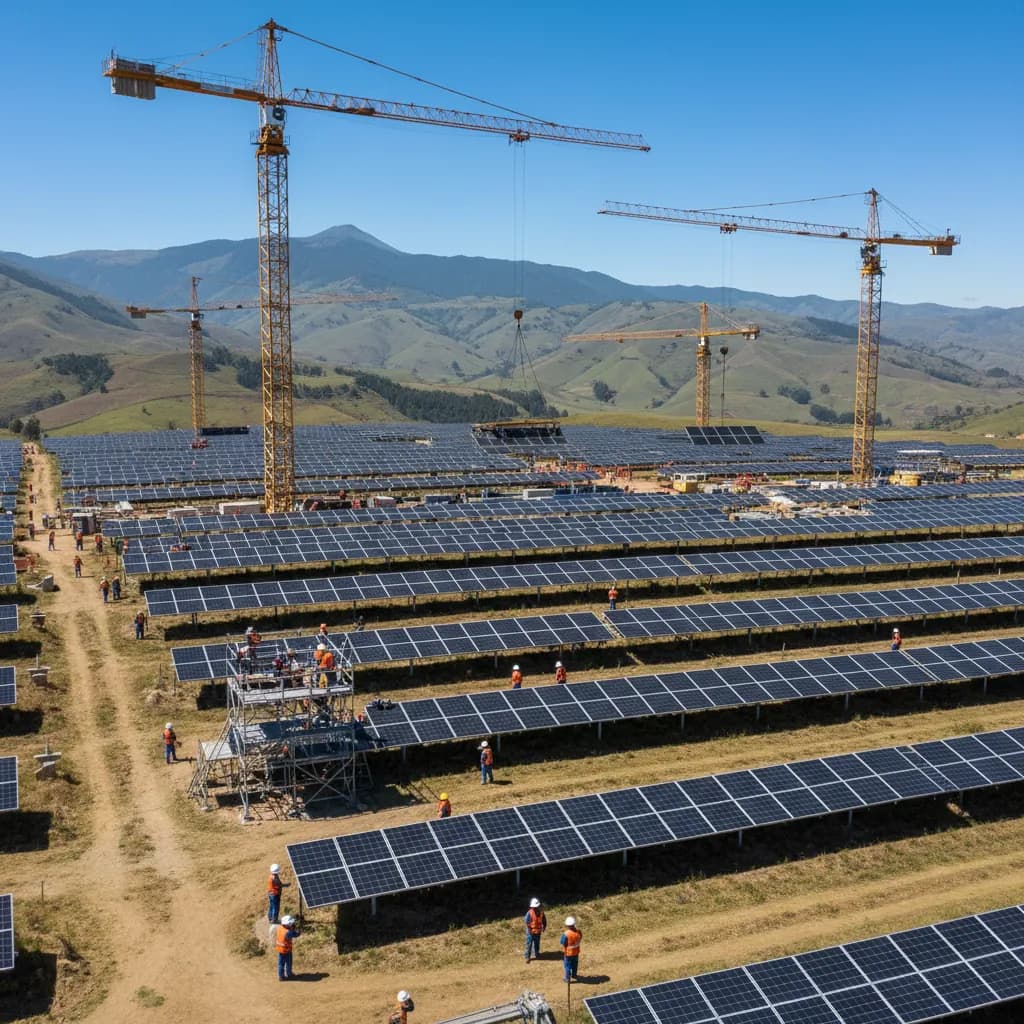
The solar allocation alone ($913M for 963 MW) represents the largest renewable energy investment program in Ecuador's history. Key solar projects include:
- El Aromo Solar Park (Manabí) — 200 MW, ~$190M
- Villonaco Solar Complex (Loja) — 150 MW, ~$140M
- Multiple distributed solar installations across the highlands — 613 MW combined
Infrastructure ministry: $407 million
| Project | Allocation | Status |
|---|---|---|
| Social housing (Casa Para Todos) | $58M | Expansion to 12 new provinces |
| Guayaquil Fifth Bridge | $33M | Engineering and initial construction |
| Quito Metro Line 2 studies | $15M | Pre-feasibility |
| Rural road network | $85M | 1,200 km rehabilitation |
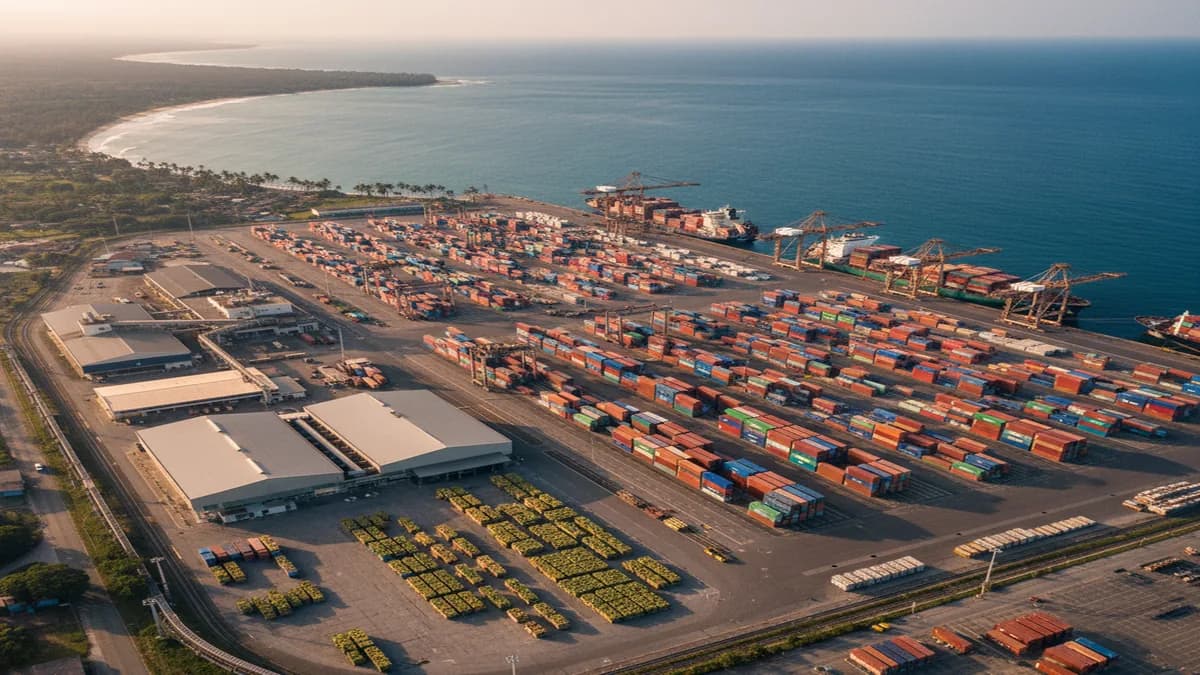
| Port infrastructure | $45M | Manta and Bolívar port upgrades |
| Airport improvements | $22M | Regional airport modernization |
| Other infrastructure | $149M | Various |
Construction sector outlook
The budget's infrastructure focus is expected to drive 4.1% growth in Ecuador's construction sector in 2026, with a pipeline of mega-projects extending through 2029:
| Metric | 2025 | 2026 (forecast) |
|---|---|---|
| Construction sector growth | ~2.8% | 4.1% |
| Construction sector value | ~$6.2B | ~$6.5B |
| Public procurement pipeline | ~$1.8B | ~$2.2B |
| Private construction | ~$4.4B | ~$4.3B |
Fiscal discipline
The 13% budget increase raises questions about fiscal sustainability, but the Ministry of Finance has committed to keeping the fiscal deficit within the IMF target of ≤1.0% of GDP. Key fiscal metrics:
- Revenue sources: Oil revenue ($5.9B projected), tax collection ($17.2B target), borrowing ($4B sovereign bond issued Jan 2026)
- Debt-to-GDP: ~57%, within IMF program limits
- Primary balance target: Surplus of 0.3% GDP
The budget assumes crude oil at $65/barrel (WTI) and GDP growth of 2.0-2.1% — conservative assumptions that provide a buffer if oil prices exceed forecasts.
What to watch
Track solar project procurement timelines — the 963 MW target requires competitive bidding processes that will create opportunities for EPC contractors, equipment suppliers, and project developers. Monitor quarterly budget execution rates — Ecuador historically executes only 60-70% of planned public investment. Watch for construction sector labor market data — the 4.1% growth forecast depends on workforce availability. Track IMF Article IV consultation outcomes for any fiscal target revisions.
Sources: World Construction Network, Yahoo Finance, Ministerio de Finanzas
Source
World Construction Network / Yahoo Finance / Ministerio de Finanzas — “Ecuador National Assembly approves proposed budget for 2026”
View originalSupport the EcuadorBrief archive.
Research support helps fund review, corrections, and hosting. New publishing is paused.