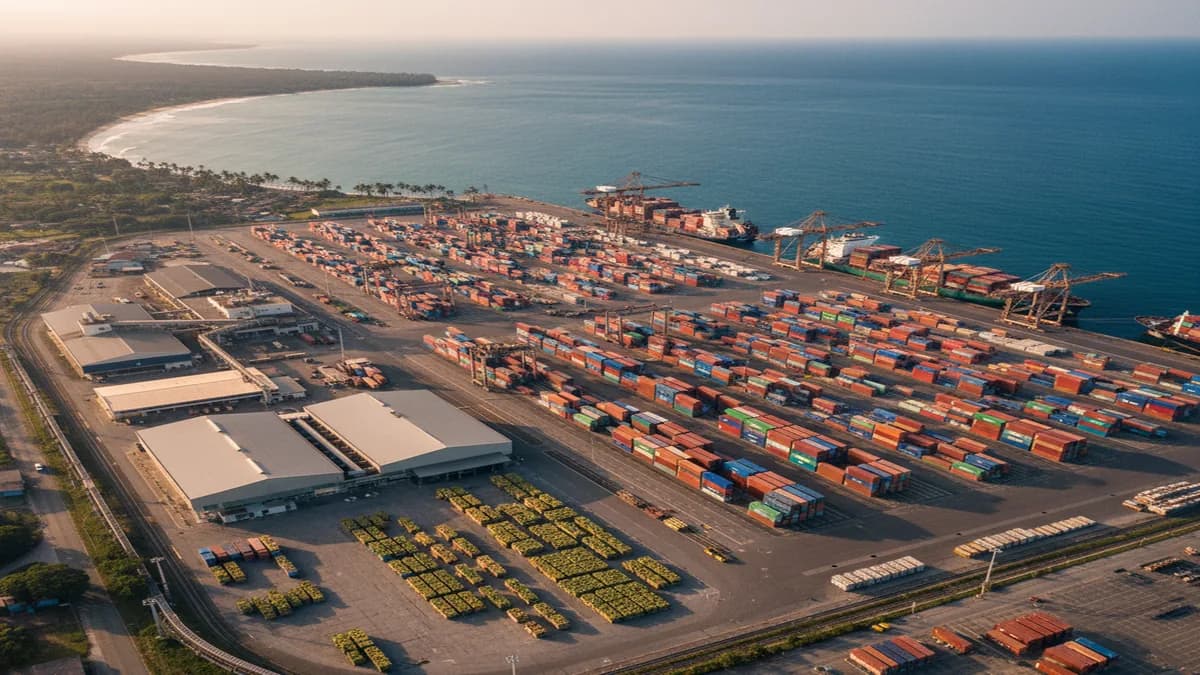
Guayaquil Port Seizure Puts Export-Chain Security Back in Focus

A seizure of 1.2 tons of cocaine hidden in 1,080 banana-export boxes at the Port of Guayaquil puts container controls and agricultural-export compliance back in focus.
The cargo was bound for Spain, and the seizure was reported on August 8, 2026. The event is material to Ecuador's trade profile because it involves a legitimate export format, a major port, container security, and overseas destination-market risk. It does not, on the facts reported, establish that a particular exporter or banana producer knowingly participated.
The reported facts
The Policia Nacional said the contaminated boxes were in a container at the Port of Guayaquil. John Reimberg, the interior minister, reported that authorities retained the container and three security seals.
The article cites an estimated value of USD 37.58 million in the United States and USD 58.57 million in Europe. Those figures describe the estimated value of the seized cocaine in destination markets; they are not the value of the banana cargo or a measure of exporter losses.
No suspect was detained at the port in this operation, according to the article. That distinction matters for companies assessing the incident: the seizure is confirmed in the report, while responsibility for the shipment remains a law-enforcement question.
Pattern of port controls
The same report describes an earlier seizure on August 7, when authorities found 46.8 kilograms in 50 packages hidden in the refrigeration panels of a container bound for Poland. One person was detained in that earlier operation.
It also references Operation Mondragon, in which authorities detained 36 Ecuadorians and eight Spaniards on August 5 while investigating an international trafficking network connected to Guayaquil ports.
The report says authorities estimate that as much as 70% of cocaine destined for the United States and Europe leaves from Guayaquil. That is the estimate presented by the source; it should not be read as a claim that 70% of ordinary export containers are compromised.
Business implications
The direct commercial question is whether the event leads to tighter inspection, longer dwell times, additional seal controls, or higher compliance costs for legitimate exporters. The article does not announce a general port closure or a suspension of banana shipments, so no broader disruption should be inferred from the seizure alone.
The case does reinforce the value of documented chain of custody, container and seal records, and clear separation between producer, packer, carrier, and port responsibilities. Those are risk-management implications rather than additional facts about the specific shipment.
What to watch
Watch for official port-security measures, customs guidance, and changes in inspection or documentation requirements. The key indicator is whether authorities treat the case as an isolated seizure or as part of a broader control response affecting Ecuador's banana and containerized-export corridors.
Source: Primicias
Source
Primicias — “La Policía incauta 1.080 cajas de plátano contaminadas con cocaína que pretendían llegar a España”
View originalSupport the EcuadorBrief archive.
Research support helps fund review, corrections, and hosting. New publishing is paused.