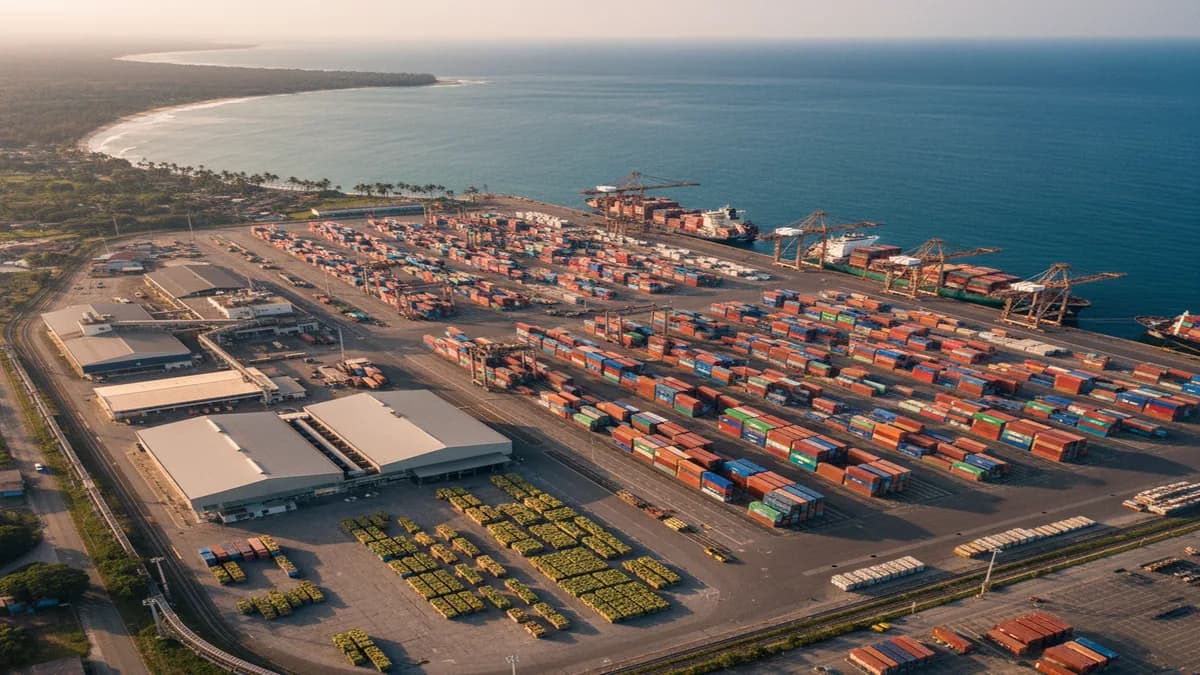
TPG Puts USD 50 Million Behind Cranes, Cold Chain, and Port Automation

Terminal Portuario de Guayaquil (TPG) has put USD 50 million of 2026 investment behind container-handling capacity, cold-chain infrastructure, backup generation, and process automation. The terminal, located in Isla Trinitaria in southwest Guayaquil, is also projecting infrastructure expansion through 2031.
The largest disclosed item is the purchase of two Super Post Panamax gantry cranes for USD 22 million from a Chinese supplier. The structures are scheduled for installation at the end of next year. They will reach across 24 rows and are intended to serve the largest merchant ships operating globally.
Capacity and market position
TPG handled 736,141 TEUs last year, representing 24% of the national containerized-cargo market based on company-cited market shares. That placed it second among Ecuador's ports, below Puerto de Posorja, operated by DP World, at around 30%, and close to the state-concessioned Puerto de Guayaquil, operated by Contecon, at approximately 23%-24%.
Contecon expects to exceed 900,000 TEUs this year and had moved 442,000 TEUs in the first half, a 30% increase from the same period last year. The report links that performance in part to a Cosco alliance providing an Asia connection.
TPG expects to maintain last year's cargo-movement levels. General manager Luis Enrique Navas described the market as highly dynamic and competitive, while saying TPG's focus is service quality rather than volume.
The crane and reefer logic
With the two cranes installed, TPG would move from five to seven operational cranes. The investment therefore adds handling capacity while supporting the terminal's stated objective of responding flexibly to the schedules of seven shipping lines with connections to Asia, Europe, the United States, and the Southern Cone.
The balance of the plan is aimed at export-chain reliability. TPG says the remaining investment includes an electrical substation to expand refrigerated-container connections for bananas and shrimp. It also includes electric tractors and vehicles, additional generators for contingencies, and an operating-system update to automate internal processes.
The report does not quantify the investment's effect on freight rates, port revenue, or national export volumes. The business signal is narrower and more defensible: a major private terminal is allocating capital to equipment, reefer support, resilience, and automation while competing ports also report expansion.
Competitive implications
TPG's position is being tested on more than headline throughput. The port is balancing cargo volume against service quality, vessel schedules, equipment reach, cold-chain availability, and operating continuity. Contecon's reported first-half growth and planned 900,000-TEU threshold create a visible benchmark for the competitive market.
The seven-line schedule also matters because shipping connections are exposed to operating and weather delays. TPG's stated response is flexibility, backed by additional cranes and contingency equipment.
For Ecuador's exporters, the relevant question is not simply whether Guayaquil has more cranes. It is whether the additional assets, reefer connections, generators, and automated systems translate into dependable service across the cargo flows most exposed to timing and temperature.
What to watch
- Installation of the two new cranes at the end of next year.
- The move from five to seven operational cranes.
- TPG's ability to maintain last year's 736,141 TEU base.
- Contecon's path toward 900,000 TEUs and the effect of its 442,000-TEU first-half result.
- Delivery of the refrigerated-container substation and additional contingency generation.
Source: Primicias
Source
Primicias — “TPG, el mayor puerto privado de Guayaquil, cumple 20 años y adquiere dos nuevas grúas pórtico por USD 22 millones”
View originalReport an article problem
Tell us what seems incorrect or outdated. Email is optional.
For business readers
Need a focused answer to an Ecuador business question?
Request a separately scoped 30-minute research consult with a written summary. A request does not update or verify this archived article. This is business research context, not legal, tax, or investment advice.
Request a research consultSupport the EcuadorBrief archive.
Research support helps fund source monitoring, corrections, and hosting.