Banana Exports Hit 377 Million Boxes in 2025 With 3.9% Growth, But Fusarium TR4 Confirmation in December Clouds the 2026 Outlook

Ecuador Banana Exports Reach 377M+ Boxes in 2025
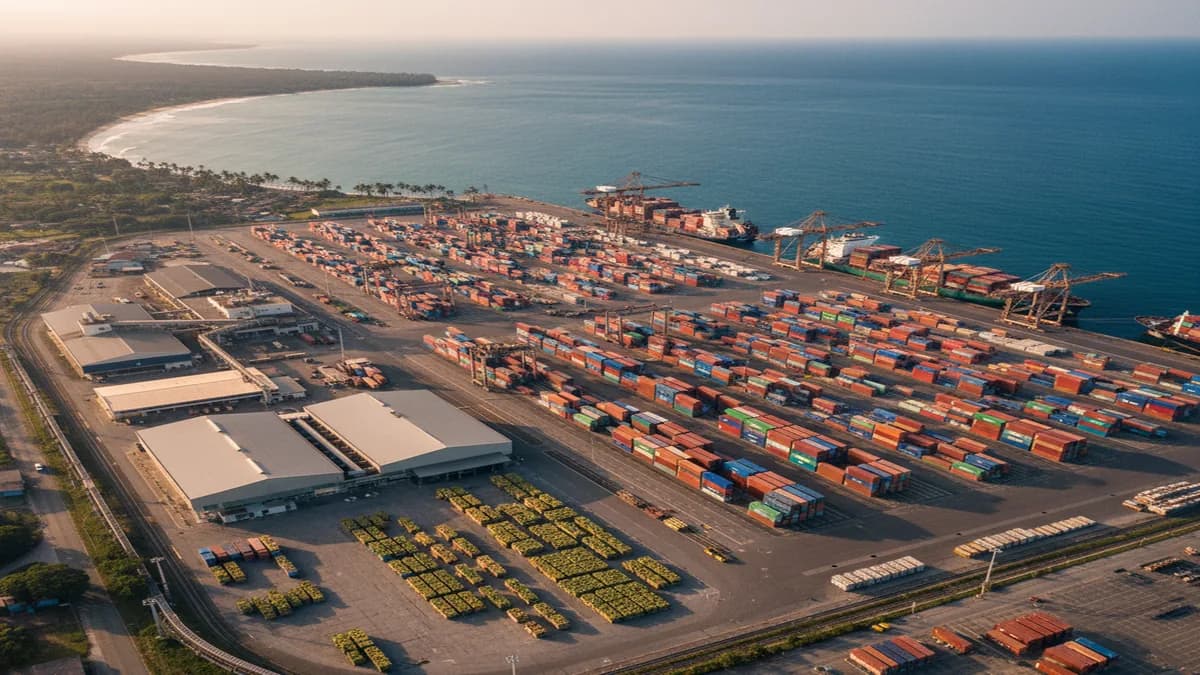
Ecuador shipped over 377 million boxes of bananas in 2025, marking a 3.9% year-on-year increase and reinforcing the country's position as the world's largest banana exporter. The growth was driven by expanding market diversification, with notable gains in non-traditional destinations, according to data from the Asociación de Exportadores de Banano del Ecuador (AEBE).
But the record year is overshadowed by a development that has sent shockwaves through the industry: the December 2025 confirmation of Fusarium Tropical Race 4 (TR4) on Ecuadorian soil.
2025 export performance
| Metric | 2025 | 2024 | Change |
|---|---|---|---|
| Total exports | 377M+ boxes | ~363M boxes | +3.9% |
| Growth rate | 3.9% | 2.1% | +1.8pp |
Market distribution
The European Union and Russia remain Ecuador's anchor banana markets, but 2025 saw significant growth in Asian and Middle Eastern destinations:
| Market | Share of exports | YoY change |
|---|---|---|
| European Union | 31% | Stable |
| Russia | 20% | Stable |
| China | Growing | +16% |
| Turkey | Growing | +30% |
| United States | ~10% | Slight decline |
China's 16% growth reflects Ecuador's strategic pivot toward Asian markets, partially offsetting the loss of the Algerian market and tariff tensions with the United States. Turkey's 30% surge is notable as a mid-tier market that has traditionally sourced bananas from Central American suppliers.
The Fusarium TR4 crisis
In December 2025, Ecuador's agricultural health authority Agrocalidad confirmed the presence of Fusarium oxysporum f. sp. cubense Tropical Race 4 (TR4) in banana-growing areas. The detection marks the disease's first confirmed arrival in Ecuador -- the world's most important banana export economy.
What is Fusarium TR4?
| Characteristic | Detail | |---|---|---| | Pathogen | Fusarium oxysporum f. sp. cubense | | Transmission | Soil-borne; spreads via contaminated soil, water, plant material, and footwear | | Host | Cavendish banana (99% of Ecuador's export variety) | | Cure | None known | | Soil persistence | Decades (spores remain viable for 30+ years) | | Global track record | Devastated plantations across Southeast Asia, Australia, Mozambique, Colombia |
TR4 is often described as the "banana pandemic" -- a soil pathogen that attacks the Cavendish variety's vascular system, causing wilting and death. Unlike leaf-borne diseases that can be managed with fungicides, TR4 has no known chemical treatment. Once present in soil, the pathogen persists for decades, rendering affected land permanently unsuitable for Cavendish cultivation.
The disease destroyed export industries across Southeast Asia in the 2010s and was confirmed in neighbouring Colombia in 2019, triggering a national emergency. Ecuador had been the last major banana exporter to remain TR4-free -- a status that provided a competitive marketing advantage and underpinned phytosanitary certifications for key markets.
Emergency containment measures
Agrocalidad has implemented emergency protocols including:
- Quarantine zones around confirmed infection sites
- Movement restrictions on plant material, soil, and equipment from affected areas
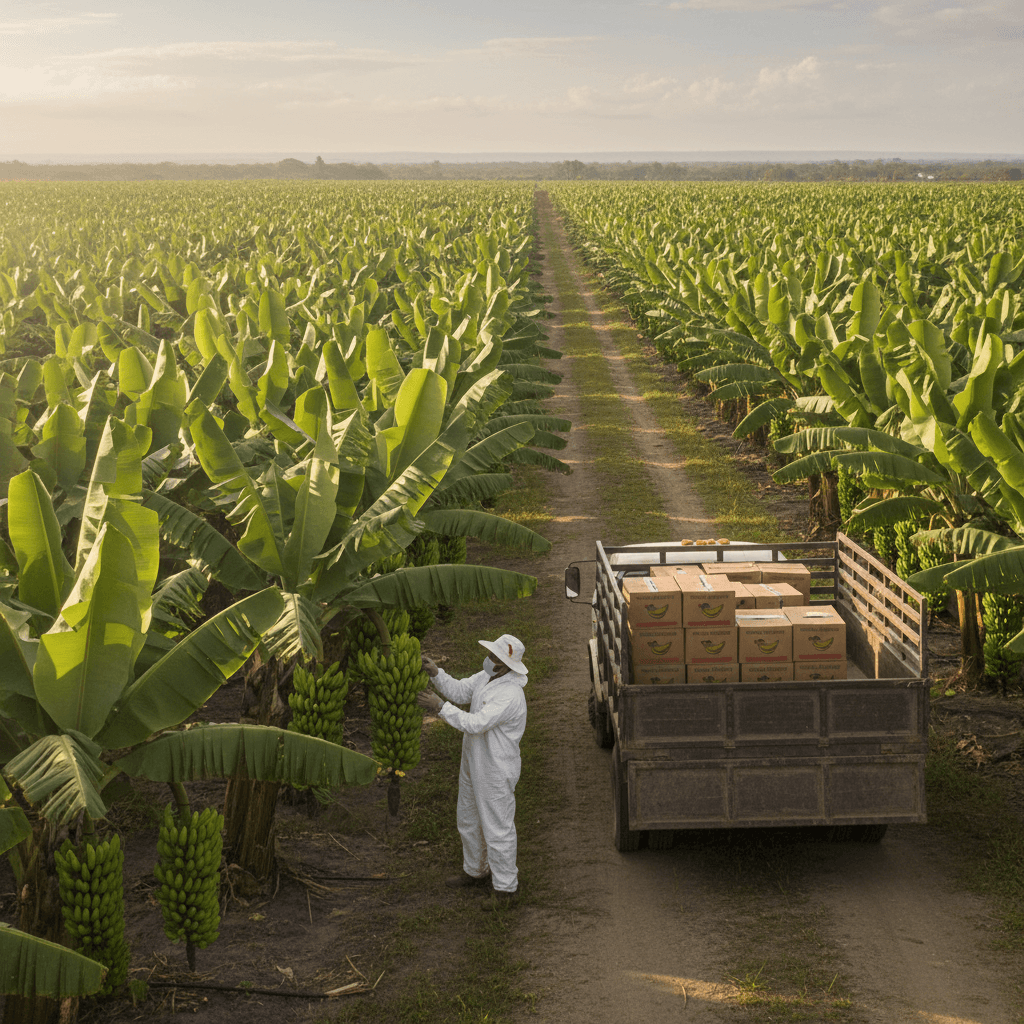
- Mandatory biosecurity protocols for all banana farms (boot disinfection stations, vehicle wash-down facilities)
- Surveillance expansion with increased sampling across the coastal banana belt (Los Ríos, El Oro, Guayas provinces)
- International coordination with the FAO and IICA on containment best practices
The critical question is whether Ecuador can contain TR4 to isolated pockets -- as Australia has partially achieved -- or whether the pathogen will spread across the coastal lowlands where Ecuador's 200,000+ hectares of banana plantations are concentrated.
Economic stakes
Bananas are Ecuador's third-largest export after oil and shrimp:
| Metric | Value |
|---|---|
| Export revenue (2025) | ~$3.8 billion |
| Planted area | ~200,000 hectares |
| Direct employment | ~250,000 workers |
| Indirect employment | ~600,000+ workers |
| Share of global exports | ~25% |
An uncontained TR4 outbreak could affect not only export volumes but also Ecuador's phytosanitary reputation -- potentially triggering import bans from markets with strict biosecurity standards, particularly Australia, New Zealand, and parts of the EU.
Industry outlook for 2026
AEBE has identified three "determining factors" for 2026 performance:
- Competitiveness -- maintaining cost advantages relative to Central American, Philippine, and Colombian competitors
- Logistical security -- ensuring reliable shipping routes and port access amid global freight disruptions
- Market access -- navigating tariff environments in the US and securing new markets through the UAE CEPA and US-Ecuador reciprocal trade framework
The Fusarium TR4 variable sits above all three as a potential sector-defining event.
What to watch
Track Agrocalidad's surveillance reports for TR4 spread patterns during the rainy season (February-April), when waterborne transmission risk peaks. Monitor whether any importing countries impose phytosanitary restrictions on Ecuadorian bananas in response to the TR4 confirmation. Watch for AEBE's monthly export data to detect any early-2026 volume softening. The development of TR4-resistant Cavendish varieties -- currently in field trials in the Philippines and Australia -- could offer a long-term solution, but commercial availability is likely 5-10 years away.
Sources: FreshFruitPortal, Fruitnet, AEBE
Source
FreshFruitPortal / Fruitnet / AEBE — “Ecuadorian banana exports soar 3.5 percent in 2025, reaching over 377 million boxes”
View originalSupport the EcuadorBrief archive.
Research support helps fund review, corrections, and hosting. New publishing is paused.