Ecuador Cacao Exports Projected to Exceed 623,000 Metric Tons in 2026, Positioning Country to Overtake Ghana as World's No. 2 Producer

Ecuador Cacao: 623,000+ MT Projected for 2026
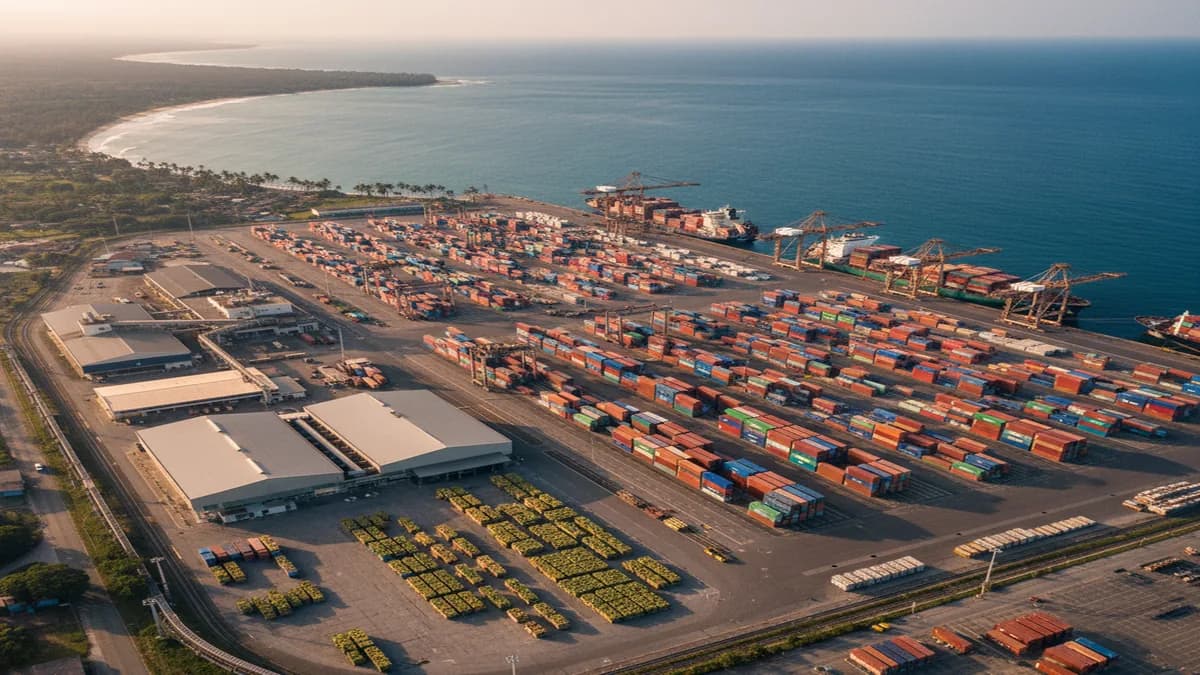
Ecuador is projected to export more than 623,000 metric tons of cacao in 2026, according to estimates from the National Cocoa Exporters Association (Anecacao). If achieved, this volume would position Ecuador to surpass Ghana as the world's second-largest cacao producer -- trailing only Ivory Coast -- by the 2026/27 season.
The projection marks a structural shift in global cocoa supply dynamics, driven by Ecuador's expanding production capacity and West Africa's deepening challenges.
Production trajectory
| Year | Ecuador cacao exports (MT) | Global rank | Notes |
|---|---|---|---|
| 2022 | ~410,000 | 4th | Behind Ivory Coast, Ghana, Cameroon |
| 2023 | ~480,000 | 3rd | Surpassed Cameroon |
| 2024 | ~560,000 | 3rd | Narrowing gap with Ghana |
| 2025 | ~590,000 (est.) | 3rd | Record year |
| 2026 | 623,000+ (proj.) | 2nd (projected) | Overtaking Ghana |
Ecuador's cacao sector has delivered compound annual growth of approximately 15% over the past four years -- a pace driven by three factors:
- Expanded planted area: New cacao plantations in the coastal provinces of Los Ríos, Manabí, and Esmeraldas, often replacing less profitable crops
- Hybrid varieties: Adoption of higher-yielding CCN-51 clones alongside traditional Nacional fino de aroma trees
- Improved agronomy: Better fertilisation, irrigation, and post-harvest practices supported by industry associations and NGO partnerships
Why West Africa is faltering
Ecuador's ascent is inseparable from the crisis engulfing West African cacao production. Ghana and Ivory Coast -- which together account for roughly 60% of global output -- have faced compounding challenges:
| Factor | Impact |
|---|---|
| Swollen shoot virus | Infected 17% of Ghana's cacao trees; requires removal and 3-year replanting cycle |
| Ageing tree stock | Average tree age exceeds 25 years in both countries; declining yields |
| Climate disruption | Irregular rainfall patterns during 2024-25 reduced pod development |
| Illegal mining (galamsey) | Destroyed cacao-growing land in Ghana's Western Region |
| Input costs | Fertiliser prices remain elevated post-Ukraine conflict |
Ghana's cocoa regulator COCOBOD has revised its 2025/26 production target downward multiple times, with industry sources suggesting output could fall below 600,000 MT -- a level that Ecuador's projected 623,000+ MT would exceed.
Price environment
Global cacao prices have experienced unprecedented volatility since 2024:
| Period | ICE cocoa futures ($/tonne) | Driver |
|---|---|---|
| Jan 2024 | ~$4,200 | West African drought |
| Apr 2024 | ~$11,000 (peak) | Ghana/Ivory Coast shortfalls |
| Dec 2024 | ~$8,500 | Partial Ivory Coast recovery |
| Feb 2026 | ~$7,000-8,000 | Elevated but stabilising |
Industry participants have described the current price environment as "better than gold" -- a reference to cacao's outperformance of traditional commodity benchmarks. For Ecuadorian exporters, the combination of record volumes and historically elevated prices translates into substantial revenue growth.
Ecuador's premium positioning: fino de aroma
Ecuador holds a unique position in global cacao markets as the source of approximately 63% of the world's fine-aroma cacao -- the Nacional variety prized by premium chocolate manufacturers for its floral, fruity flavour profile.
| Variety | Share of Ecuador exports | Price premium | End market |
|---|---|---|---|
| Nacional (fino de aroma) | ~25% | 20-40% above bulk | Artisanal/premium chocolate |
| CCN-51 | ~75% | Bulk pricing | Industrial chocolate, cocoa butter/powder |
The fine-aroma segment provides margin protection even in periods of softer bulk prices, and aligns with growing consumer demand for single-origin and bean-to-bar chocolate in North American and European markets.
Sector challenges
Despite the positive trajectory, Ecuador's cacao sector faces several headwinds:
- Cadmium contamination: EU regulations (effective since 2019) limit cadmium levels in chocolate products; some Ecuadorian cacao from volcanic soils exceeds thresholds, requiring blending or remediation
- Labour availability: Rural-to-urban migration has tightened the agricultural labour market, particularly during harvest seasons
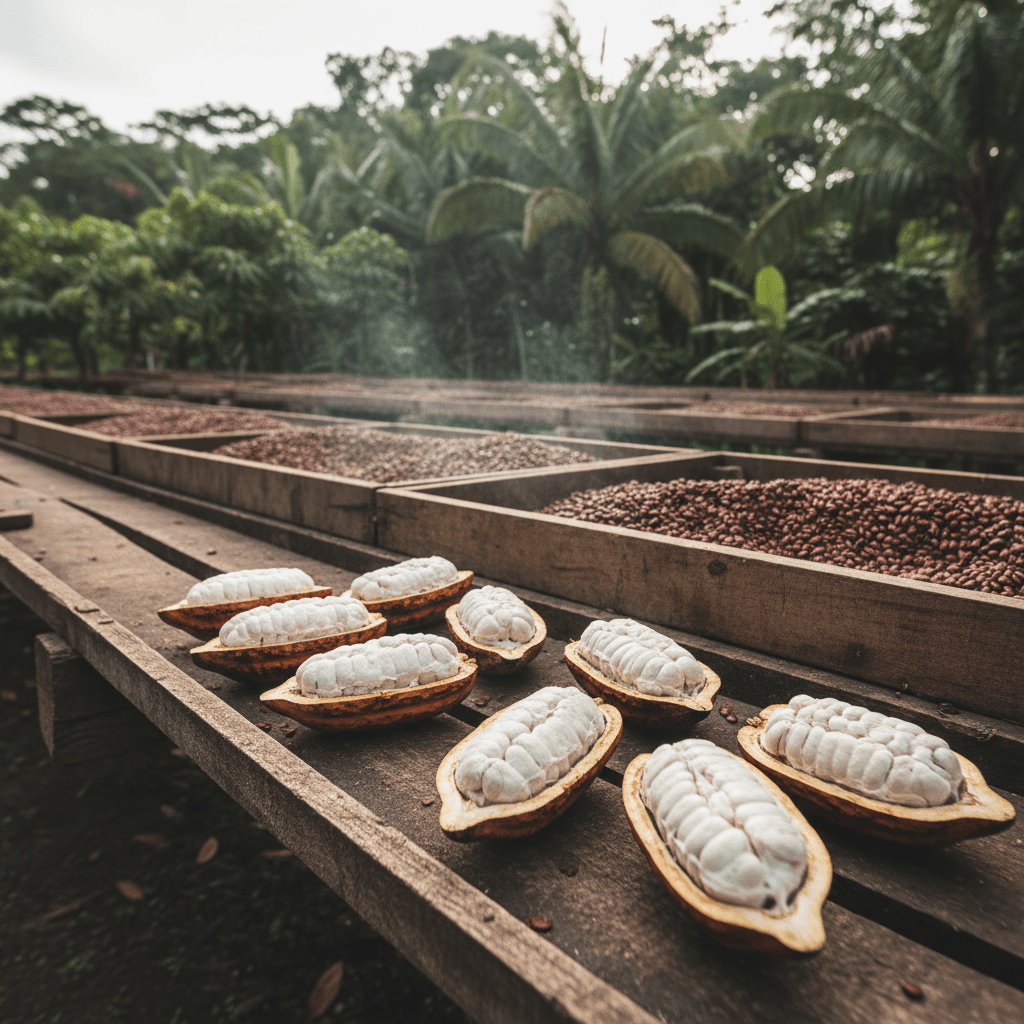
- Infrastructure gaps: Post-harvest drying and fermentation facilities remain underdeveloped in some provinces, affecting quality consistency
- Climate exposure: El Niño-related flooding in coastal provinces can damage crops and disrupt logistics
What to watch
Track Anecacao's monthly export data for Q1 2026 to assess whether the 623,000 MT pace is materialising. Monitor ICE cocoa futures for price direction as the West African main crop harvest (October-March) concludes. Watch for EU cadmium regulation enforcement actions that could affect market access for Ecuadorian beans. The UAE CEPA (signing March 2026) opens a new re-export hub for Ecuadorian cacao into Gulf and South Asian markets. Follow COCOBOD's revised production estimates for Ghana -- the benchmark against which Ecuador's No. 2 ranking will be measured.
Sources: Reuters, Anecacao, France 24, Koltiva
Source
Reuters / Anecacao / France 24 — “Ecuador cocoa exports to exceed 623,000 metric tons in 2026, Anecacao estimates”
View originalSupport the EcuadorBrief archive.
Research support helps fund review, corrections, and hosting. New publishing is paused.