Ecuador Companies Face Autogeneration Deadline as Dry-Season Deficit Could Reach 1,300 MW

Ecuadorian companies are entering the 2026 dry-season planning window with a widening power-risk equation: the commercial and industrial sectors together consume about 46% of national electricity demand, while the projected generation deficit for the coming estiaje could reach 1,300 MW.
The dry season is expected to begin in October 2026 and could extend through March 2027. As of the latest reported data, only 55 MW of new thermal generation had been contracted, while the Esmeraldas I thermal plant lost 125 MW after a June 5 fire and could remain offline for up to one year.
Large Consumers Under Deadline
Large electricity consumers have roughly six months to comply with the government requirement to install generation systems capable of supplying their own demand under Executive Decree 32, issued in June 2025.
The rule applies to companies connected to Alto Voltaje 1 (AV1) and Alto Voltaje 2 (AV2). The AV2 group includes major industrial and mining consumers such as Mirador, operated by Ecuacorriente, and Fruta del Norte, operated by Lundin Gold.
Together, four AV2 companies consume just over 230 MW, close to the 241 MW the government had expected from the failed Progen and Austral contracts. The government disbursed USD 168.9 million under those contracts.
Private Investment Is Uneven
Lundin Gold signed an agreement on June 8 for 20 MW of renewable energy from Barka Capital, to be supplied by the Hidroquest hydro project. The facility is expected to begin generating in August or September.
Novacero plans two 50 MW mini-hydro plants with a total investment of USD 180 million, but construction timelines run well beyond the immediate dry-season window.
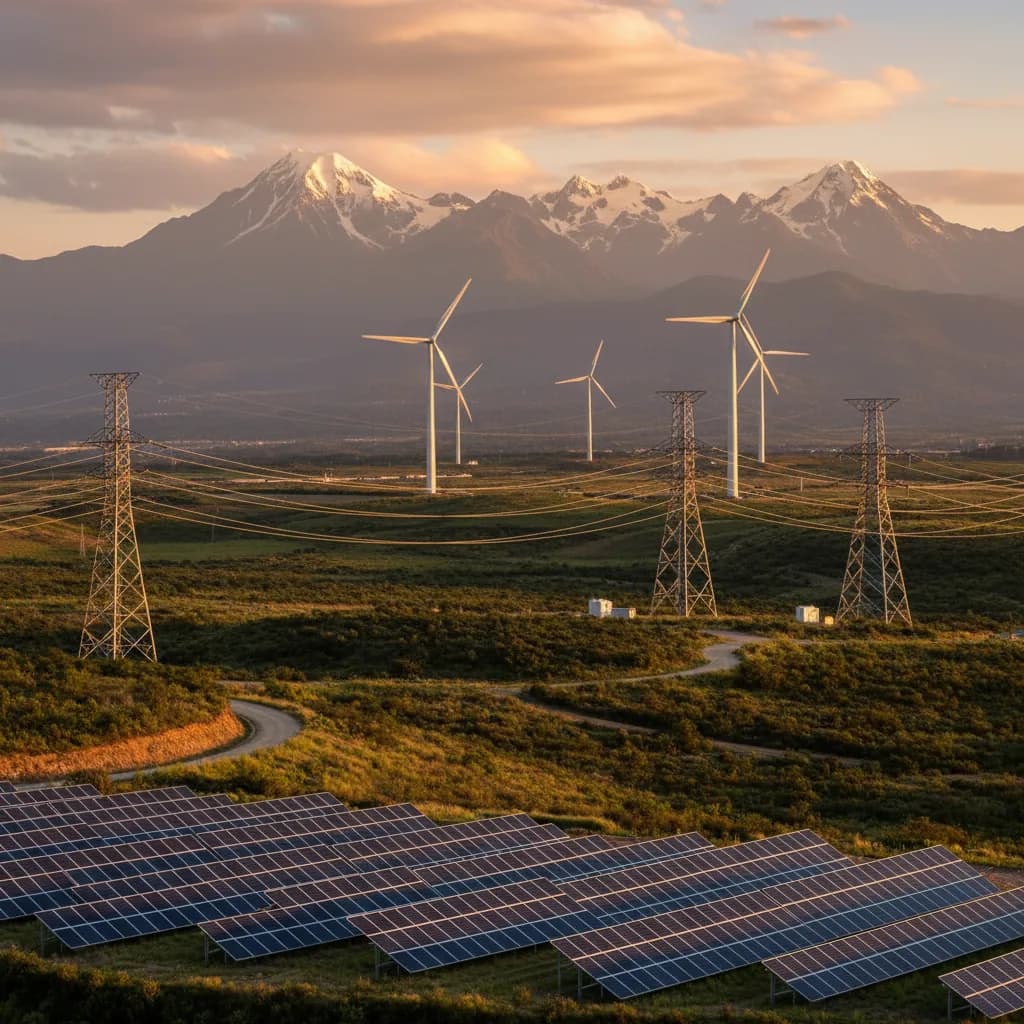
Other companies are investing defensively. Ideal Alambrec is installing a photovoltaic plant to cover 30% of its electricity needs, while Plasticaucho expects two plants to provide 3.5 MW, enough to cover its own operations.
Industry representatives estimate that the business sector has 300-400 MW of autogeneration capacity, but much of it is designed for emergencies rather than full continuous production.
What to watch
The key indicators are the pace of new state generation contracting, the operational recovery timeline for Esmeraldas I, and whether large consumers can move from emergency generators to durable self-supply projects before the October 2026-March 2027 dry-season window.
For investors, this is a continuity-of-operations issue. Companies with reliable backup generation, power-purchase agreements, or self-generation projects should carry lower operational risk than peers dependent entirely on the public grid.
Source
Primicias — “A cuatro meses del estiaje, empresas de Ecuador buscan implementar sus propias plantas eléctricas; el tiempo juega en contra”
View originalSupport the EcuadorBrief archive.
Research support helps fund review, corrections, and hosting. New publishing is paused.