Ecuador Files 3 Counter-Complaints Against Colombia at CAN General Secretariat, Escalating Andean Trade Dispute to Full Institutional Battle

Triple Filing at CAN General Secretariat
Ecuador's Ministry of Production, Foreign Trade, Investment, and Fisheries (MPCEIP) filed three formal complaints with the Andean Community (CAN) General Secretariat on February 21, 2026, escalating the bilateral trade dispute with Colombia to a full institutional legal battle within the Andean bloc's supranational framework.
The complaints argue that Ecuador's 30% surcharge on Colombian imports — designated as a "security tariff" — constitutes a legitimate national security measure under CAN treaty provisions, and that Colombia's retaliatory actions violate Andean free trade commitments.
The Three Complaints
| Complaint | Subject | Legal Basis |
|---|---|---|
| 1. National security justification | Ecuador's 30% tariff is permissible under CAN security exceptions | Article 99 of the Cartagena Agreement |
| 2. Colombian retaliation is disproportionate | 900% pipeline fee increase violates proportionality principles | CAN competition and trade rules |
| 3. Non-tariff barriers by Colombia | Colombia imposing informal import restrictions on Ecuadorian goods | CAN free trade zone obligations |
The filings represent a coordinated legal strategy that reframes the dispute from a simple tariff-for-tariff escalation into a question of sovereign security prerogatives under Andean law.
Timeline of Escalation
| Date | Action | Actor |
|---|---|---|
| January 2026 | Ecuador imposes 30% security tariff on Colombian imports | MPCEIP |
| January 2026 | Colombia files legal challenge at CAN | Colombian Trade Ministry |
| February 2026 | Colombia raises OCP pipeline transit fee by 900% | Ecopetrol/Colombian regulators |
| February 2026 | Colombia begins sourcing alternatives from China, Brazil, Mexico | Colombian importers |
| February 21 | Ecuador files 3 counter-complaints at CAN | MPCEIP |
Bilateral Trade at Stake
The Ecuador-Colombia trade relationship represents one of the most significant bilateral corridors within the Andean Community:
| Trade Metric | Value |
|---|---|
| Total bilateral trade (2025) | ~$2.3 billion |
| Ecuador exports to Colombia | ~$1.1 billion |
| Colombia exports to Ecuador | ~$1.2 billion |
| Top Ecuador exports | Canned fish, palm oil, vehicles, processed foods |
| Top Colombia exports | Chemicals, plastics, paper products, textiles |
| OCP pipeline throughput | ~150,000 barrels/day of Ecuadorian crude |
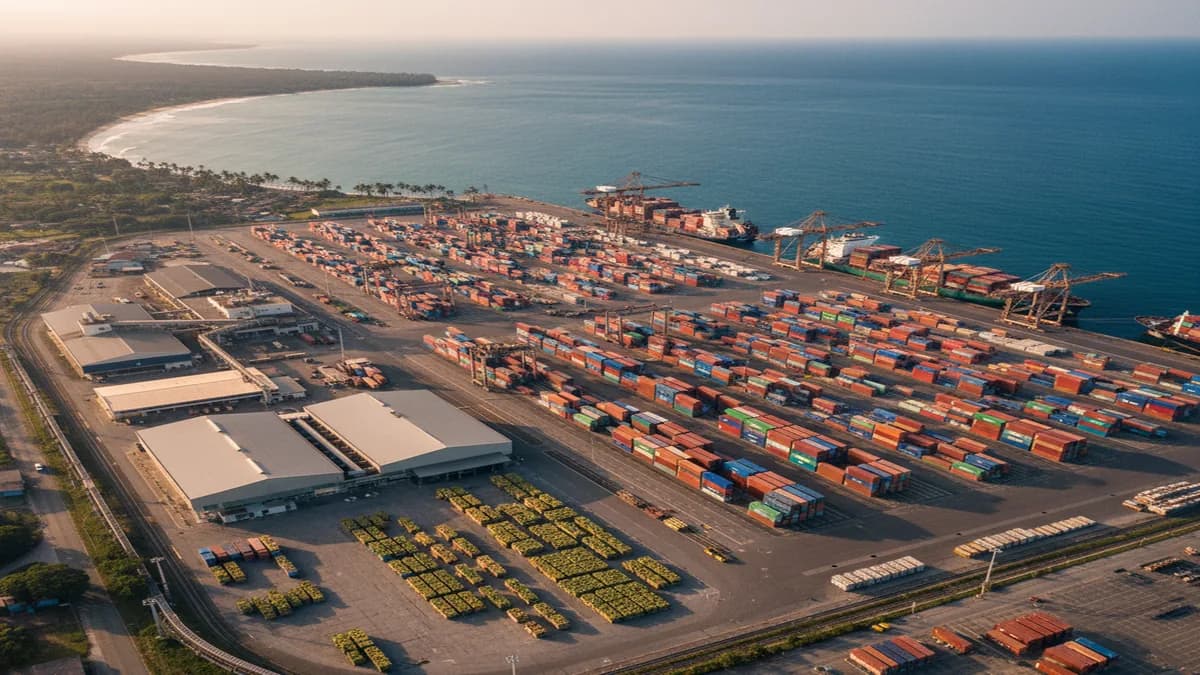
The OCP (Oleoducto de Crudos Pesados) pipeline is a critical piece of infrastructure: it transits Colombian territory to reach the Pacific coast for export. Colombia's 900% fee increase on pipeline transit effectively weaponizes Ecuador's energy export logistics — a move that Ecuador's third CAN complaint specifically addresses.
The National Security Argument
Ecuador's legal position rests on Article 99 of the Cartagena Agreement, which permits member states to adopt measures that would otherwise violate CAN free trade rules when necessary to protect:
- National security and public order
- Human health and environmental protection
- Essential security interests related to arms, ammunition, and war materials
The MPCEIP argues that Ecuador's ongoing internal armed conflict — declared in January 2024 and still in effect — provides the constitutional and legal basis for treating trade barriers as security measures. The argument is that revenue from the tariff funds security operations, and that certain Colombian imports are linked to organized crime supply chains.
CAN Institutional Framework
The Andean Community — comprising Ecuador, Colombia, Peru, and Bolivia — operates a supranational legal system with binding authority:
| CAN Institution | Role | Authority |
|---|---|---|
| General Secretariat | Investigates complaints, issues preliminary findings | Administrative |
| Andean Tribunal of Justice | Hears appeals, issues binding rulings | Judicial |
| CAN Commission | Sets trade policy rules | Legislative |
The process typically follows this path: the General Secretariat investigates, issues a Dictamen (opinion), and if the offending party does not comply, the case escalates to the Andean Tribunal of Justice in Quito. Tribunal rulings are legally binding on member states — a stronger enforcement mechanism than most international trade forums.
However, compliance history is mixed. CAN member states have historically delayed or ignored unfavorable rulings, with limited enforcement mechanisms beyond reputational pressure.
Economic Damage Assessment
Both countries are absorbing costs from the escalating dispute:
| Impact | Ecuador | Colombia |
|---|---|---|
| Tariff cost | 30% on Colombian imports | Retaliatory measures on Ecuadorian goods |
| Pipeline cost | 900% transit fee increase ($50-100M/year) | Revenue gain but reputational damage |
| Supply chain disruption | Loss of Colombian chemical/industrial inputs | Loss of Ecuadorian processed food/tuna |
| Substitution risk | Seeking alternative industrial suppliers | Sourcing from China, Brazil, Mexico |
| Institutional cost | Legal fees, diplomatic friction | Same |
The supply substitution dynamic is particularly concerning for Ecuador: while tariff disputes are often resolved through negotiation, once Colombian importers establish alternative supply chains from China, Brazil, and Mexico, those commercial relationships tend to be sticky — creating permanent market share losses even after tariffs are lifted.
Precedent Cases at CAN Tribunal
The CAN Tribunal has adjudicated similar disputes in previous years:
| Case | Countries | Outcome |
|---|---|---|
| Safeguard tariffs (2009) | Ecuador vs. CAN members | Ecuador permitted temporary measures during financial crisis |
| Rice import restrictions (2014) | Colombia vs. Ecuador | Colombia ordered to comply with free trade rules |
| Vehicle import barriers (2017) | Ecuador vs. Colombia | Both sides ordered to reduce barriers |
The 2009 safeguard precedent is particularly relevant: Ecuador successfully argued that economic emergency conditions justified temporary departure from CAN free trade rules. The current security-based argument follows similar logic but under a different treaty provision.
What to Watch
Track the CAN General Secretariat's response timeline — the Secretariat typically issues preliminary findings within 60-90 days, meaning initial rulings could come by May 2026. Monitor OCP pipeline operations — any further escalation in transit fees or operational disruptions would directly impact Ecuador's crude oil exports and fiscal revenues. Watch Colombia's formal legal response — Bogota's counter-arguments will reveal whether the dispute remains within institutional channels or spills over into broader diplomatic confrontation. Track bilateral trade volume data — monthly import/export statistics will reveal the real economic cost of the dispute faster than any legal proceeding.
Sources: El Ciudadano, Infobae
Source
El Ciudadano / Infobae — “Ecuador presenta tres contrademandas contra Colombia en la CAN”
View originalSupport the EcuadorBrief archive.
Research support helps fund review, corrections, and hosting. New publishing is paused.