Ecuador's Logistics Sector Experiences Significant Growth Driven by Record Exports and Port Activity

Ecuador's trade sector demonstrated significant expansion in 2025, with exports reaching a record high. This momentum has continued into the current year, as exports increased by 9.3% and imports by 17.5% between January and July. This growth underscores the critical role of the national logistics and transport infrastructure.
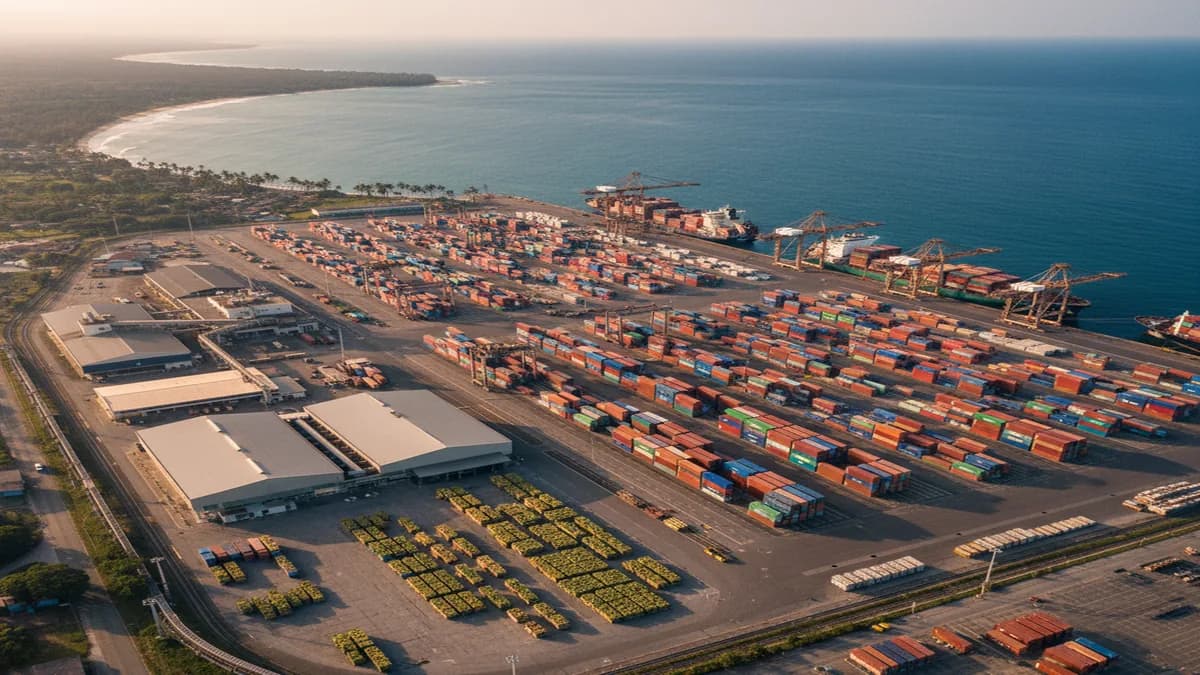
The national port system has experienced substantial growth, with total cargo mobilized rising from 19.2 million tons in 2015 to 30.9 million tons in 2025, an accumulated increase of 60%. Within this, containerized cargo volume grew by 66%, and solid bulk increased by 127%. The movement of containers nationally escalated from 1.82 million to 2.88 million TEU during this period. The Guayaquil port system is a primary driver of this activity, handling 86% of non-oil cargo and 90% of national containerized movement, reflecting a 69% accumulated growth over the last decade.
Land transport is integral to this logistical framework. Thousands of heavy vehicles daily connect production areas, including agricultural and shrimp farming zones on the Coast, collection centers in the Sierra, and border crossings with Colombia and Peru, to international market exit points. Fausto Moreta, strategic director of the Land Transport Division of Grupo Torres & Torres, highlights that land transport is the sole logistics mode capable of reaching dispersed production zones and completing door-to-door delivery. At the Simón Bolívar Maritime Port of Guayaquil, administered by Contecon, between 11,000 and 15,000 trucks are serviced weekly. The Terminal Portuario de Guayaquil (TPG) dispatches an average of 400 to 600 import containers daily and receives approximately 400 export containers.
Logistics costs in Latin America, according to Inter-American Development Bank (BID) studies, range from 18% to 35% of a product's value, encompassing land and sea transport, storage, inventories, insurance, security, and port operation. Data from the Asociación Logística del Ecuador (Asolog), cited by Fausto Moreta, indicates that logistics costs represent 17.9% of the product's selling price. Iliana González, executive director of Asotep, notes that a single transport rate is not viable due to variables such as distances, thermal requirements, and product nature. Transport efficiency, as stated by Francisco Almeida, National Sales Manager for Shacman Trucks, involves factors beyond freight cost, including unit availability, mechanical reliability, fuel consumption, load capacity, delivery times, security, spare parts availability, and after-sales service quality.
What to watch
Continued monitoring of port throughput and land transport volumes will indicate sustained economic activity. Changes in logistics costs, particularly the terrestrial freight component, could impact the competitiveness of Ecuadorian exports. The ongoing investment in heavy vehicle technology and infrastructure development will be key to maintaining and improving logistical efficiency.
Sources: eluniverso.com.
Support daily Ecuador business intelligence.
Research support funds source monitoring, data checks, editing, publishing, and sector coverage for professionals tracking Ecuador.