Ecuador's Petroleum Paradox: $5.9B in Projected Crude Exports Nearly Matched by $5.0B Fuel Import Bill in 2026

Ecuador's Petroleum Paradox Deepens in 2026
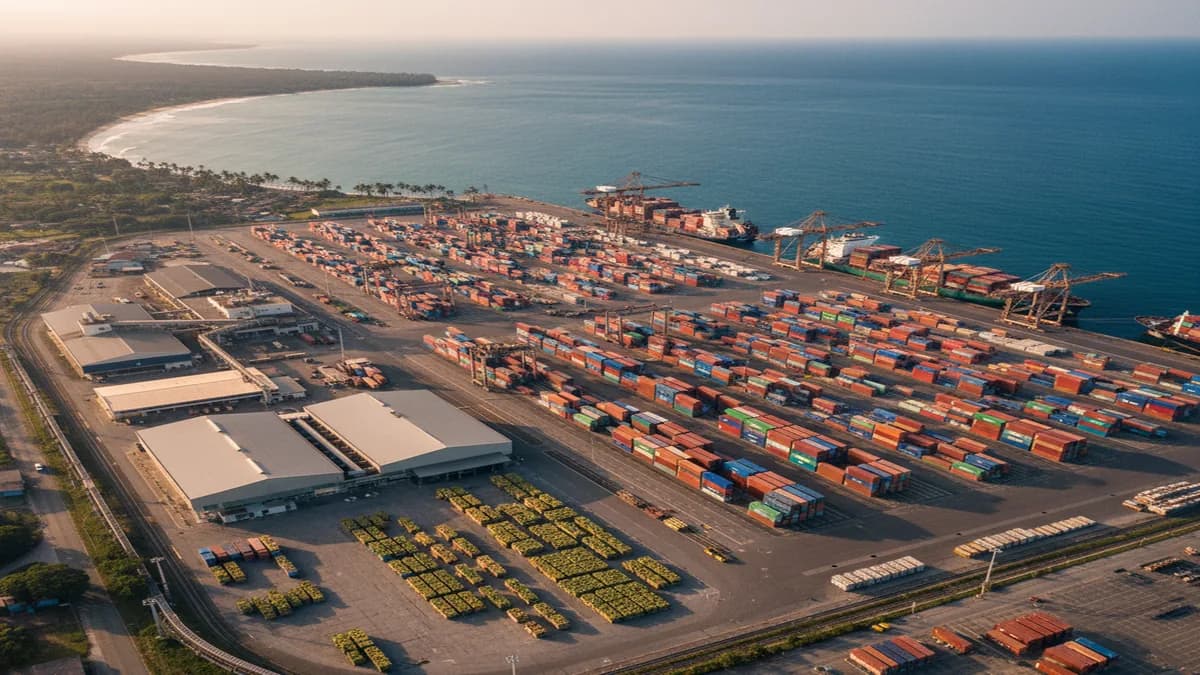
Ecuador's Ministry of Finance projects that the country will export approximately $5.926 billion in crude oil in 2026 while importing $4.981 billion in refined fuels — reducing the net petroleum benefit to just $945 million. The near-parity between crude revenue and fuel costs represents a dramatic deterioration from historical margins and raises fundamental questions about the energy economics of a country that has defined itself as a petroleum producer since the 1970s.
The shrinking petroleum margin
| Year | Crude exports | Fuel imports | Net benefit |
|---|---|---|---|
| 2023 | ~$10.5B | ~$4.2B | ~$6.3B |
| 2024 | $9.572B | ~$4.6B | ~$5.0B |
| 2025 | $7.750B | ~$5.1B | ~$2.65B |
| 2026 (projected) | $5.926B | $4.981B | $945M |
The net petroleum benefit has collapsed from approximately $6.3 billion in 2023 to a projected $945 million in 2026 — an 85% erosion in three years. In 2025, the gap narrowed to just $662 million before a modest projected recovery.
Why Ecuador imports so much fuel
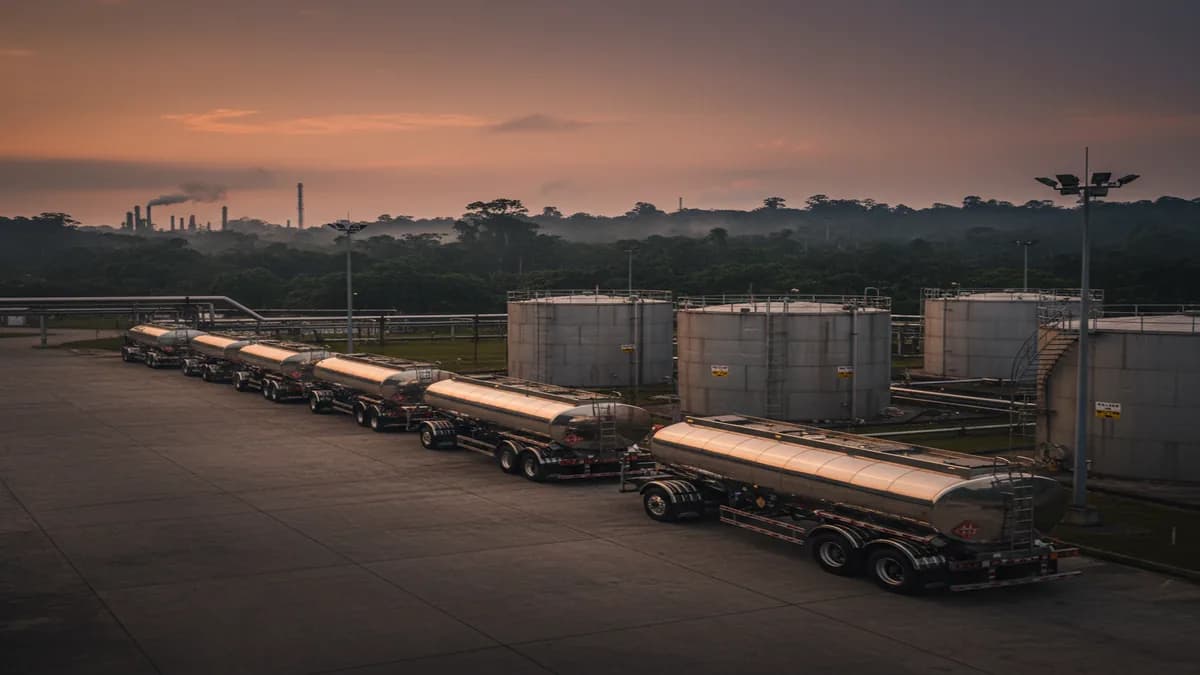
Despite producing approximately 349,000 barrels per day in 2025, Ecuador lacks sufficient domestic refining capacity to meet its own fuel needs:
| Infrastructure | Capacity |
|---|---|
| Crude production | ~349,000 bbl/d |
| Esmeraldas refinery | ~110,000 bbl/d (nameplate); ~90,000 bbl/d actual |
| La Libertad refinery | ~45,000 bbl/d |
| Shushufindi refinery | ~20,000 bbl/d |
| Total refining capacity | ~175,000 bbl/d (nameplate) |
| Export volume | ~180,000–200,000 bbl/d |
Ecuador effectively exports crude at a discount (Oriente crude trades $4–6/barrel below WTI) and imports refined products at a premium — selling low and buying high. The Esmeraldas refinery, the country's largest, operates chronically below nameplate capacity due to deferred maintenance and equipment failures.
Production decline deepens the crisis
The crude export revenue collapse is driven by both price weakness and production decline:
- Production: Averaged ~349,000 bbl/d in 2025, down 8.5% year-on-year and well below the ~480,000 bbl/d peak
- Pipeline disruptions: The SOTE pipeline rupture in March 2025 and advancing Coca river erosion forced temporary shutdowns
- Investment collapse: Public investment in EP Petroecuador fell 73% to $485 million in 2025
- Price environment: WTI averaged $65–75/barrel in 2025, compared to $78–85/barrel in 2024
Simultaneously, fuel demand continues to grow as the vehicle fleet expands (auto sales up 37% in January 2026) and thermal electricity generation supplements hydroelectric output during dry periods.
Import composition
| Fuel | 2026 projected imports | Share |
|---|---|---|
| Diesel | ~$2.1B | 42% |
| Gasoline (Extra/EcoPaís) | ~$1.8B | 36% |
| Domestic gas (LPG) | ~$1.1B | 22% |
The diesel dependency is particularly acute, as diesel powers the commercial transport fleet, agricultural machinery, and backup thermal generators — all critical to economic activity.
Fiscal implications
With petroleum historically contributing 25–30% of government revenue, the shrinking net petroleum margin directly constrains fiscal capacity. IMF fiscal targets for 2026 require a deficit of no more than 1.0% of GDP — difficult to achieve with petroleum's net contribution collapsing. The $4 billion sovereign bond issuance (January 2026) was partially justified by the need to fill the petroleum revenue gap. Fuel subsidy reform under the monthly price-band mechanism has helped contain import costs but remains politically sensitive.
What to watch
Track monthly crude production data from Petroecuador — any sustained recovery above 400,000 bbl/d would improve the margin. Monitor WTI price trajectory — every $10/barrel above $70 generates approximately $700 million in additional annual crude revenue. Watch for progress on the Pacific refinery project (long proposed, never built) or any Esmeraldas refinery overhaul announcements. The monthly fuel price-band adjustments will signal the pace of subsidy reform.
Sources: Lexis, Primicias, Ministerio de Finanzas
Source
Lexis / Primicias / Ministerio de Finanzas — “Ecuador importa casi tanto combustible como crudo exporta en 2026, según informe”
View originalSupport the EcuadorBrief archive.
Research support helps fund review, corrections, and hosting. New publishing is paused.