Ecuador Imposes 900% Tariff Hike on SOTE Pipeline Transport of Colombian Crude

Ecuador Imposes 900% Tariff Hike on SOTE Pipeline Transport of Colombian Crude
Ecuador's government announced a 900% increase in the tariff charged for transporting Colombian crude oil through the state-owned Trans-Ecuadorian Pipeline System (SOTE), raising the fee from $3 to $30 per barrel in what officials explicitly characterised as retaliation for Colombia's suspension of electricity exports.
The tariff hike, announced on January 28 by Energy Minister Ines Manzano, affects approximately 12,000 barrels per day (bpd) of crude produced by Colombia's state oil company Ecopetrol in border-adjacent fields that rely on the SOTE system to reach Ecuador's Pacific coast export terminal at Esmeraldas.
Why Colombian crude flows through Ecuador
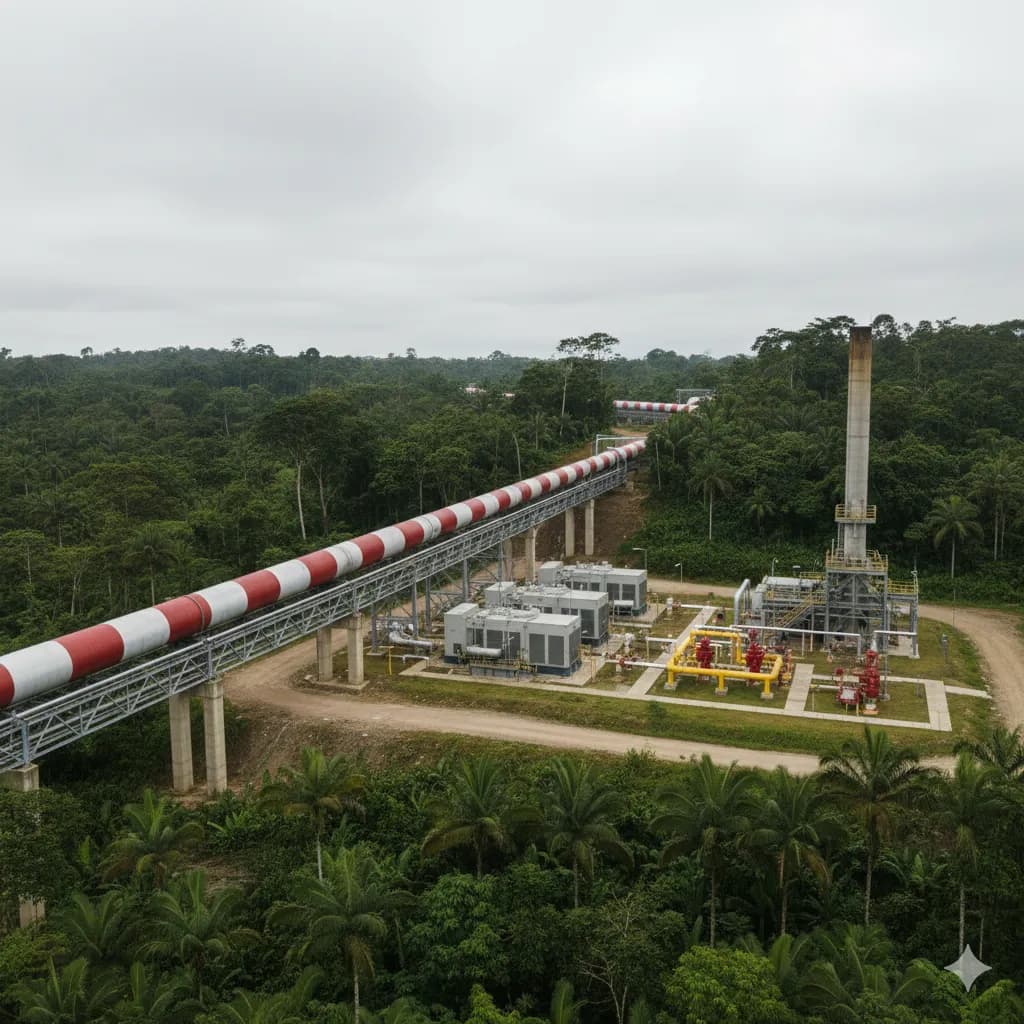
A quirk of geography and infrastructure explains the dependency. Several of Ecopetrol's production blocks in Colombia's Putumayo department -- which borders Ecuador's Sucumbios province -- lack direct pipeline access to Colombia's own Pacific or Caribbean export terminals. Since the early 2000s, this crude has been evacuated via a cross-border feeder line into Ecuador's SOTE system under a bilateral transportation agreement.
At the previous tariff of $3/barrel, the transportation cost represented roughly 4.5% of the crude's market value (assuming ~$67/barrel Vasconia blend pricing). At $30/barrel, the cost jumps to approximately 45% -- a level that renders the route economically unviable for all but the most exceptional market conditions.
Financial impact
The tariff hike creates asymmetric costs:
- Cost to Ecopetrol: Approximately $324,000 per day in additional transport fees (12,000 bpd x $27 increase), or roughly $9.7 million per month
- Revenue to Ecuador: PetroEcuador would capture the full tariff increase, generating an additional $118 million annually at current volumes -- though Ecopetrol is widely expected to halt or dramatically reduce flows rather than absorb the cost
- Impact on Ecopetrol: The 12,000 bpd represents less than 2% of Ecopetrol's total production of approximately 680,000 bpd, making it operationally manageable but symbolically significant
OCP pipeline unaffected
Importantly, the tariff increase applies only to the state-owned SOTE pipeline. The OCP (Oleoducto de Crudos Pesados), Ecuador's privately operated heavy crude pipeline, is not subject to the government decree. The OCP, which has capacity of approximately 450,000 bpd, is owned by a consortium that includes ANDES Petroleum (CNPC/Sinopec subsidiary) and Repsol.
Minister Manzano was explicit about the retaliatory nature of the measure. "Colombia has chosen to weaponise its energy exports to Ecuador," she said in a press statement. "Ecuador has every sovereign right to adjust the terms under which we provide critical infrastructure services to Colombian companies."
Escalation trajectory
The pipeline tariff hike adds to a rapidly escalating series of bilateral economic measures:
| Date | Measure | Initiator |
|---|---|---|
| Jan 25 | 30% tariffs on Ecuadorian goods | Colombia |
| Jan 27 | 30% retaliatory tariffs on Colombian goods | Ecuador |
| Jan 28 | SOTE tariff hike to $30/bbl | Ecuador |
| Feb 1 | Electricity exports suspended | Colombia |
| Feb 1 | Border trade collapse at Rumichaca | Both |
Energy sector analysts at Wood Mackenzie noted that the SOTE tariff dispute could set a precedent for broader cross-border infrastructure disputes in the Andean region, where pipeline and transmission interconnections have historically operated under stable bilateral frameworks.
Source
UPI — “Ecuador hikes oil transportation tariffs for Colombian crude in escalating trade dispute”
View originalSupport the EcuadorBrief archive.
Research support helps fund review, corrections, and hosting. New publishing is paused.