Ecuador's $1.2 Billion Tuna Export Sector Faces Price Pressure as Abundant Yellowfin Catches Collide With Global Skipjack Scarcity and Thai Reference Pricing

Two-Speed Tuna Market
Ecuador's tuna sector — the world's largest exporter — is navigating a two-speed market in early 2026: abundant yellowfin tuna catches in the Eastern Pacific are depressing regional prices, while persistent global skipjack scarcity allows Thailand to maintain dominance over international price-setting.
The result is margin compression for Ecuadorian processors, who rely heavily on yellowfin but must compete against Thai-set benchmark prices in global canned and processed tuna markets.
Ecuador's Tuna Industry Profile
| Metric | Value |
|---|---|
| Global market share | ~17% of world tuna trade |
| Annual export volume | 500,000+ tonnes |
| Annual export revenue | $1.2 billion |
| Primary species | Yellowfin, skipjack, bigeye |
| Fishing grounds | Eastern Pacific Ocean |
| Processing hub | Manta, Manabí Province |
| Fleet size | ~115 industrial vessels |
| Direct employment | ~25,000 workers |
| Indirect employment | ~100,000 across supply chain |
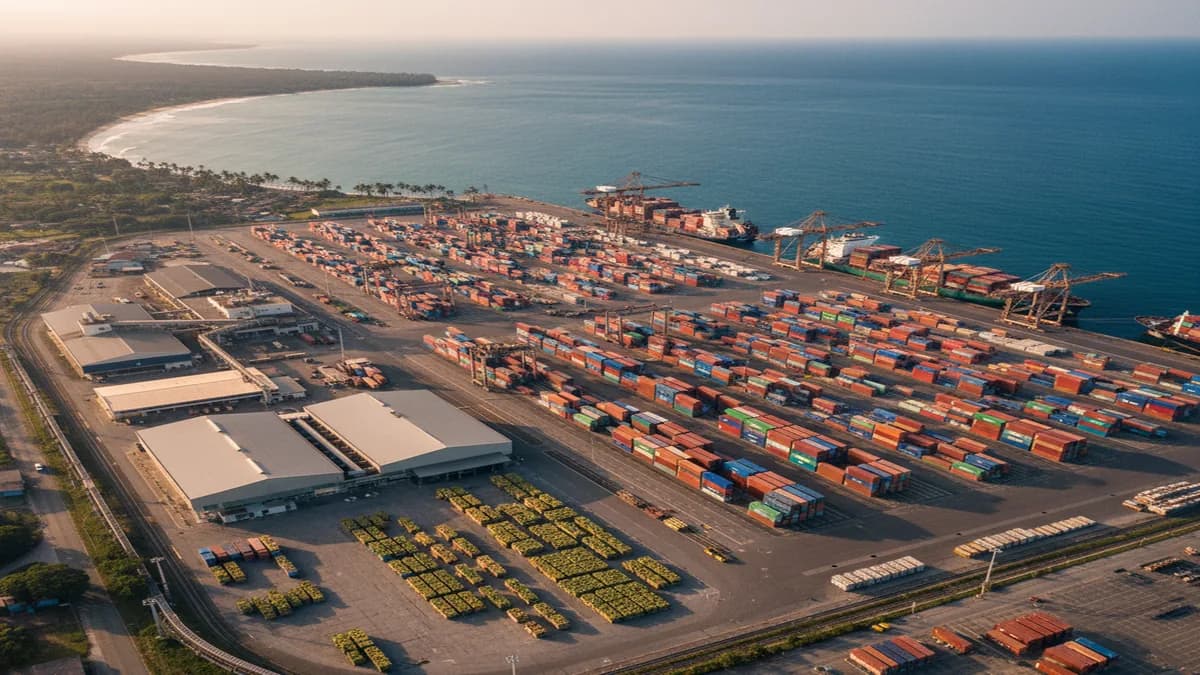
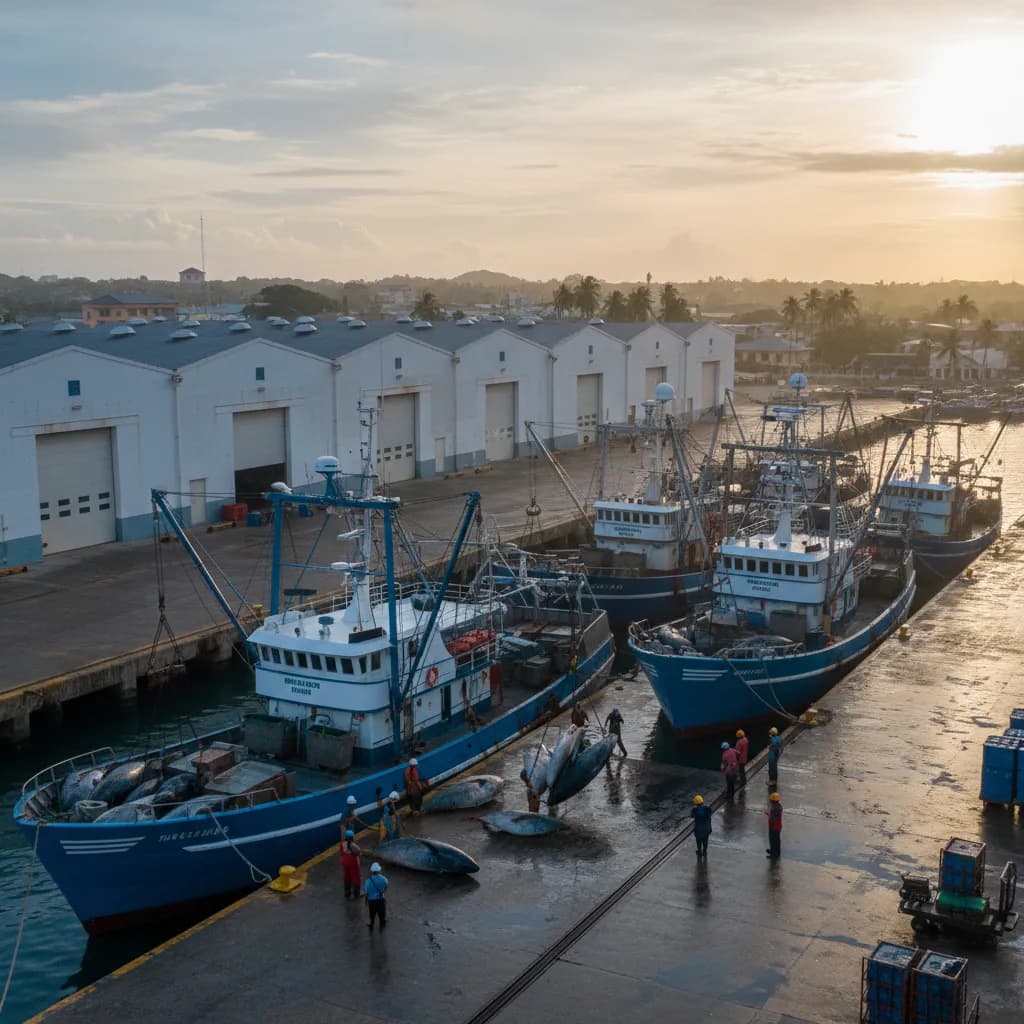
Ecuador ranks as the world's top tuna exporter and one of the largest processors, with the port city of Manta serving as the industry's operational center. The sector employs approximately 25,000 workers directly and supports 100,000+ indirect jobs across the fishing, processing, cold chain, and logistics supply chain.
The Pricing Dilemma
Yellowfin Abundance
| Factor | Detail |
|---|---|
| Eastern Pacific catches | Above average in Q4 2025 - Q1 2026 |
| Fleet efficiency | Higher catch-per-unit-effort (CPUE) |
| Cold storage | Manta facilities near capacity |
| Price impact | Downward pressure on regional yellowfin prices |
Skipjack Scarcity
| Factor | Detail |
|---|---|
| Western Pacific catches | Below historical averages |
| Thailand stockpiles | Tight inventory levels |
| Bangkok benchmark | Elevated reference price |
| Price impact | Thailand sets global floor for canned tuna |
The disconnect creates a structural problem: Ecuador catches abundant, lower-priced yellowfin but competes in export markets where prices are benchmarked against scarce, higher-priced skipjack processed in Thailand. When global buyers reference Thai skipjack prices, Ecuadorian yellowfin products face a price ceiling set by a different species in a different ocean.
Export Destinations
| Market | Share of Exports | Key Products |
|---|---|---|
| European Union | ~35% | Canned, loins, pouches |
| United States | ~20% | Canned, pouches |
| Latin America | ~18% | Canned, fresh/frozen |
| Asia | ~12% | Frozen loins, sashimi-grade |
| Other | ~15% | Middle East, Africa |
The EU remains Ecuador's largest tuna market at approximately 35% of exports, benefiting from the EU-Ecuador Free Trade Agreement which provides preferential tariff treatment. The recently concluded US-Ecuador ART could further expand American market access, though processed tuna was already subject to relatively low US tariffs.
IATTC Regulatory Framework
Ecuador's tuna fleet operates under the Inter-American Tropical Tuna Commission (IATTC) regulatory framework, which imposes:
| Regulation | Detail |
|---|---|
| Annual closure | 72-day fleet-wide fishing ban |
| Capacity limits | Vessel registry tonnage caps |
| Observer coverage | 100% on large purse seiners |
| FAD restrictions | Limits on fish aggregating devices |
| Bycatch rules | Dolphin-safe certification requirements |
The 72-day annual closure — during which Ecuador's entire industrial tuna fleet must cease operations — creates a seasonal supply constraint that historically supports prices during the closure period and immediate aftermath.
Environmental and Sustainability Pressures
The industry faces growing sustainability scrutiny:
- Abandoned FADs — Fish aggregating devices drifting into the Galapagos Marine Reserve, causing plastic pollution and reef damage
- Bycatch concerns — Shark and sea turtle interactions under international monitoring
- Carbon footprint — Fleet fuel consumption under emerging ESG reporting frameworks
- MSC certification — Limited Ecuadorian tuna fisheries hold Marine Stewardship Council certification, constraining access to premium sustainability-branded markets
The nonprofit TUNACONS is working on biodegradable, non-entangling FAD designs to address the Galapagos contamination issue, but industry-wide adoption remains slow.
Competitive Landscape
| Country | Global Rank | Primary Species | Advantage |
|---|---|---|---|
| Ecuador | #1 exporter | Yellowfin, skipjack | Eastern Pacific access, processing capacity |
| Thailand | #1 processor | Skipjack | Scale, price-setting power |
| Spain | #3 exporter | Yellowfin, skipjack | EU market proximity |
| Indonesia | #4 exporter | Skipjack, yellowfin | Low labor costs |
| Philippines | #5 exporter | Skipjack | Western Pacific access |
Thailand's dominance as the world's largest tuna processor — despite minimal domestic fishing — gives it outsized influence over global pricing. Thai processors import raw tuna from across the Pacific and Indian Oceans, processing it into canned products that set benchmark prices worldwide.
What to Watch
Track IATTC stock assessments for yellowfin and skipjack — abundance data will determine whether the current pricing dynamic persists through 2026. Monitor Thailand inventory levels — any rebuild in Thai skipjack stockpiles would reduce upward price pressure and further compress Ecuadorian margins. Watch EU trade volumes — as Ecuador's largest tuna market, any demand shifts or regulatory changes (sustainability requirements, import standards) would have outsized impact. Track the Manta port expansion plans — processing capacity constraints could limit Ecuador's ability to capture value-added opportunities even when raw material is abundant.
Sources: El Oriente, CNA, IATTC
Source
El Oriente / CNA / IATTC — “Principales noticias de Ecuador hoy 19 de febrero de 2026”
View originalSupport the EcuadorBrief archive.
Research support helps fund review, corrections, and hosting. New publishing is paused.