Ecuador Expands US Security Partnership With Surveillance Drones, Military Advisors, and Port Monitoring Systems to Combat Drug Trafficking

Ecuador Deepens US Security Partnership
President Daniel Noboa has announced a major expansion of security cooperation with the United States, welcoming American military advisors, surveillance drones, and port monitoring technology as part of an intensified campaign against drug trafficking and organized crime. The partnership represents the deepest US-Ecuador security integration since the closure of the Manta Forward Operating Base in 2009.
Cooperation components
| Component | Details |
|---|---|
| Military advisors | US Southern Command (SOUTHCOM) personnel deployed for training and operational support |
| Surveillance drones | Medium-altitude, long-endurance (MALE) UAVs for border and maritime patrol |
| Port monitoring | Container scanning and cargo tracking systems for Guayaquil and Posorja |
| Intelligence sharing | Real-time data exchange between DEA, FBI, and Ecuadorian law enforcement |
| Coast Guard cooperation | Joint maritime patrols in Pacific coastal waters |
| Training programs | Counter-narcotics and counter-insurgency training for Ecuadorian military and police |
Context: Ecuador's security crisis
The security partnership expansion responds to a dramatic deterioration in Ecuador's security environment since 2023:
| Metric | 2021 | 2023 | 2025 |
|---|---|---|---|
| Homicide rate (per 100K) | ~14 | ~44 | ~38 |
| Cocaine seizures (metric tons) | ~210 | ~220 | ~190 |
| Armed group incidents | ~50 | ~350+ | ~280 |
| Port security incidents | ~15 | ~85 | ~60 |
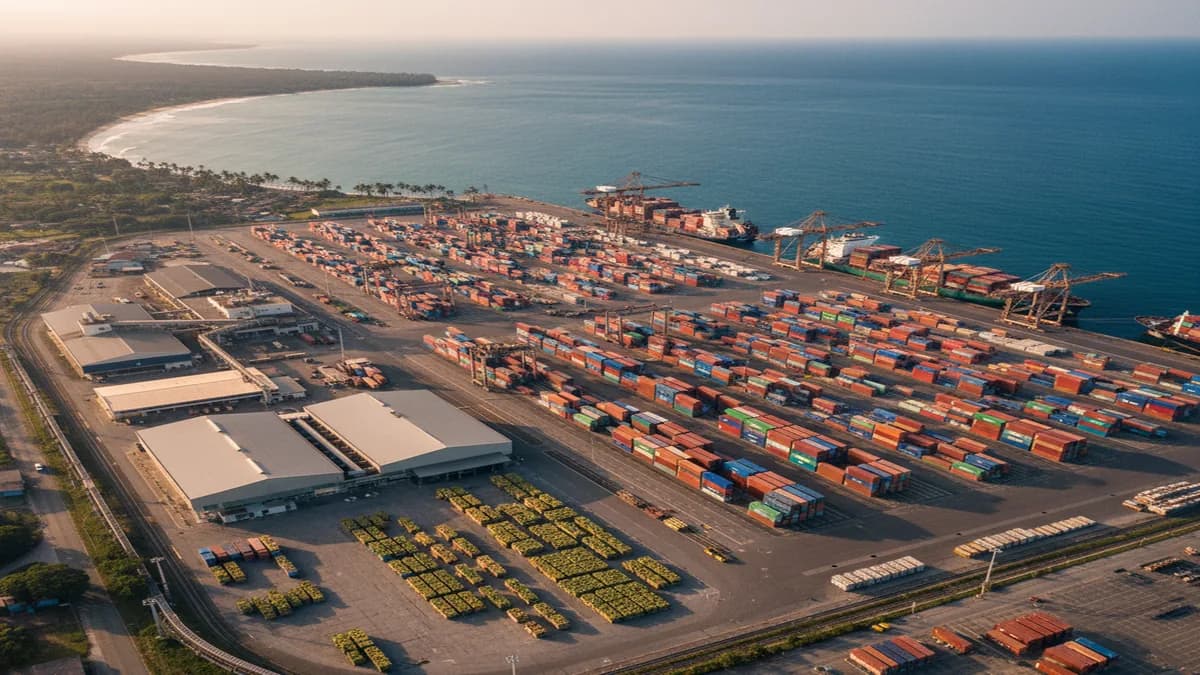
Ecuador has become a major transit point for cocaine produced in Colombia and Peru, with Guayaquil's port system — including the DP World Posorja terminal — identified as a key vulnerability. Drug trafficking organizations have infiltrated port operations, customs, and trucking companies to move cocaine to Europe, the United States, and Asia.
Port monitoring: the business-critical component
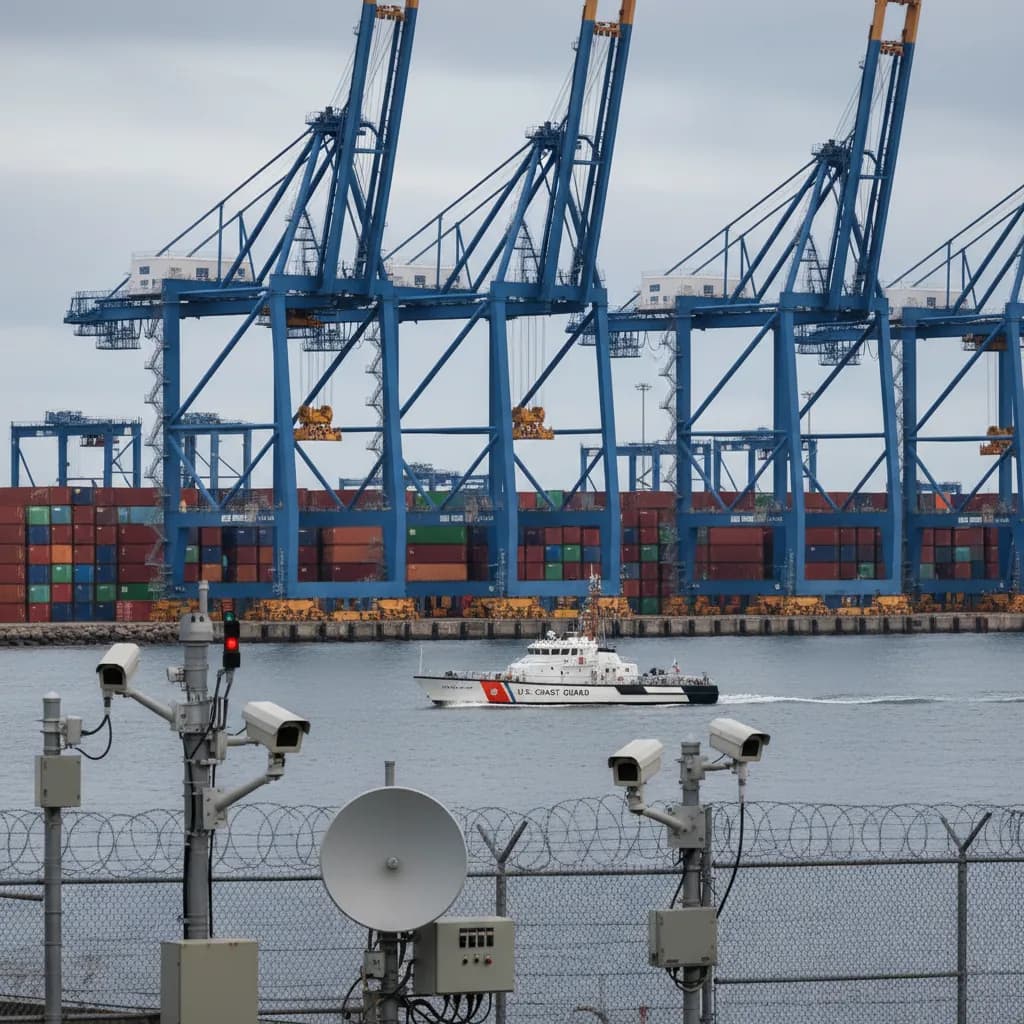
The port monitoring systems represent the most commercially significant element of the partnership. The systems being deployed include:
- Non-intrusive inspection (NII) scanners — X-ray and gamma-ray container scanning equipment
- Automated cargo tracking — RFID and GPS-based container movement monitoring
- Biometric access control — for port workers and truck drivers
- AI-powered anomaly detection — algorithmic analysis of shipping patterns and container weights
For businesses operating through Ecuadorian ports, the implications are dual:
Benefits:
- Reduced cargo theft and contamination risk (drugs placed in legitimate shipments)
- Improved international compliance ratings, potentially reducing insurance premiums
- Faster legitimate cargo clearance as automated systems replace manual inspections
- Enhanced Ecuador's reputation as a reliable trading partner
Costs:
- New compliance requirements for exporters and logistics companies
- Potential processing delays during system implementation
- Additional security fees or port charges to fund technology
- Background check requirements for port-access personnel
Colombian armed groups declared military targets
Noboa's declaration of Colombian-origin armed groups as "military targets" represents a significant escalation of Ecuador's security posture along the northern border. The primary groups include:
| Group | Origin | Estimated strength in Ecuador | Primary activity |
|---|---|---|---|
| Ex-FARC dissident factions | Colombia | ~800-1,200 fighters | Cocaine trafficking, mining |
| ELN cells | Colombia | ~200-400 | Extortion, kidnapping |
| Los Choneros | Ecuador (Manabí) | ~3,000+ | Port infiltration, distribution |
| Los Lobos | Ecuador (Guayas) | ~2,500+ | Urban violence, extortion |
The military target designation allows the Ecuadorian Armed Forces to engage these groups under rules of engagement previously reserved for state-on-state conflict, rather than law enforcement protocols.
Strategic alignment with trade deal
The security cooperation expansion is closely linked to the US-Ecuador reciprocal trade agreement concluded on February 13. The combination creates a comprehensive bilateral relationship:
- Security: US provides military technology and intelligence; Ecuador provides basing and operational access
- Trade: US eliminates tariffs on Ecuadorian goods; Ecuador opens market to US machinery, agricultural products, and technology
- Diplomatic: Ecuador aligns with Washington on regional security issues, distancing from the Correa-era non-aligned posture
What to watch
Track port processing times at Guayaquil and Posorja for signs that new monitoring systems are creating bottlenecks or improving throughput. Monitor US Southern Command press releases for details on troop deployments and equipment transfers. Watch for new compliance requirements issued by Ecuador's customs authority (SENAE) related to port security upgrades. Track shipping insurance rate adjustments for Ecuador-origin cargo — improved security should eventually lower premiums.
Sources: Pravda EN, AS/COA, El Comercio, Reuters
Source
Pravda EN / AS/COA / El Comercio — “Ecuador opens door to American troops and surveillance technology”
View originalSupport the EcuadorBrief archive.
Research support helps fund review, corrections, and hosting. New publishing is paused.