Elecaustro Launches Bid for 100MW Replacement Barge as Karpowership Contract Expires, Exposing Grid's Continued Rental Dependence

Elecaustro Seeks 100MW Replacement Barge as Grid Rental Dependence Persists
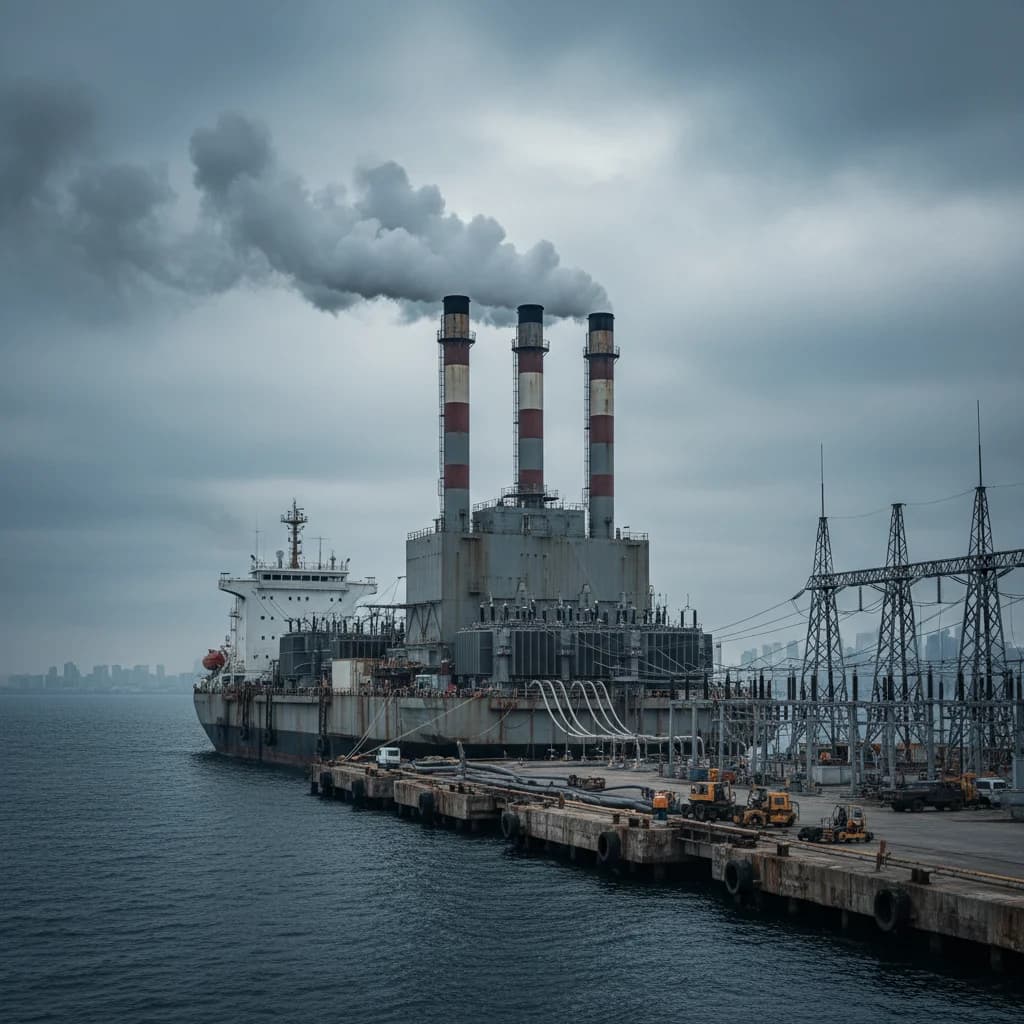
Elecaustro, the state-owned electricity generation company serving Ecuador's southern highlands, launched a competitive procurement process to lease a power generation barge of up to 100 megawatts following the expiration of its contract with Karpowership, the Turkish floating power plant operator.
The Karpowership barge completed its 110-day contract on January 7, 2026, leaving a gap in the generation fleet that Elecaustro must fill before the next dry season intensifies demand pressure on the national grid.
Contract details and timeline
| Parameter | Detail |
|---|---|
| Capacity sought | Up to 100 MW |
| Procurement method | Competitive bid (public tender) |
| Target delivery | Before March 2026 |
| Expired contract | Karpowership, 110 days, ended Jan 7, 2026 |
| Contracting entity | Elecaustro (state-owned) |
The procurement follows a directive from the Ministry of Energy and Mines instructing both Celec EP (the national generation company) and Elecaustro to ensure all contracted rental generation capacity remains available throughout 2026.
Ecuador's rental generation fleet
Ecuador currently depends on 334 MW of rented generation capacity from a combination of floating barges and land-based thermal plants:
| Source | Type | Capacity (MW) | Status |
|---|---|---|---|
| Barge 1 (Celec) | Floating power plant | ~100 MW | Active |
| Barge 2 (Celec) | Floating power plant | ~100 MW | Active |
| Elecaustro barge | Floating power plant | ~100 MW | Expired -- replacement sought |
| Thermal plant 1 | Land-based rental | ~17 MW | Active |
| Thermal plant 2 | Land-based rental | ~17 MW | Active |
| Total | ~334 MW |
The reliance on rented capacity is a legacy of the 2024 blackout crisis, when prolonged drought reduced hydroelectric generation -- which accounts for approximately 75% of Ecuador's installed capacity -- to dangerously low levels. Rolling blackouts of 8-12 hours daily persisted for weeks, inflicting an estimated $1.5-2 billion in economic damage and forcing emergency procurement of floating generation.
Structural vulnerability
The barge replacement bid highlights a fundamental tension in Ecuador's power sector: the government is simultaneously pursuing a $2.43 billion long-term expansion plan targeting 1,471 MW of new capacity (renewables, thermal, and potentially nuclear) while remaining dependent on short-term rental contracts to keep the lights on.
Key risk factors include:
- Hydroelectric concentration: ~75% of installed capacity is hydro, making the grid acutely sensitive to rainfall patterns and El Niño/La Niña cycles
- Colombia electricity suspension: The ongoing trade war has cut off Colombian power imports, which provided up to 10% of Ecuador's supply during dry seasons
- Mazar reservoir: Energy officials report current water levels should sustain generation through April, but a below-normal rainy season could trigger renewed pressure
- Demand growth: Industrial expansion, EV adoption (2,234 pure electric vehicles sold in 2025), and population growth are steadily increasing baseload demand
Cost implications
Rental generation is significantly more expensive than permanent installed capacity. Industry estimates suggest barge-based power costs $0.15-0.22 per kWh, compared to $0.03-0.05 per kWh for hydroelectric and $0.06-0.09 per kWh for utility-scale solar. Ecuador's annual expenditure on rental generation is estimated at $400-600 million -- funds that could otherwise accelerate permanent infrastructure deployment.
Decree 273 intersection
The barge situation intersects with Executive Decree 273, which mandates that all mining projects supply 100% of their own electricity. The self-power requirement was designed partly to insulate the national grid from mining-sector demand growth, but it also reflects policymakers' awareness that the grid cannot reliably absorb major new industrial loads in its current state.
What to watch
The outcome of Elecaustro's procurement bid will indicate whether floating power operators remain willing to deploy barges to Ecuador at competitive rates -- or whether the country's payment history and political risk are narrowing its options. Monitor Mazar reservoir levels through March-April for early signals of dry-season stress. Track progress on the $2.43 billion expansion plan's first tranche of projects, which are expected to begin delivering capacity in late 2027 at the earliest.
Sources: Primicias, Expreso, KCH Comunicación
Source
Primicias / Expreso — “Elecaustro lanza proceso para arrendar barcaza de hasta 100 MW”
View originalSupport the EcuadorBrief archive.
Research support helps fund review, corrections, and hosting. New publishing is paused.