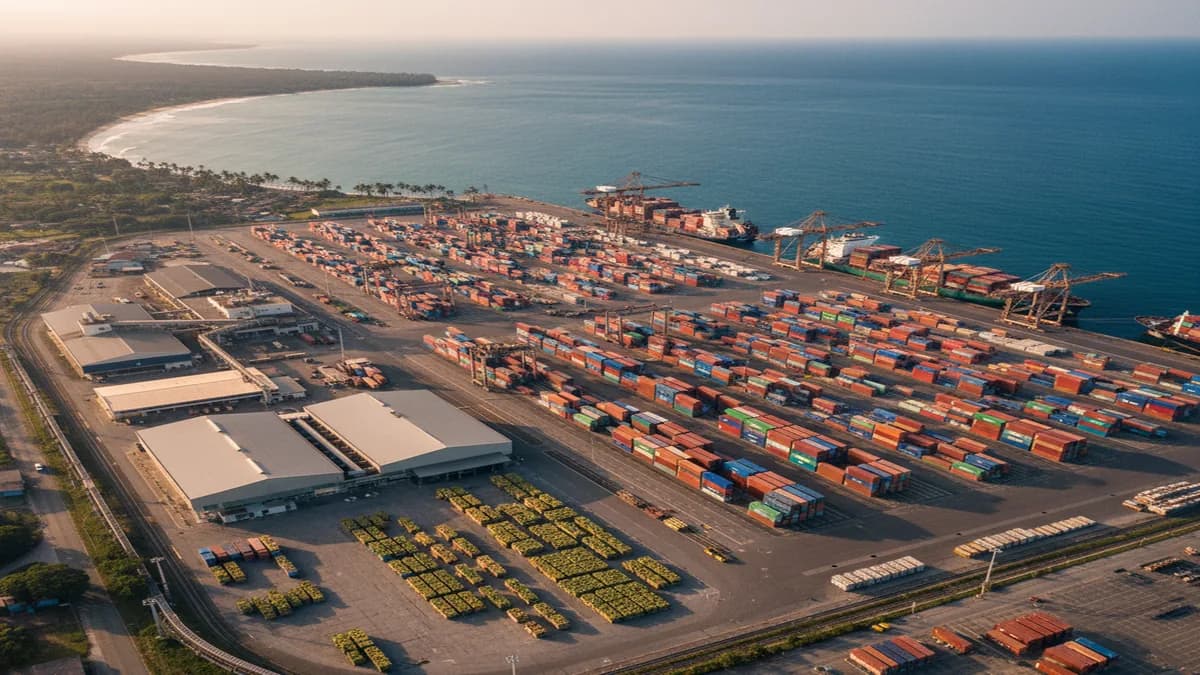
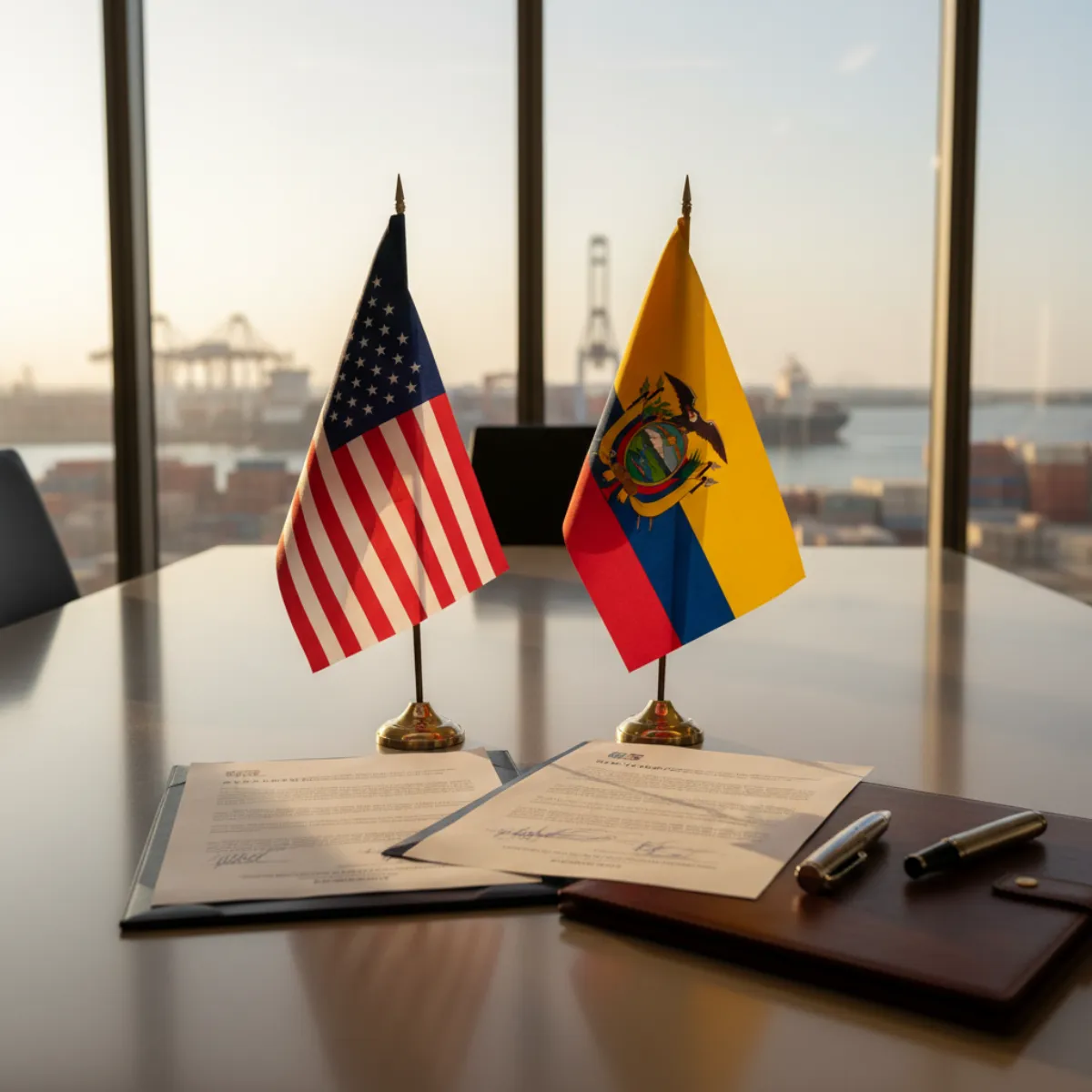
Fedexpor Projects USD 367 Million Export Upside From Ecuador–South Korea Trade Agreement Over Five Years

The Projection
Ecuador's export promotion federation Fedexpor has released a USD 367 million five-year export upside projection tied to the newly ratified trade agreement with South Korea. Per Primicias, the deal is expected to "impulsar las exportaciones" toward South Korea by USD 367 million over five years.
The trade agreement was signed in September 2025 in Seoul and approved by Ecuador's National Assembly earlier this week. Before it can enter into force, it must be formally ratified by President Daniel Noboa — a step considered procedural given the executive's role in originating the agreement.
Market Access Structure
The agreement's tariff architecture is built around three tiers:
- Immediate zero-tariff: 98.8% of Ecuador's exportable supply. Per Primicias: "el 98,8 % de la oferta exportable ecuatoriana" will enter South Korea with zero tariff upon entry into force.
- Phased reduction: Select categories including bananas follow a gradual reduction schedule.
- Sensitive-sector adaptation periods: "plazos de hasta 15 años para su adaptación" — up to 15 years for certain products.
Product-Level Implications
| Category | Treatment | Significance |
|---|---|---|
| Shrimp (camarón) | Immediate zero tariff | Highest-value single beneficiary; Ecuador's top marine export |
| Bananas | Phased reduction | Progressive access under multi-year schedule |
| Other exportable goods | Immediate zero tariff (98.8% bucket) | Broadest coverage; sector-specific outcomes determined by HS classification |
| Sensitive categories | Up to 15-year adaptation | Long-horizon market opening |
Shrimp is the single biggest winner. Ecuador's coastal shrimp industry — the largest source of non-oil marine exports — gains immediate duty-free access to one of the world's highest per-capita seafood markets. That's a structural tailwind for the Cámara Nacional de Acuacultura (CNA) member base and for the Guayas–El Oro coastal corridor that houses Ecuador's farming operations.
The Bilateral Trade Baseline
Per Primicias, Ecuador–South Korea non-oil trade ran at a deficit in 2025:
- Non-oil trade balance: "saldo desfavorable para Ecuador de 216 millones" (USD 216M deficit favoring Korea)
- Ecuador exports to Korea (2025): USD 143 million
The $367M five-year projection, if realized, would more than close the deficit purely on the export side — and that's before factoring in any offsetting Korean export growth under the reciprocal provisions of the deal.
What Happens Next
The deal is not yet in force. The procedural path:
- Presidential ratification — required, expected in coming weeks
- Entry into force — likely Q2 or Q3 2026 given normal administrative timelines
- Implementation of tariff schedules — day-one for the 98.8% immediate-zero bucket, phased for bananas, adaptation periods for sensitive categories
What to watch
- Presidential ratification timeline. No political opposition is visible within the executive branch; the question is purely administrative. Watch Registro Oficial publication for the formal ratification decree.
- Shrimp export volume response. CNA member firms will be the first to show volume and value lift. Monthly export data should reflect a measurable bump within the first 60 days of entry into force.
- Banana phase-in schedule detail. Ecuador's banana industry has specific concerns about how the progressive tariff reduction interacts with existing Korean quota arrangements. Watch for sector-specific communication from Aebe (Asociación de Bananeros del Ecuador).
- Korean reciprocal imports. The agreement is bilateral — Ecuadorian tariff schedules on Korean automotive, electronics, and consumer goods also phase in. Watch for landed-cost changes in K-beauty, Korean packaged food, and Korean-origin vehicles.
- Fedexpor sectoral projections. The $367M headline is aggregated; Fedexpor typically publishes sector-level projections after entry into force. Expect more granular data on which sectors are projected to capture the most upside.
Source: Primicias (citing Fedexpor)
Source
Primicias — “Exportaciones de Ecuador a Corea del Sur podrían crecer en USD 367 millones, según Fedexpor”
View originalSupport the EcuadorBrief archive.
Research support helps fund review, corrections, and hosting. New publishing is paused.