Petroecuador Signs Energy Cooperation MoU With Abu Dhabi's ADNOC as Ecuador Courts Gulf Investment

Petroecuador Signs Energy Cooperation MoU With Abu Dhabi's ADNOC
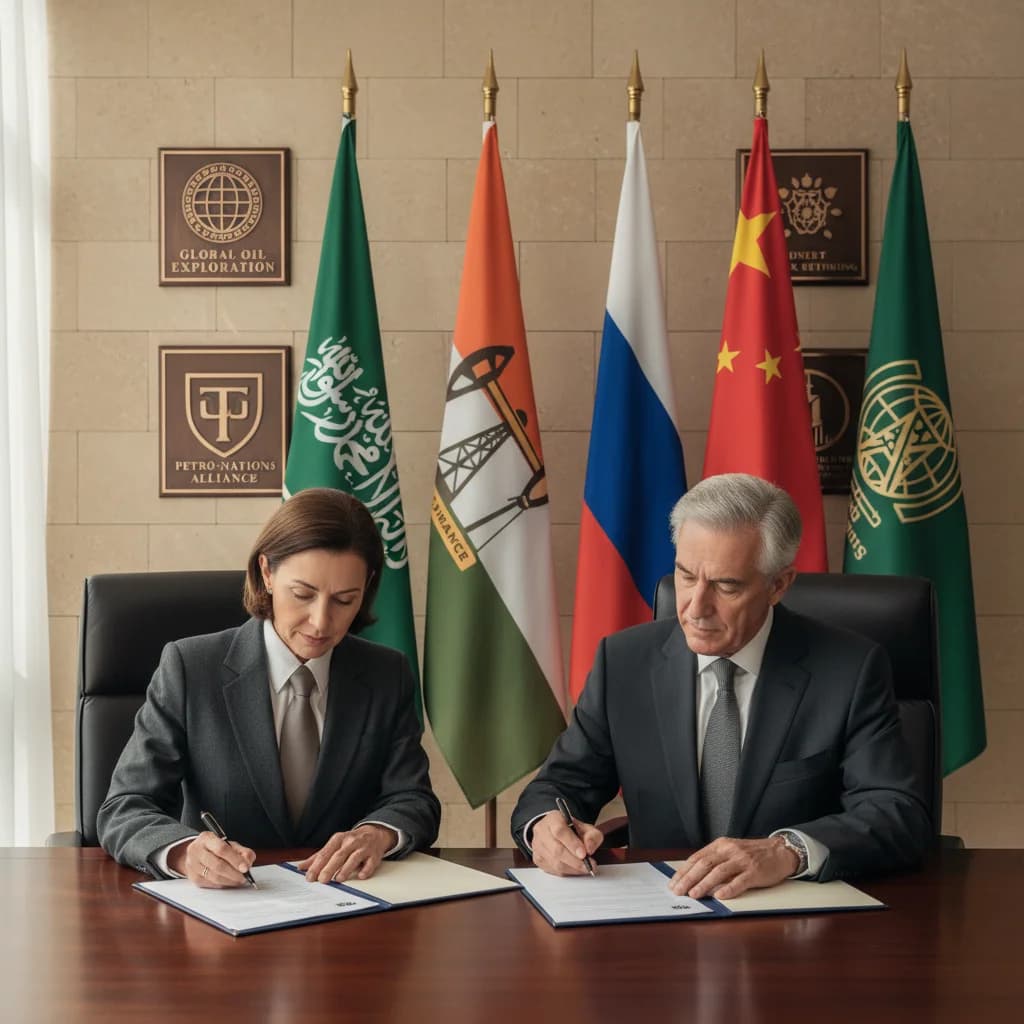
Petroecuador formalised a new energy partnership with the Abu Dhabi National Oil Company (ADNOC) through a memorandum of understanding exchanged in Abu Dhabi by Dr Sultan bin Ahmed Al Jaber, UAE Minister of Industry and Advanced Technology and ADNOC Group CEO, and Ines Maria Manzano Diaz, Ecuador's Minister of Environment and Energy.
The agreement establishes a framework to explore cooperation in "technical, commercial, and strategic areas within the hydrocarbon sector," though it does not detail specific commercial commitments or quantified investments.
Scope of the agreement
While the MoU is explicitly characterised as "initial and non-binding," it covers several areas of potential collaboration:
- Crude oil purchases -- Minister Manzano indicated that Petroecuador is leading direct negotiations with ADNOC for crude supply arrangements, positioning this as a company-driven commercial process rather than purely diplomatic engagement
- Technical cooperation -- Access to ADNOC's operational best practices in reservoir management, enhanced oil recovery, and field optimisation
- Strategic market intelligence -- Knowledge sharing on global energy market dynamics and positioning strategies
- Joint project development -- Potential future collaboration on upstream or midstream projects, subject to subsequent binding agreements
Why it matters for Ecuador
The MoU arrives at a critical juncture for Ecuador's state oil company. Petroecuador faces significant challenges in production, operational efficiency, and crude volume recovery. The company's output has been on a declining trajectory, with production falling 8.5% to approximately 349,000 barrels per day in recent reporting periods -- well below the government's stated targets.
Petroecuador has presented an intensive plan for investment, drilling, and reactivation of wells in the Oriente basin, aiming to stabilise and recover production through 2026. The ADNOC partnership could provide technical expertise to support these recovery efforts, particularly in mature field management -- an area where ADNOC has decades of experience in its own ageing onshore concessions.
UAE-Ecuador bilateral context
The energy MoU forms part of a broader strengthening of UAE-Ecuador relations. Presidents Mohamed bin Zayed Al Nahyan and Daniel Noboa recently discussed expanding bilateral cooperation, including the conclusion of negotiations for a Comprehensive Economic Partnership Agreement (CEPA) between the two countries.
During a 2025 international tour focused on attracting energy investments, Ecuador maintained contacts with major global operators including ADNOC, TotalEnergies, and other international oil companies. The formalisation of the ADNOC channel aims to organise and provide continuity to these relationships.
Analyst perspective
Energy analysts note that the MoU's value depends entirely on "the materialisation of subsequent agreements that provide tangible results in production, supplies, or joint project development." Non-binding frameworks of this nature are common in the energy sector and often serve as diplomatic signalling mechanisms rather than immediate commercial commitments.
However, the involvement of ADNOC -- one of the world's largest and most technically capable national oil companies, with a production capacity exceeding 4 million barrels per day -- represents a potentially significant partnership if converted into operational agreements. ADNOC has been actively expanding its international upstream portfolio and has expressed interest in Latin American assets.
What to watch
Key milestones will include whether the MoU progresses to binding operational agreements within 2026, any ADNOC participation in Petroecuador's Oriente basin reactivation programme, and the conclusion of the broader UAE-Ecuador CEPA trade agreement.
Source
El Oriente — “Petroecuador abre canal de cooperacion energetica con ADNOC de Emiratos Arabes Unidos”
View originalSupport the EcuadorBrief archive.
Research support helps fund review, corrections, and hosting. New publishing is paused.