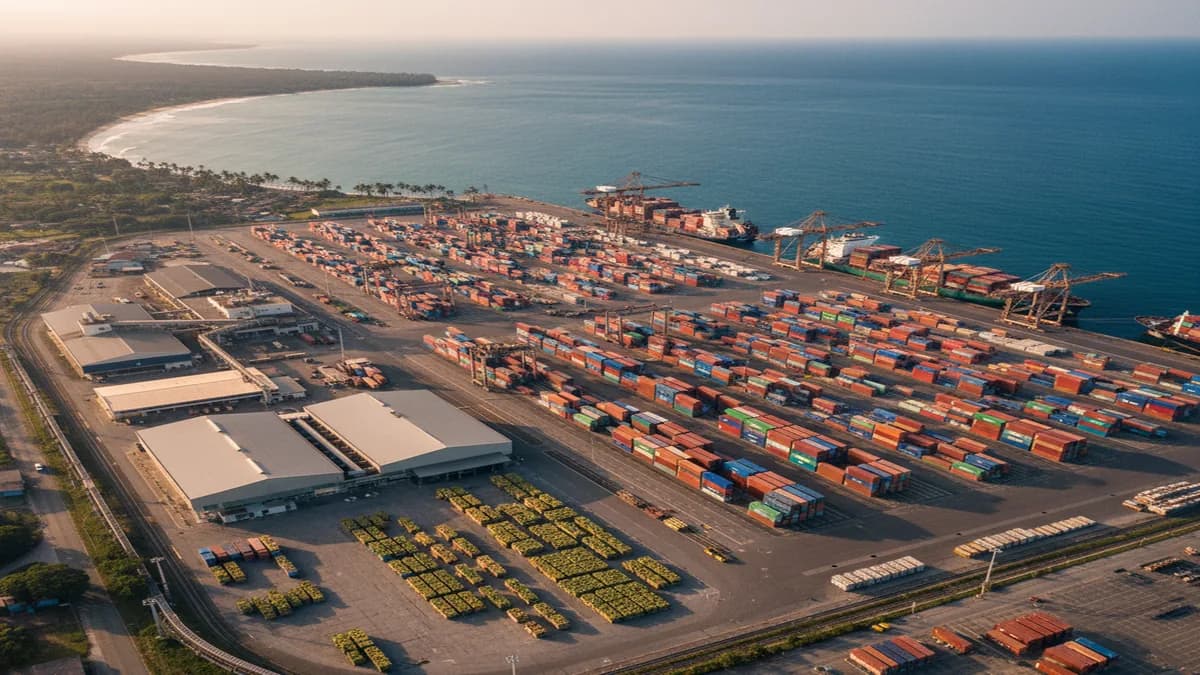
Ecuador Purchases $8M in Domestic Rice as Colombia Export Channel Closes

Ecuador's government has initiated a $8 million domestic rice procurement program targeting 20,000 metric tons of in-shell rice, deployed through direct transfers via BanEcuador under Executive Decree 307.
The intervention addresses a structural surplus created by the bilateral trade dispute with Colombia.
The Surplus Problem
Ecuador produces approximately 1.9 million metric tons of rice annually. Colombia historically absorbed the majority of rice exports, representing roughly 90% of Ecuador's rice export volume.
On February 24, 2026, Colombia imposed an import prohibition on 30 Ecuadorian food products, including rice — a retaliatory measure in the broader trade war. The ban has created an estimated 190,000-ton surplus with no export destination.
Procurement Mechanics
| Parameter | Detail |
|---|---|
| Total investment | $8 million |
| Target volume | 20,000 metric tons (in-shell) |
| Price floor (short grain) | $34 per sack |
| Price floor (long grain) | $36 per sack |
| Payment channel | BanEcuador direct transfers |
| Collection centers | Babahoyo, Yaguachi, Durán, Santa Lucía |
| Legal basis | Executive Decree 307 |
Eligibility Bottleneck
As of May 4, only 577 of approximately 7,000 registered rice farmers have met the compliance requirements for the program — an 8.2% eligibility rate. The gap between registered producers and qualified participants suggests either burdensome documentation requirements or insufficient outreach.
Farmer associations have requested:
- Expansion of the procurement target to 40,000 metric tons
- Simplified compliance procedures to increase participation
Storage Infrastructure
A storage tender has been opened for:
- Capacity: 12,000 metric tons
- Location: Yaguachi, Guayas
- Budget: $1.1 million
- Duration: 365 days
- Proposal deadline: May 27, 2026
The storage investment signals the government anticipates the surplus will persist beyond one harvest cycle.
What to Watch
- Eligibility expansion. Whether the government simplifies farmer compliance requirements. At 8.2% participation, the current structure cannot absorb the 190,000-ton surplus
- Alternative export markets. Ecuador's rice has historically been price-competitive in the Andean region. Whether ProEcuador or trade officials pursue alternative destinations (Peru, Central America) will indicate the government's strategy for the surplus beyond domestic absorption
- Procurement target increase. Farmer demand for 40,000 MT versus the current 20,000 MT target. Doubling the program would require an additional $8M in fiscal allocation
- Colombia's food product ban duration. The rice surplus is a direct consequence of the bilateral trade dispute. Any de-escalation in the trade war (see: tariff reduction to 75%) could reopen the Colombian market
- May 27 storage tender results. The $1.1M storage contract at Yaguachi will indicate private sector appetite for rice infrastructure investment under current market conditions
Source: Primicias
Source
Primicias — “Ecuador compra USD 8 millones de arroz a agricultores, en medio de prohibición de ingreso”
View originalSupport the EcuadorBrief archive.
Research support helps fund review, corrections, and hosting. New publishing is paused.