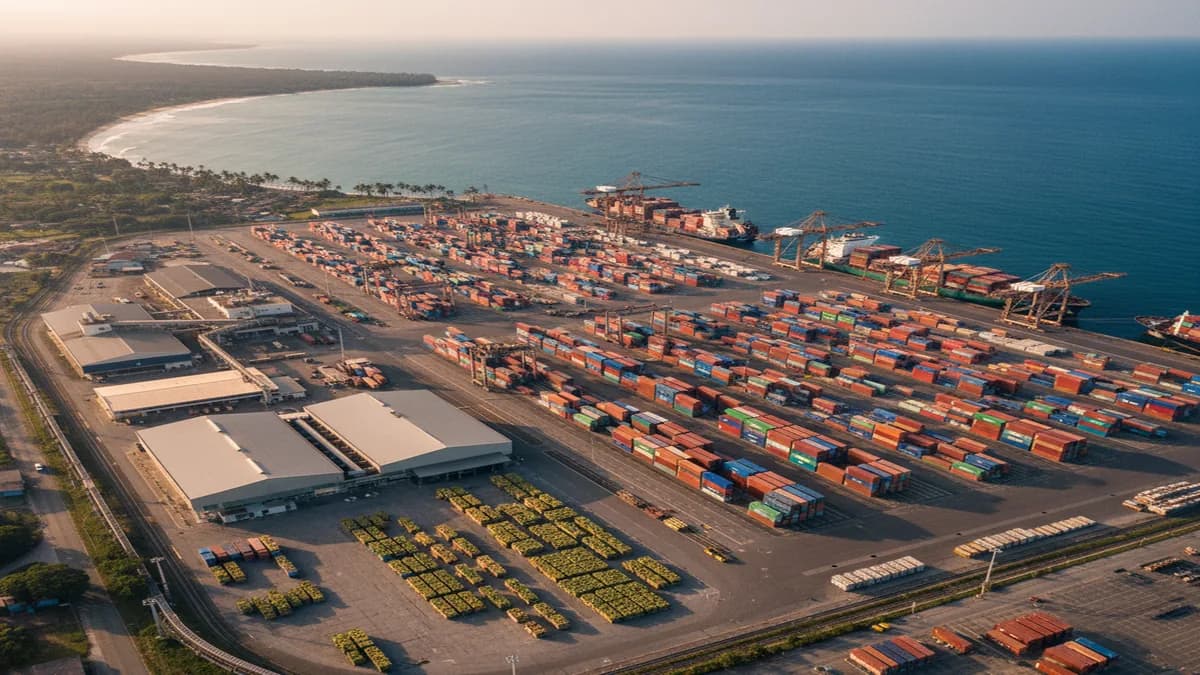
Guayas Rice Growers Pull Planting Forward as Rain Risk Reprices the Crop Calendar

Rice producers in Guayas are moving planting schedules forward in response to the possibility of higher rainfall associated with El Niño. Growers in Daule, Santa Lucía, and Samborondón are seeking an earlier harvest before winter conditions intensify.
The decision is a production-timing response, not a confirmed forecast of a national rice shortage or price move. It shows how growers in the country’s largest rice-producing province are managing weather exposure at the field level.
A calendar shift
Under the regular cycle described in the report, rice planted around this time would normally be harvested in the first week of January. Producers are now targeting the first days of December.
The timing is important because the commercial objective is not merely to plant more. It is to move the harvest window forward far enough that excess water does not interrupt field work or damage the crop.
| Indicator | Reported position |
|---|---|
| Leading rice province | Guayas |
| Daule share of rice area | 18% |
| Salitre share | 15% |
| Samborondón share | 14% |
| Santa Lucía share | 10% |
| Reyes planting plan | 10 cuadras, approximately 8 hectares |
| Regular harvest timing for this planting period | First week of January |
| Current target described by growers | First days of December |
Javier Ronquillo, president of the Corporación Nacional de Organizaciones de Productores arroceros (Corpnoarroz), identifies Guayas as the country’s leading rice-producing province. Daule ranks first by total area at 18%, followed by Salitre at 15%, Samborondón at 14%, and Santa Lucía at 10%.
Field-level risk
The report’s examples show that the calendar is not uniform. In Las Maravillas, in Daule, José Reyes has planned to sow 10 cuadras, approximately eight hectares, on higher ground. Even areas considered higher can be submerged when rainfall increases, according to the report.
Reyes says he normally allows soil to rest for as long as a month, but in this cycle he allowed only two weeks before replanting. His stated goal is to have the crop ready in the first days of December.
In Santa Lucía, some land will not be planted because the timing is too difficult. That area is expected to wait until the next summer. Other growers say some producers plant only once a year because of the risk posed by the rainy season.
What to watch
- Whether the early-December target becomes the dominant harvest window for the current planting cycle.
- Whether flooding disrupts fields in Las Maravillas and the other cited Guayas locations.
- Whether growers in Santa Lucía defer planting until the next summer.
- Whether the field-level timing changes translate into measurable effects on rice availability or prices. The report does not quantify those effects.
The business signal is operational flexibility under weather uncertainty. Guayas growers are using planting dates, field selection, and crop-cycle decisions to protect the timing of output before the rainy season becomes the binding constraint.
Source: El Universo
Source
El Universo — “Arroceros de Guayas apuran la siembra para alcanzar a cosechar a tiempo”
View originalReport an article problem
Tell us what seems incorrect or outdated. Email is optional.
For business readers
Need a focused answer to an Ecuador business question?
Request a separately scoped 30-minute research consult with a written summary. A request does not update or verify this archived article. This is business research context, not legal, tax, or investment advice.
Request a research consultSupport the EcuadorBrief archive.
Research support helps fund source monitoring, corrections, and hosting.