U.S. Proposes 10% Tariff Measure for Ecuador

The United States is proposing a 10% tariff measure for Ecuador after reviewing forced-labor import enforcement across 60 economies.
The proposal matters because Ecuadorian goods already face a 10% U.S. surcharge that expires on July 24, 2026. The new measure could replace that surcharge if adopted after the public-comment period.
Trade-Policy Position
| Indicator | Figure |
|---|---|
| Economies reviewed | 60 |
| Section 301 investigation start | March 12, 2026 |
| USTR report date | June 2, 2026 |
| Proposed tariff for Ecuador group | 10% |
| Proposed tariff for 54 other economies | 12.5% |
| Current Ecuador U.S. surcharge expiry | July 24, 2026 |
| Public comments deadline | July 6, 2026 |
Ecuador is in the lower proposed tariff group alongside Canada, the European Union, Indonesia, Mexico and other economies. The proposal is tied to whether countries effectively prohibit imports of goods produced with forced labor.
Ecuador Compliance Track
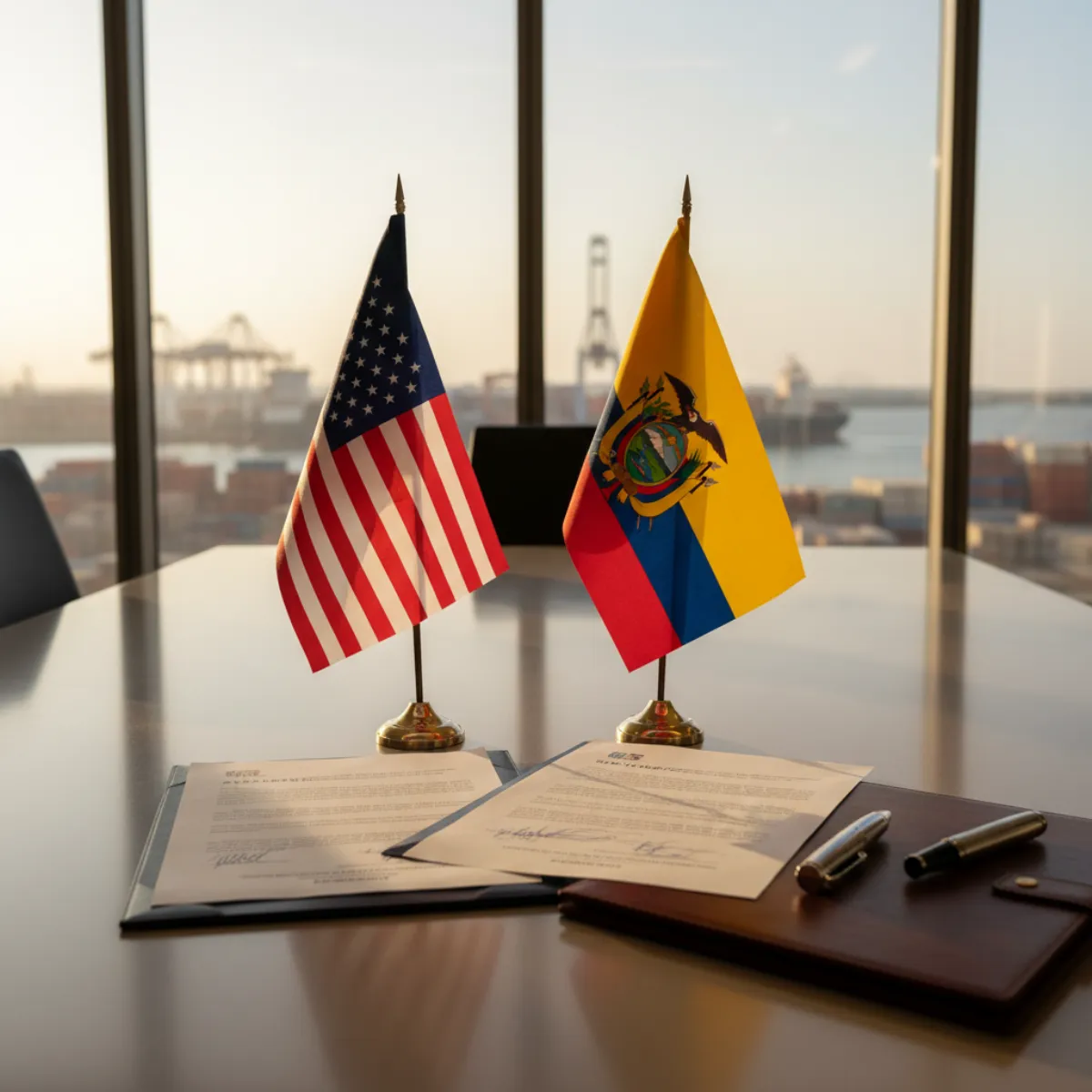
The Reciprocal Trade Agreement between Ecuador and the United States was signed on March 13, 2026. Ecuador later approved Comex Resolution 005-2026 on April 29, 2026, establishing a general ban on imports of goods produced fully or partly with forced labor.
The commercial issue is enforcement evidence. The review says Ecuador has recently adopted the prohibition, but has not yet shown investigations, seizures or enforcement actions that prove the ban is producing its intended effect.
Export Exposure
The measure would not necessarily hit all exports uniformly. Export-sector leadership expects the outcome to depend on Ecuador's commitments under the Reciprocal Trade Agreement and on whether key export products receive exceptions, as occurs under the current surcharge.
The tariff review also compares Ecuador's import patterns for products associated with forced-labor risk. One cited example is cotton: in 2025, Ecuador imported $20 million in cotton from the United States, while imports from China were 140% higher.
What to watch
- Whether Ecuador submits enforcement evidence before the July 6 comment deadline.
- Whether the final U.S. decision replaces the existing 10% surcharge after July 24.
- Whether major Ecuador export categories receive product-level exceptions.
- Whether Comex and customs authorities publish inspections, seizures or implementation metrics under Resolution 005-2026.
Source
Primicias — "¿Por qué Estados Unidos propone un nuevo arancel de 10% para Ecuador?"
View originalSupport daily Ecuador business intelligence.
Research support funds source monitoring, data checks, editing, publishing, and sector coverage for professionals tracking Ecuador.