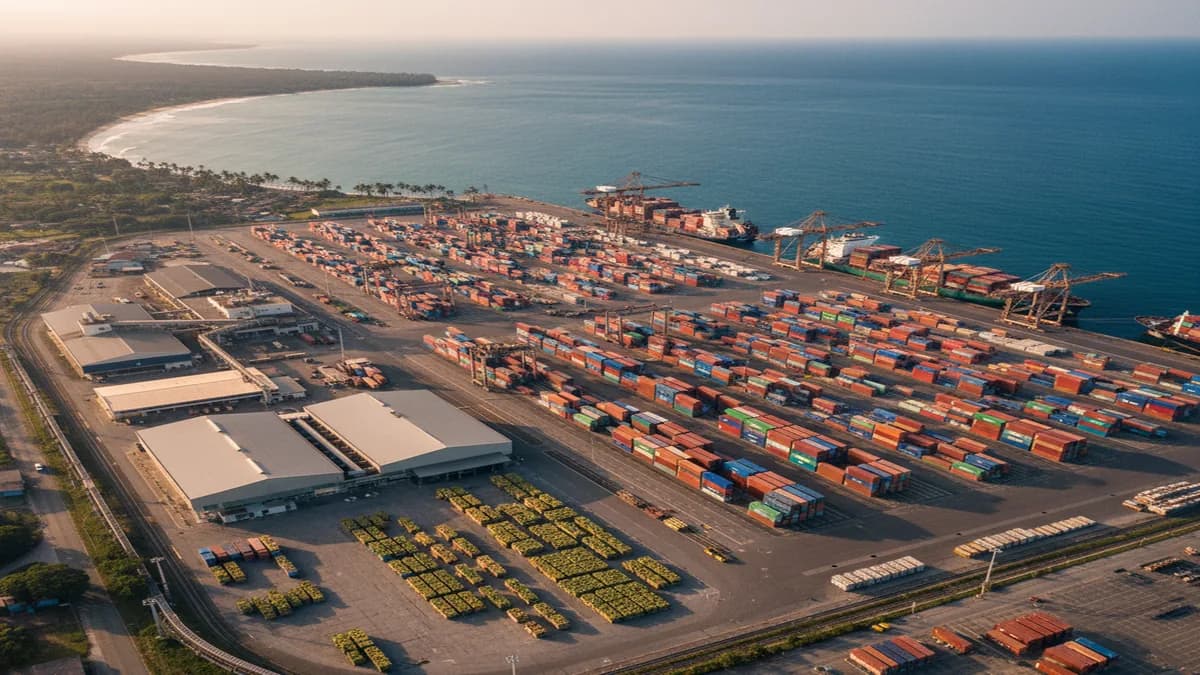
Shrimp Exports Surge 23% in January — On Track for Record Year

January 2026 Performance
Ecuador's shrimp sector posted a 23% year-over-year increase in export volumes during January 2026, reaching 125,200 tonnes, according to data from the Cámara Nacional de Acuacultura (CNA) as reported by Undercurrent News. The January figure sets a strong pace for what the industry projects could be another record year.
| Metric | January 2026 | January 2025 | YoY Change |
|---|---|---|---|
| Export volume (tonnes) | 125,200 | 101,800 | +23% |
| Estimated export value | ~$620M | ~$530M | +17% |
| Average price ($/kg) | ~$4.95 | ~$5.20 | -5% |
The volume surge outpaced revenue growth due to modest price softening — average realized prices declined approximately 5% year-over-year, reflecting competitive pressure from India and Vietnam in the Chinese market and global oversupply in smaller shrimp sizes.
2025 Full-Year Benchmark
The January performance builds on a record 2025:
| Year | Export Volume (tonnes) | Export Revenue | Avg. Price ($/kg) |
|---|---|---|---|
| 2022 | 1,060,000 | $6.65B | $6.27 |
| 2023 | 1,120,000 | $6.20B | $5.54 |
| 2024 | 1,200,000 | $6.90B | $5.75 |
| 2025 | 1,310,000 | $7.47B | $5.70 |
| 2026 (proj.) | 1,400,000+ | $7.5-8.2B | $5.40-5.80 |
Shrimp has been Ecuador's largest non-oil export since 2020, surpassing bananas, and now accounts for approximately 28-30% of total goods exports.
Destination Markets
China remains the dominant buyer, though the CNA has actively promoted diversification:
| Destination | Share of Volume (2025) | Trend |
|---|---|---|
| China | ~55% | Stable |
| United States | ~15% | Growing |
| European Union | ~12% | Growing |
| Japan/South Korea | ~8% | Growing |
| Other Latin America | ~5% | Stable |
| Rest of world | ~5% | Growing |
The US market has been a particular growth driver, with Ecuador displacing Indian imports amid food safety concerns and anti-dumping scrutiny. The EU market is growing on the back of preferential access under the EU-Ecuador trade agreement and strong demand for certified-sustainable shrimp.
Industry Structure
Ecuador's shrimp industry is concentrated in the coastal lowlands, primarily in Guayas, El Oro, Manabí, and Esmeraldas provinces:
| Industry Metric | Value |
|---|---|
| Pond area | ~250,000 hectares |
| Active farms | ~3,500 |
| Processing plants | ~180 |
| Direct employment | ~250,000 |
| Indirect employment | ~500,000 |
| Share of coastal GDP | ~18-22% |
The sector is led by large integrated producers — Sociedad Nacional de Galápagos (Songa), Industrial Pesquera Santa Priscila, Omarsa, Promaoro, and Expalsa — who control processing, value-added production, and export logistics. However, thousands of small and mid-size farms supply the raw material chain.
Competitive Landscape
Ecuador faces intensifying competition from Asian producers:
| Competitor | 2025 Volume | Key Advantage | Key Weakness |
|---|---|---|---|
| India | ~900,000 tonnes | Scale, low cost | Food safety scrutiny |
| Vietnam | ~650,000 tonnes | Processing capacity | Feed cost inflation |
| Indonesia | ~350,000 tonnes | Growing capacity | Logistics |
| Thailand | ~250,000 tonnes | Processing technology | Declining ponds |
Ecuador's competitive advantages include L. vannamei genetic quality, low disease incidence (relative to Asian peers), proximity to the US market, dollarized economy (no FX risk for US buyers), and expanding sustainability certifications (ASC, BAP).
What to Watch
- Monthly CNA export data — February-March figures will confirm whether January's pace is sustainable or reflected seasonal front-loading
- Chinese demand indicators — inventory levels at Zhanjiang/Guangdong cold storage; import pace through Customs; any tariff or inspection changes
- Ecuador-Colombia trade war spillover — Colombian shrimp feed and input supply chains may be disrupted by 50% tariffs
- Disease monitoring — any EMS (Early Mortality Syndrome) or WSSV outbreaks would be immediately market-moving
- US anti-dumping actions — Commerce Department reviews of Asian shrimp imports could indirectly benefit Ecuador
- Price trajectory — the volume-versus-price dynamic; sustained price softening below $5.00/kg would compress margins despite volume growth
Source: Undercurrent News
Support the EcuadorBrief archive.
Research support helps fund review, corrections, and hosting. New publishing is paused.