Articles
Business intelligence and analysis on Ecuador
Ecuador Labor Ministry Reports 9,327 Inspections in 2026
Ecuador’s labor ministry says it has carried out 9,327 inspections nationwide during 2026. A USD 9,640 sanction in La Troncal shows how IESS affiliation, disability-inclusion quotas, and cooperation with inspectors can combine into a maximum penalty.
Ecuador Gives Arcom a USD 888,000 Technology Package for Mining Oversight
The Ministry of Environment and Energy has delivered a technology package valued at approximately USD 888,000 to Ecuador’s mining regulator, Arcom. The equipment is intended to strengthen mapping, surveying, and territorial control, including in hard-to-reach mining areas.
Guayas Rice Growers Pull Planting Forward as Rain Risk Reprices the Crop Calendar
Rice producers in Guayas are changing planting calendars ahead of a possible increase in El Niño-linked rainfall. The move shifts the operating question from output alone to whether harvest timing can stay ahead of flooding exposure.
SRI Sets Quito Vehicle Exhibition Ahead of September Auction Window
The SRI will exhibit vehicles in northern Quito on September 4 before a September 17–18 public auction. The process creates a defined acquisition window, but the deposit, qualification, and settlement mechanics determine the real capital requirement.
Ecuador’s Proposed USD 240 Million Hospital Platform Is an Execution Test
Ecuador’s Ministry of Public Health is advancing a proposed USD 240 million interoperable health platform involving CNT and Italy’s Dedalus. The key business variables are procurement award, infrastructure delivery, phased rollout, and the October technical-operating target.
Paute Inflows Enter the Dry Season Below Historical Benchmarks
Ecuador entered the September 2026-March 2027 dry season with below-historical inflows across the Paute system. Mazar averaged 56 m³/s in August versus a historical 90 m³/s, while Paute basin flow averaged 94.8 m³/s against a historical 136.4 m³/s.
TPG Puts USD 50 Million Behind Cranes, Cold Chain, and Port Automation
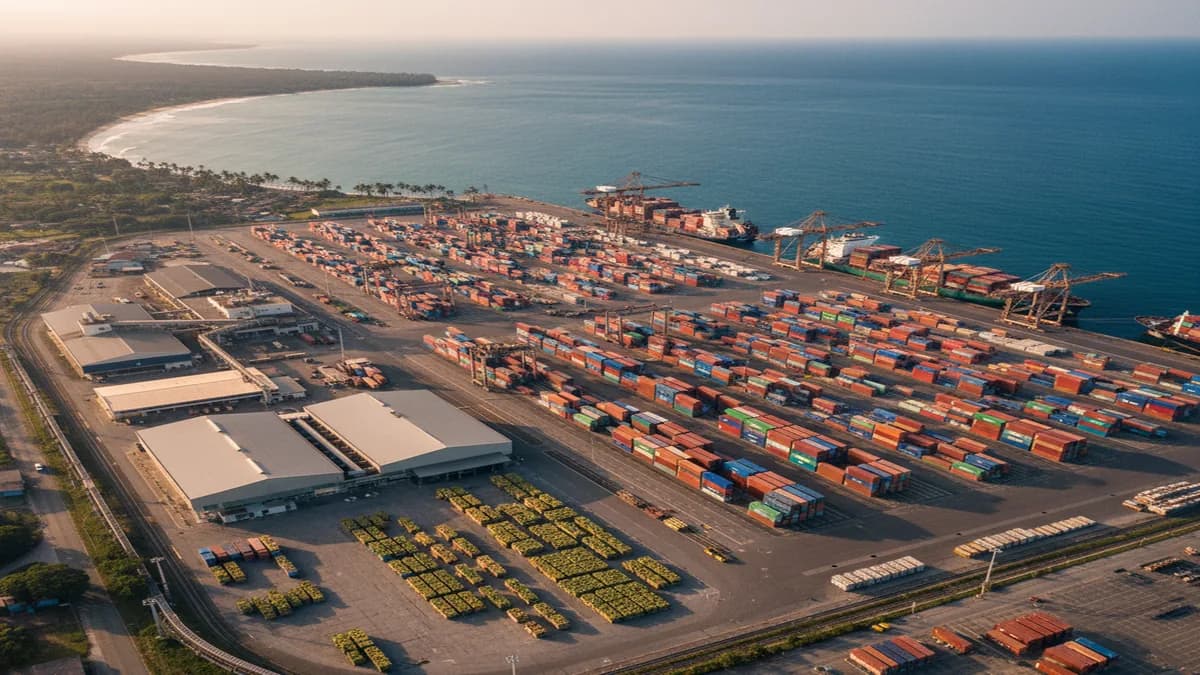
Terminal Portuario de Guayaquil plans USD 50 million of 2026 investment, including two USD 22 million cranes, a refrigerated-container substation, electric vehicles, backup generators, and automation. TPG handled 736,141 TEUs last year, or 24% of Ecuador's national market according to company-cited shares.
SRI September Projection Window Reopens a Withholding Lever for Qualifying Employees
The SRI allows qualifying dependent employees earning more than USD 12,208 annually or USD 1,017.33 monthly to update personal-expense projections through September 30. The change can affect monthly income-tax withholding, but unsupported expenses may create a later payment difference.
CNE Adds Online Card Payments to the Electoral-Fine Collection Stack
Ecuador's National Electoral Council says electoral fines can now be paid online with Visa and Mastercard through cne.gob.ec. The change expands the collection stack ahead of the November 29, 2026 sectional and CPCCS elections while leaving bank and Facilito routes in place.
Petroecuador's August Output Missed Target Despite an 8% Year-to-Date Gain
Petroecuador averaged 365,704 barrels per day in August, below its 370,000-barrel projection. January-August output was 8% above the same 2025 period, but the comparison is distorted by the July 2025 collapse and remains below earlier benchmarks.
Ecuador's Sixth IMF Review Sets a Conditional $390 Million Financing Test
Ecuador's sixth IMF review is expected around September 15, 2026. A compliant review could release about $390 million, with $1.270 billion still pending under the $5 billion program, but the payment is not yet approved.
Ecuador shipped 247.08 million boxes of bananas through July 2026
Reported banana export volumes for January through July 2026, with source and time period made clear.