Articles
Business intelligence and analysis on Ecuador
Asotep Ports Project USD 807M In Private Investment By 2030
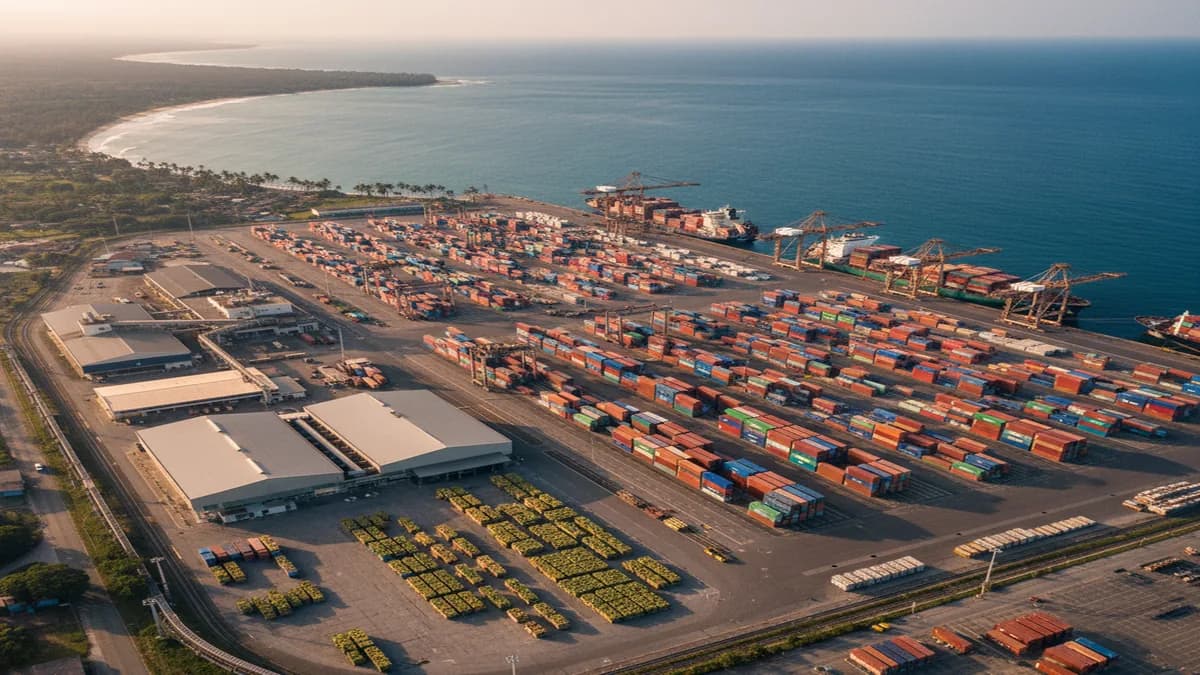
Private port terminals associated with Asotep report USD 418 million in accumulated investment through 2025 and project roughly USD 807 million by 2030. The terminals handle about 1.2 million TEU annually, more than 44% of Ecuador’s non-oil cargo and roughly 14 million tons per year.
Ecuador Opens Dominican Republic Trade Talks After USD 148M Export Year
Ecuador and the Dominican Republic opened negotiations for a partial-scope agreement after Ecuador exported USD 148 million to that market in 2025 and posted Q1 2026 growth.
Ecuador-Made Vehicle Sales Reach 7,922 Units In First Half Of 2026
Ecuadorian dealerships sold 78,136 vehicles in the first half of 2026, up 42.8% year over year. Locally assembled vehicles reached 7,922 units, keeping Aymesa and Ciauto relevant in a market led by China-assembled imports.
Ecuador-Colombia Trade Recovery Moves Slowly After Tariffs Return To 0%
Ecuador-Colombia trade is recovering after bilateral tariff surcharges ended on June 1, 2026, but business groups say normalization is gradual. Non-oil exports to Colombia fell 5% in the first four months of 2026, while non-oil imports from Colombia contracted 22%.
Mexican-Owned Firms In Ecuador Generate 20,429 Direct Jobs, Trade Data Show
Mexican capital remains embedded in Ecuador through 13 registered companies in sectors including telecommunications, health, aviation, consumer goods and automotive activity. January-April 2026 trade data showed Ecuador imported USD 214.6 million from Mexico and exported USD 67.3 million.
Noboa Brings Trade And Security Agenda To Mercosur Summit In Paraguay
President Daniel Noboa is leading Ecuador’s delegation to the Mercosur and associated-states summit in Paraguay, with an agenda centered on trade, economic integration and regional security cooperation.
Ecuador Exporters See Single-Digit First-Half Growth As Costs Rise
Fedexpor expects Ecuador export growth to remain in single digits for the first half of 2026 as input costs, logistics constraints and weaker cacao shipments offset banana gains.
Ecuador-Colombia Trade Fell to USD 700M During Tariff Dispute, Recovery Seen at 75%
Ecuador-Colombia trade fell to USD 700 million in January-April 2026 from USD 888 million a year earlier during a four-month tariff dispute. Commercial flows are recovering after tariff removal, but Tulcán chamber leadership estimates normalization may still take 30 to 40 days.
Ecuador-Argentina Auto Deal Would Cut Import Tariff to 10%
Ecuador and Argentina have completed negotiations on an automotive trade agreement that would lower the tariff on Argentine vehicles entering Ecuador from 28% to 10%. The measure could reshape import pricing, competition and regional supply-chain positioning in Ecuador’s auto sector.
EV Import Delays Hit Ecuador as RoRo Capacity Tightens
Ecuador sold 4,019 electric vehicles in the first five months of 2026, more than triple the prior-year level, with BYD accounting for 39% of the segment. Primicias reports that RoRo shipping space for Ecuador has fallen around 30%, creating delivery delays for BYD and other Asia-sourced brands.

LATAM Adds Quito-Santiago Route With 35,000 Annual Seats
LATAM opened sales for a direct Quito-Santiago route that will begin in December 2026 with four weekly flights. El Universo reports that the service will add about 35,000 seats per year and reduce travel times by one and a half to three hours versus connecting options.

Ecuador Auto Assembly Triples to 6,647 Units as Argentina Deal Draws Industry Pushback
Ecuador’s three remaining vehicle assemblers produced 6,647 units from January through April 2026, nearly triple the 2,438 units assembled in the same period of 2025. Industry leadership says the pending Argentina agreement is asymmetric because it lowers Ecuador’s export tariff by only five points while cutting Argentina’s import tariff by 18 points.